https://boda.su/en/posts/id3681-cookware-safety-materials-to-avoid-for-healthier-meals
Cookware safety: materials to avoid for healthier meals
Safer cookware: what to use—and what to ditch
Cookware safety: materials to avoid for healthier meals
Learn which cookware can leach toxins—aluminum, Teflon, copper, silicone, melamine, plastic—and safer picks like stainless steel, glass, ceramic, cast iron.
2026-01-14T20:27:22+03:00
2026-01-14T20:27:22+03:00
2026-01-14T20:27:22+03:00
Conversations about healthy eating usually focus on the food itself—less sugar, more vegetables, the right fats. Yet there’s a factor we tend to overlook: even wholesome meals can turn problematic if they’re cooked or stored in the wrong containers. Some materials release substances when heated or after long use; these can build up in the body and, over time, start to affect health.Aluminum cookware and foilAluminum is one of the most debated kitchen materials. When heated, it can migrate into food, especially in acidic or salty dishes. The metal is not easily eliminated from the body and can accumulate for years.Doctors and researchers link excess aluminum to disruptions in the nervous and immune systems, as well as internal organs. If ditching foil altogether is difficult, it’s worth minimizing direct contact with food. A simple workaround is to use parchment as a barrier layer.Teflon and nonstick coatingsNonstick cookware is convenient but demands care. When overheated, a damaged coating can release harmful compounds. Preheating an empty pan or cooking on high heat is especially risky. Scratches and chips are a clear sign it’s time to let that pan go. Even minor damage increases the chance that unwanted substances will end up in your food. It’s also best to avoid metal utensils with this type of cookware.Copper cookwareCopper is essential in trace amounts, but as cookware it can be problematic. Over time, copper oxidizes and its ions can leach into food. A green patina on the surface is a warning sign—such items are no longer suitable for cooking. At home, copper pots and pans are better used rarely or replaced with more neutral materials.Silicone: not so simpleSilicone cookware is seen as modern and handy, but quality matters. Silicone labeled LFGB or FDA is considered safer, indicating the material has been tested. Very bright, highly saturated colors can hint at aggressive dyes. And silicone isn’t made for extreme heat: exceeding the recommended temperature range can lead to the release of unwanted compounds.Melamine and plasticMelamine dishes often look appealing and feel easy to use, but they’re not suitable for hot food. When heated, these items can release formaldehyde, a substance classified as a carcinogen. The same caution applies to plastic containers. They’re handy for storage, but it’s better not to reheat food in them or pour in piping-hot dishes. For that, glass or ceramic is the safer choice.What counts as safer cookwareIt’s impossible to skip cookware altogether, but you can choose more neutral materials:Stainless steel—good for everyday use, especially 18/10.Heat-resistant glass—convenient for baking and storage.Ceramics—safe without bright glazes or questionable dyes.Enamelware—reliable if there are no chips.Cast iron—durable and resilient with proper care.Cookware isn’t just a kitchen accessory; it’s part of your daily diet. What you cook in directly shapes food quality. A careful choice of materials—and timely replacement of worn items—helps cut avoidable risks and makes meals genuinely safer.
cookware safety, toxic leaching, aluminum, Teflon, nonstick, copper, silicone, melamine, plastic, safe cookware, stainless steel, cast iron, glass, ceramic, enamelware, healthy cooking
2026
articles
Safer cookware: what to use—and what to ditch
Learn which cookware can leach toxins—aluminum, Teflon, copper, silicone, melamine, plastic—and safer picks like stainless steel, glass, ceramic, cast iron.
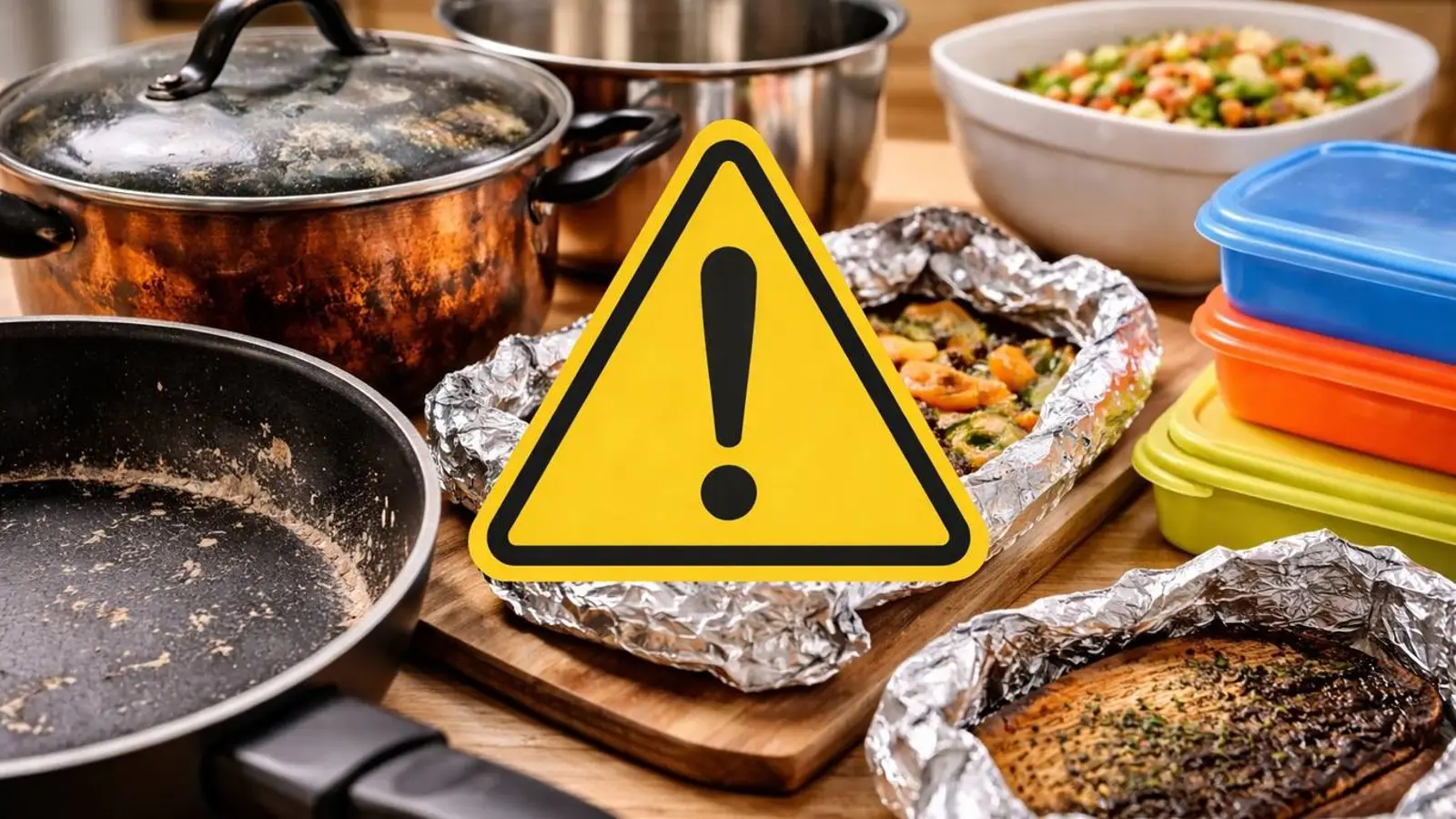
Generated by DALL·E
Conversations about healthy eating usually focus on the food itself—less sugar, more vegetables, the right fats. Yet there’s a factor we tend to overlook: even wholesome meals can turn problematic if they’re cooked or stored in the wrong containers. Some materials release substances when heated or after long use; these can build up in the body and, over time, start to affect health.
Aluminum cookware and foil
Aluminum is one of the most debated kitchen materials. When heated, it can migrate into food, especially in acidic or salty dishes. The metal is not easily eliminated from the body and can accumulate for years.
Doctors and researchers link excess aluminum to disruptions in the nervous and immune systems, as well as internal organs. If ditching foil altogether is difficult, it’s worth minimizing direct contact with food. A simple workaround is to use parchment as a barrier layer.
Teflon and nonstick coatings
Nonstick cookware is convenient but demands care. When overheated, a damaged coating can release harmful compounds. Preheating an empty pan or cooking on high heat is especially risky. Scratches and chips are a clear sign it’s time to let that pan go. Even minor damage increases the chance that unwanted substances will end up in your food. It’s also best to avoid metal utensils with this type of cookware.
Copper cookware
Copper is essential in trace amounts, but as cookware it can be problematic. Over time, copper oxidizes and its ions can leach into food. A green patina on the surface is a warning sign—such items are no longer suitable for cooking. At home, copper pots and pans are better used rarely or replaced with more neutral materials.
Silicone: not so simple
Silicone cookware is seen as modern and handy, but quality matters. Silicone labeled LFGB or FDA is considered safer, indicating the material has been tested. Very bright, highly saturated colors can hint at aggressive dyes. And silicone isn’t made for extreme heat: exceeding the recommended temperature range can lead to the release of unwanted compounds.
Melamine and plastic
Melamine dishes often look appealing and feel easy to use, but they’re not suitable for hot food. When heated, these items can release formaldehyde, a substance classified as a carcinogen. The same caution applies to plastic containers. They’re handy for storage, but it’s better not to reheat food in them or pour in piping-hot dishes. For that, glass or ceramic is the safer choice.
What counts as safer cookware
It’s impossible to skip cookware altogether, but you can choose more neutral materials:
- Stainless steel—good for everyday use, especially 18/10.
- Heat-resistant glass—convenient for baking and storage.
- Ceramics—safe without bright glazes or questionable dyes.
- Enamelware—reliable if there are no chips.
- Cast iron—durable and resilient with proper care.
Cookware isn’t just a kitchen accessory; it’s part of your daily diet. What you cook in directly shapes food quality. A careful choice of materials—and timely replacement of worn items—helps cut avoidable risks and makes meals genuinely safer.