
How to use a thermal space blanket: gold vs silver, first aid tips
Learn what a thermal space blanket is, how it works, when to use gold vs silver sides, and how to wrap a casualty. Essential hiking and emergency kit tips.
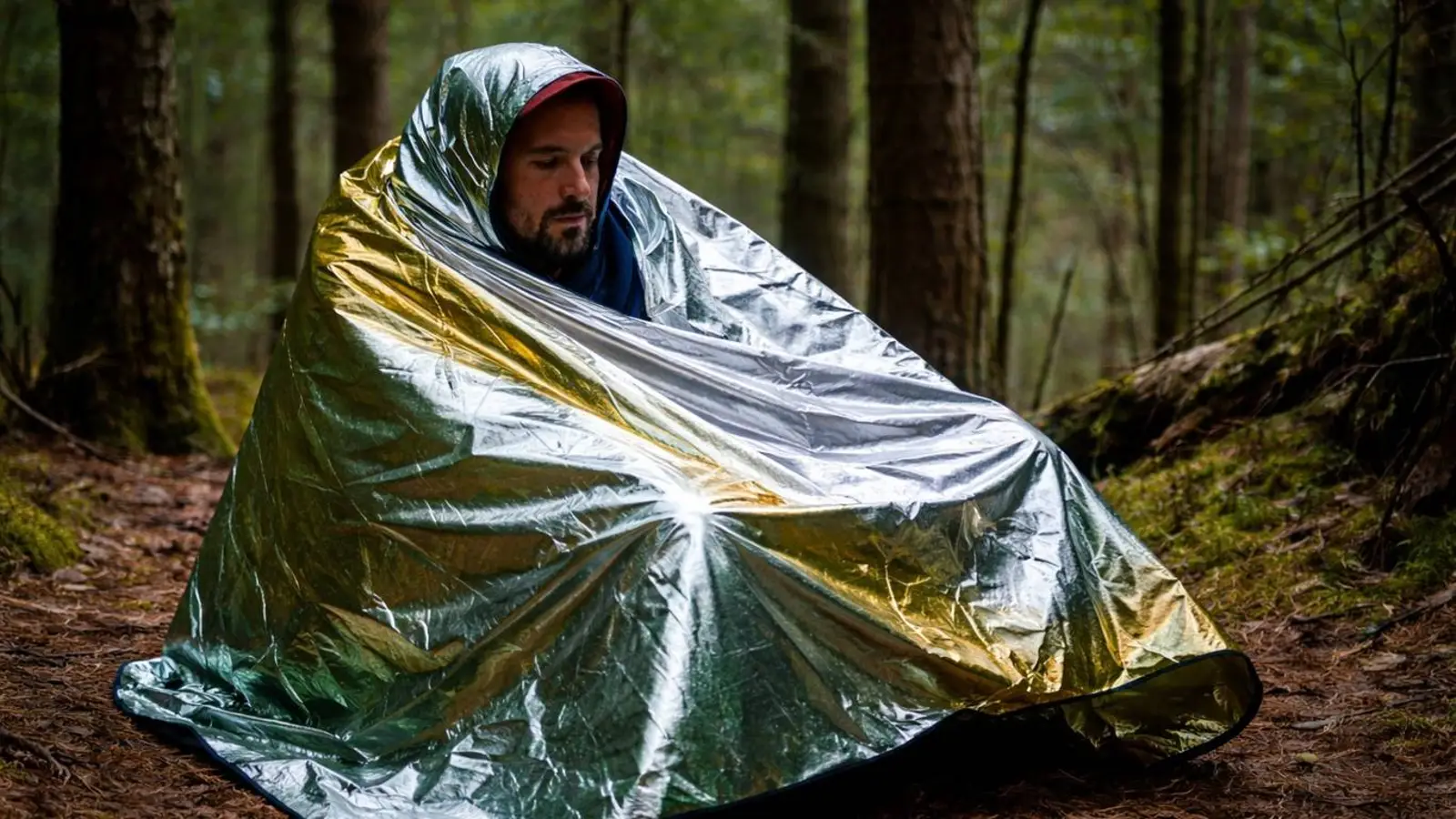
Generated by DALL·E
Experienced hikers carry all sorts of clever kit, yet one item often looks too humble to take seriously. The emergency thermal blanket—a thin, foil-like sheet—barely takes any space, but in a crunch it can prove decisive.
What a thermal blanket is
The thermal blanket, also known as a space or rescue blanket, is made of Mylar film, a synthetic material with a metallized coating engineered for extreme conditions. Folded up, it slips into a jacket pocket or first-aid pouch. It weighs around 50 grams, yet its usefulness rivals far bulkier gear.
How it really works
Its job is not to heat you. It keeps the warmth your body already produces. The film reflects thermal radiation back toward the person, slowing heat loss and reducing the risk of hypothermia. That is why it serves as first aid against cold, wind, and damp weather.
Gold and silver sides: what’s the difference
The blanket has two sides—silver and gold—and that’s a functional choice, not decoration. For protection from cold, the silver side should face the body to reflect most of the heat back. The gold side stays outside and can also absorb warmth from the sun or a campfire.
When the goal is the opposite—to prevent overheating—use it with the silver side outward to reflect sunlight.
How to wrap a casualty correctly
When using a thermal blanket, a few simple rules matter:
- cover the person completely with no gaps;
- always leave the face open to avoid obstructing breathing;
- if possible, insulate the person from cold ground or flooring by placing a backpack, mat, or clothing underneath.
These steps are especially important with signs of hypothermia or after injuries.
Beyond the cold: other uses
In harsh conditions, a thermal blanket rarely serves only one purpose. It can act as a temporary tarp against rain and wind, a sunshade, or a groundsheet. In the mountains and after traffic accidents, the film can be fashioned into improvised stretchers. Its bright reflective surface is visible from afar, so it doubles as a distress signal for rescuers.
One item tackles several jobs at once—vital when you’re far from civilization.
Why it belongs in every emergency kit
The foil blanket appears in standard kits for rescuers, hikers, and climbers for a reason. Nothing else combines such compactness with so much function. In a personal first-aid kit it takes virtually no room, and in professional sets it helps treat several casualties at once. That’s why it’s packed in car emergency kits and carried as part of a survival kit.
Can you reuse a thermal blanket
Formally—yes, with caveats. The film is very thin, and after first use it develops creases and micro-damage that reduce effectiveness. In medicine and rescue operations these blankets are considered single-use. A hiker can fold and keep a used one, but for a serious trip it’s better to have a new one.
How it helps in severe frost
In low temperatures, a thermal blanket won’t replace warm clothing or a sleeping bag. Its role is to slow heat loss and buy time. When you’re waiting for help or dealing with injuries, that margin can be the difference that prevents deep hypothermia.
Why it’s called “space”
The name is no accident. The reflective film technology was developed by NASA in the 1960s for insulating spacecraft and spacesuits. It later found plenty of uses on Earth and became a staple of emergency and hiking gear.
A thermal blanket is one of those items you rarely use but are always glad to carry. It doesn’t draw attention, takes no space, and needs no special skills. Yet at the right moment it can preserve warmth, shield from the sun, and help you hold out until help arrives.