
Exploring Haifa’s underwater archaeology and the port’s hidden past
Dive into Haifa’s marine archaeology: from shipwrecks and ancient harbors to new research and 3D mapping, discover what lies beneath the Mediterranean port.
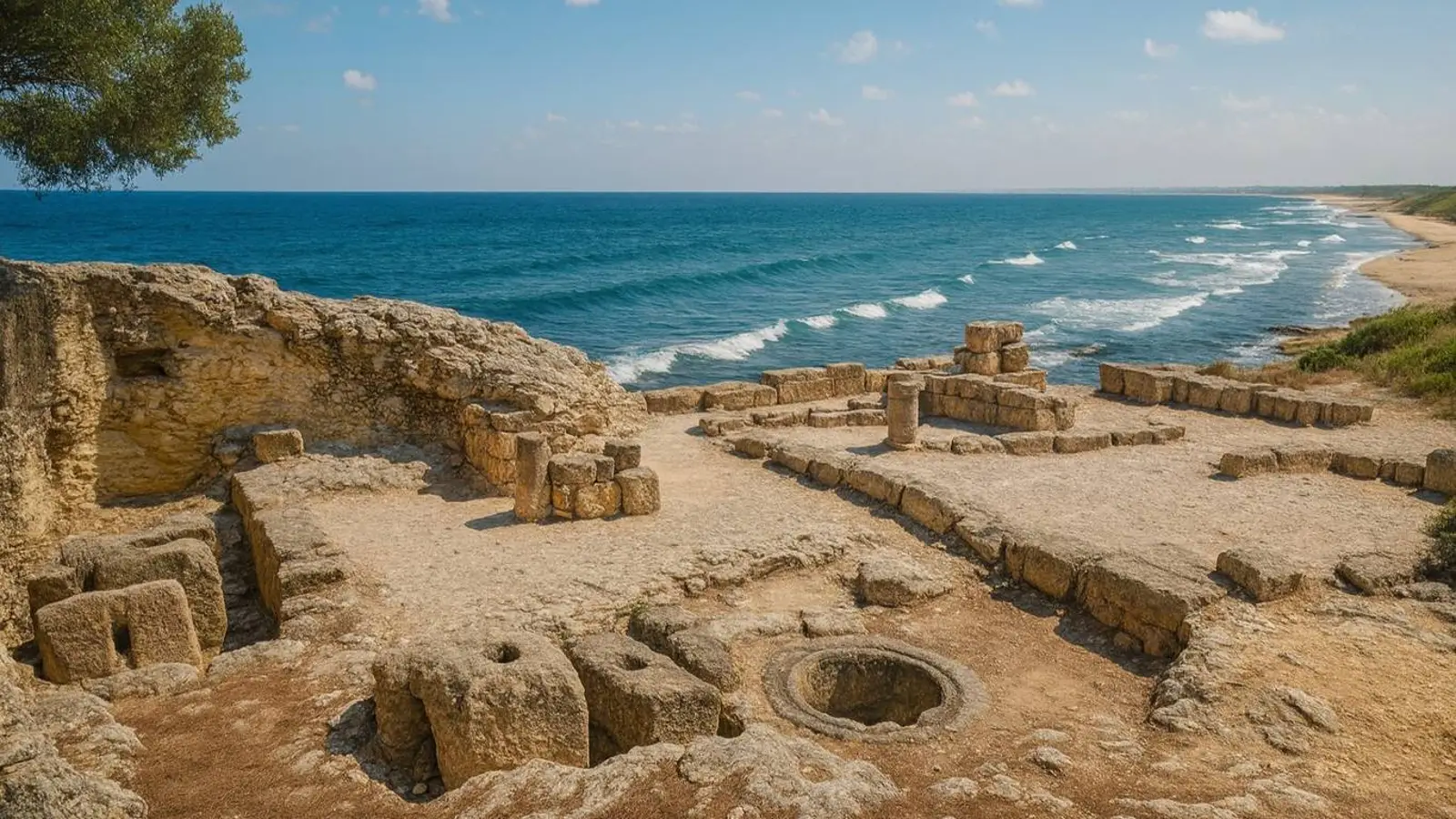
Generated by DALL·E
Haifa is known as a major Israeli city with a busy port, broad beaches, and sweeping views of the Mediterranean. Yet behind that familiar urban skyline lies a far older story—quite literally beneath the waves. Off the coast, where the sea reaches the foot of Mount Carmel, the seabed may be hiding traces of human life from many eras, stretching from the Bronze Age to the time of the Arab conquests. Researchers say these waters can speak to millennia of history, and the effort to decode them is already underway.
Why the sea off Haifa matters to researchers
For centuries, Haifa’s shoreline sat at the crossroads of maritime trade. Ships arrived from different regions, and the coast served as a key point for exchanging goods and forging contacts between peoples. Scholars believe ancient vessels may have gone down here, while remnants of harbors and coastal infrastructure could still rest under the sand.
The University of Haifa’s Institute for Maritime Studies is leading the work. Its teams operate on land and underwater, using dives, subaquatic imaging, and digital models to understand what might be lying on the seabed. In the coming years, the Port of Haifa plans to host a National Center for Marine Archaeology—a base for preserving, studying, and safeguarding artifacts raised from the sea.
Why it isn’t easy
Underwater archaeology demands more care than a standard dig. Over the centuries, the sea has reshaped the shoreline, many objects are buried beneath layers of sand, and saltwater and currents slowly erode whatever is submerged. Modern life adds another hurdle: Haifa remains a major working port, where construction and daily operations limit access and force researchers to proceed with utmost caution. The promise is clear, but so are the constraints.
What is known so far
Direct finds off Haifa’s coast are still limited. Even so, discoveries along the wider Israeli shoreline—fragments of ancient ships, anchors, and parts of harbor structures—suggest that the expectations here are well founded. It’s reasonable to assume that valuable evidence may also be waiting close to Haifa.
For now, preparation comes first: new labs are being set up, technologies refined, students trained, and computer models of potential sites developed. As conditions allow for safer work, the team intends to focus more actively on Haifa’s immediate waters.
Why it matters
The seafloor is a kind of archive. It can preserve clues to how people lived across different eras—what they traded, how their ships were built, what their ports looked like. Haifa has long played a pivotal role in the region, and the proof of that may lie just offshore, beneath a veil of water.
Such research deepens our understanding of the world we inhabit today. It resonates not only with specialists but with anyone curious about how human society evolved.
What comes next
Haifa is increasingly seen as an open-air laboratory. Research is expanding, new centers are taking shape, and modern tools—underwater mapping, 3D modeling, and digital analysis—are being put to work. The aim is to use these technologies to identify and reconstruct ancient objects with greater precision.
Researchers also stress that the results should reach the public, not remain locked in reports. Plans include making finds accessible through virtual tours, online exhibitions, and publications. Off Haifa’s coast lies a forgotten world—one that seems ready to surface.