https://boda.su/en/posts/id3491-japan-s-silent-villages-akiya-depopulation-and-what-next
Japan's silent villages: akiya, depopulation, and what next
Japan's disappearing villages: akiya, silence, and what remains
Japan's silent villages: akiya, depopulation, and what next
Explore Japan’s silent villages and akiya—abandoned houses—where depopulation erases daily life and cultural memory. Why rural Japan fades and what comes next.
2025-12-16T19:47:40+03:00
2025-12-16T19:47:40+03:00
2025-12-16T19:47:40+03:00
Neon-drenched megacities have long become Japan’s calling card. Crowded crossings, ceaseless motion, a dense urban tempo—this is how the country is most often imagined from afar. Yet beyond the big cities lies another Japan. There are villages where streets are nearly soundless, and the quiet feels less like calm than an absence of life. These places did not choose silence; it arrived as the villages themselves slowly ebbed away.People leave, villages fall quietJapan even has a term for such settlements—villages on the verge of disappearing. These are places where most residents are elderly. Young people moved to the cities long ago, families aren’t forming, and there are no children. A telling example is the village of Nanamoku in Gunma Prefecture, where more than two-thirds of the population are retirees.Each year, more homes sit empty. There’s no one to live in them and no one to maintain them. Such buildings are known as akiya—abandoned houses. As homes go vacant, the fabric of daily life frays: shops shut their doors, schools stop operating, and bus stops disappear. Everyday routines seem to switch off one by one.Not a tradition—just a consequenceThese villages are sometimes romanticized as sanctuaries where older residents carefully preserve quiet, tradition, and an unhurried pace. In truth, the hush here isn’t a conscious choice or a philosophy. It settles in because there’s simply no one left to speak or make a racket.Voices no longer carry through the streets, schoolyards stand empty, cafés don't fill with laughter. A village falls silent in step with the loss of its people.Projections suggest that by 2030 one in three homes in Japan could be left without occupants.It’s not only people who vanish—memory does tooWhen the last person leaves a house, more than daily habits disappear with them. Knowledge fades—how to tend local gardens, how to mark traditional holidays, how to cook dishes passed down through generations. With the residents goes the cultural memory of a specific place.Scientists note that the process reaches the environment as well: abandoned fields grow over, animals drift from their usual habitats, and a once-stable natural balance is disturbed.What comes next?These quiet villages shouldn’t be seen as a new cultural model or a lifestyle experiment. They are the aftermath of depopulation in places that not so long ago were full of life. At the same time, interest in such areas is slowly growing. Some come to witness what remains, others toy with the idea of buying an abandoned house, and some simply want to experience that unfamiliar, uneasy silence—an attraction that carries a hint of mourning.
Japan, silent villages, akiya, abandoned houses, depopulation, rural Japan, disappearing villages, aging population, cultural memory, empty homes, Nanamoku, Gunma Prefecture
2025
articles
Japan's disappearing villages: akiya, silence, and what remains
Explore Japan’s silent villages and akiya—abandoned houses—where depopulation erases daily life and cultural memory. Why rural Japan fades and what comes next.
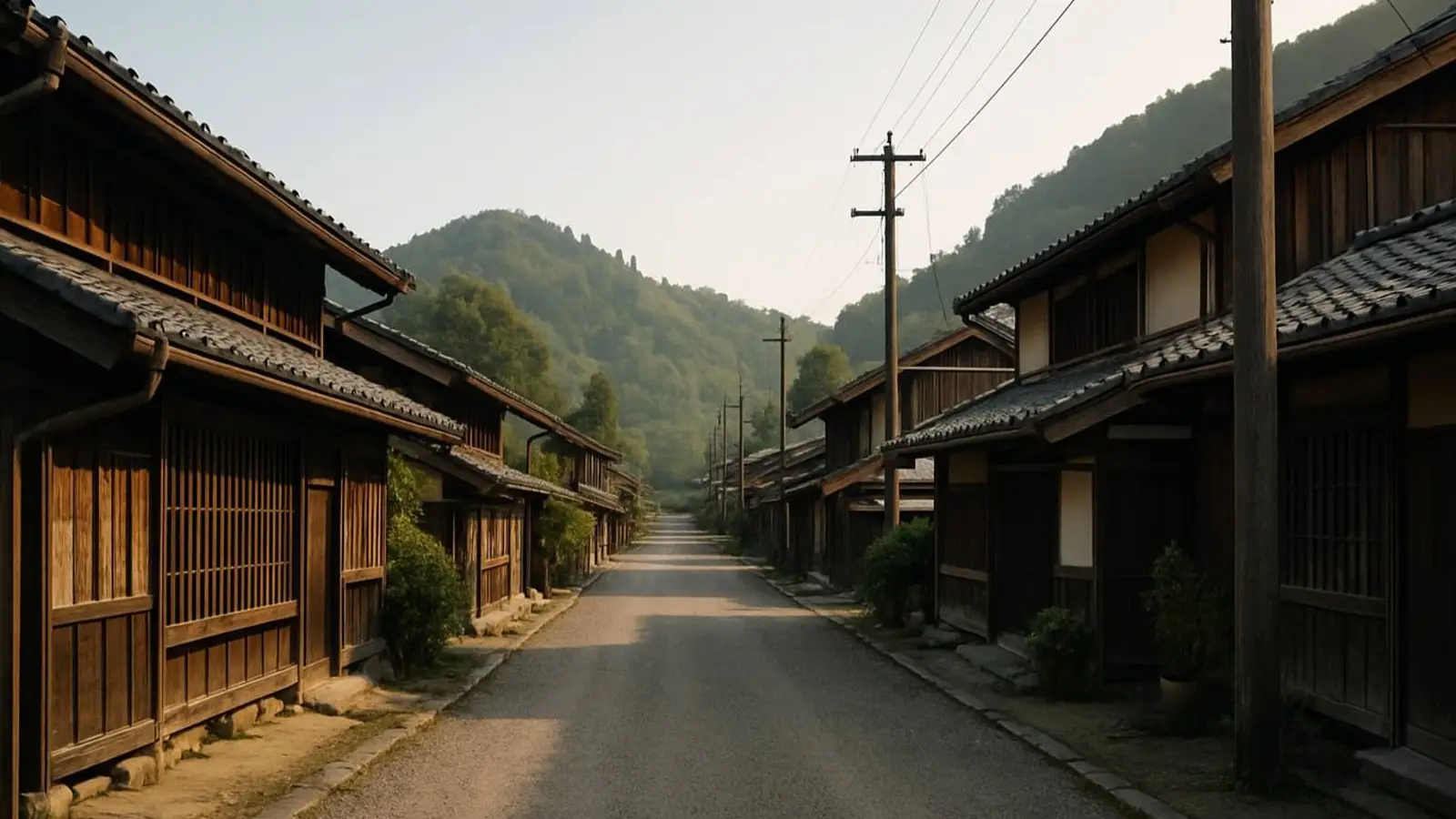
Generated by DALL·E
Neon-drenched megacities have long become Japan’s calling card. Crowded crossings, ceaseless motion, a dense urban tempo—this is how the country is most often imagined from afar. Yet beyond the big cities lies another Japan. There are villages where streets are nearly soundless, and the quiet feels less like calm than an absence of life. These places did not choose silence; it arrived as the villages themselves slowly ebbed away.
People leave, villages fall quiet
Japan even has a term for such settlements—villages on the verge of disappearing. These are places where most residents are elderly. Young people moved to the cities long ago, families aren’t forming, and there are no children. A telling example is the village of Nanamoku in Gunma Prefecture, where more than two-thirds of the population are retirees.
Each year, more homes sit empty. There’s no one to live in them and no one to maintain them. Such buildings are known as akiya—abandoned houses. As homes go vacant, the fabric of daily life frays: shops shut their doors, schools stop operating, and bus stops disappear. Everyday routines seem to switch off one by one.
Not a tradition—just a consequence
These villages are sometimes romanticized as sanctuaries where older residents carefully preserve quiet, tradition, and an unhurried pace. In truth, the hush here isn’t a conscious choice or a philosophy. It settles in because there’s simply no one left to speak or make a racket.
Voices no longer carry through the streets, schoolyards stand empty, cafés don't fill with laughter. A village falls silent in step with the loss of its people.
Projections suggest that by 2030 one in three homes in Japan could be left without occupants.
It’s not only people who vanish—memory does too
When the last person leaves a house, more than daily habits disappear with them. Knowledge fades—how to tend local gardens, how to mark traditional holidays, how to cook dishes passed down through generations. With the residents goes the cultural memory of a specific place.
Scientists note that the process reaches the environment as well: abandoned fields grow over, animals drift from their usual habitats, and a once-stable natural balance is disturbed.
What comes next?
These quiet villages shouldn’t be seen as a new cultural model or a lifestyle experiment. They are the aftermath of depopulation in places that not so long ago were full of life. At the same time, interest in such areas is slowly growing. Some come to witness what remains, others toy with the idea of buying an abandoned house, and some simply want to experience that unfamiliar, uneasy silence—an attraction that carries a hint of mourning.