
Why the Southern Ocean is our planet’s newly recognized fifth ocean
Why the Southern Ocean became the fifth ocean in 2021, how the Antarctic Circumpolar Current at 60° south shapes climate, and why this boundary finally matters.
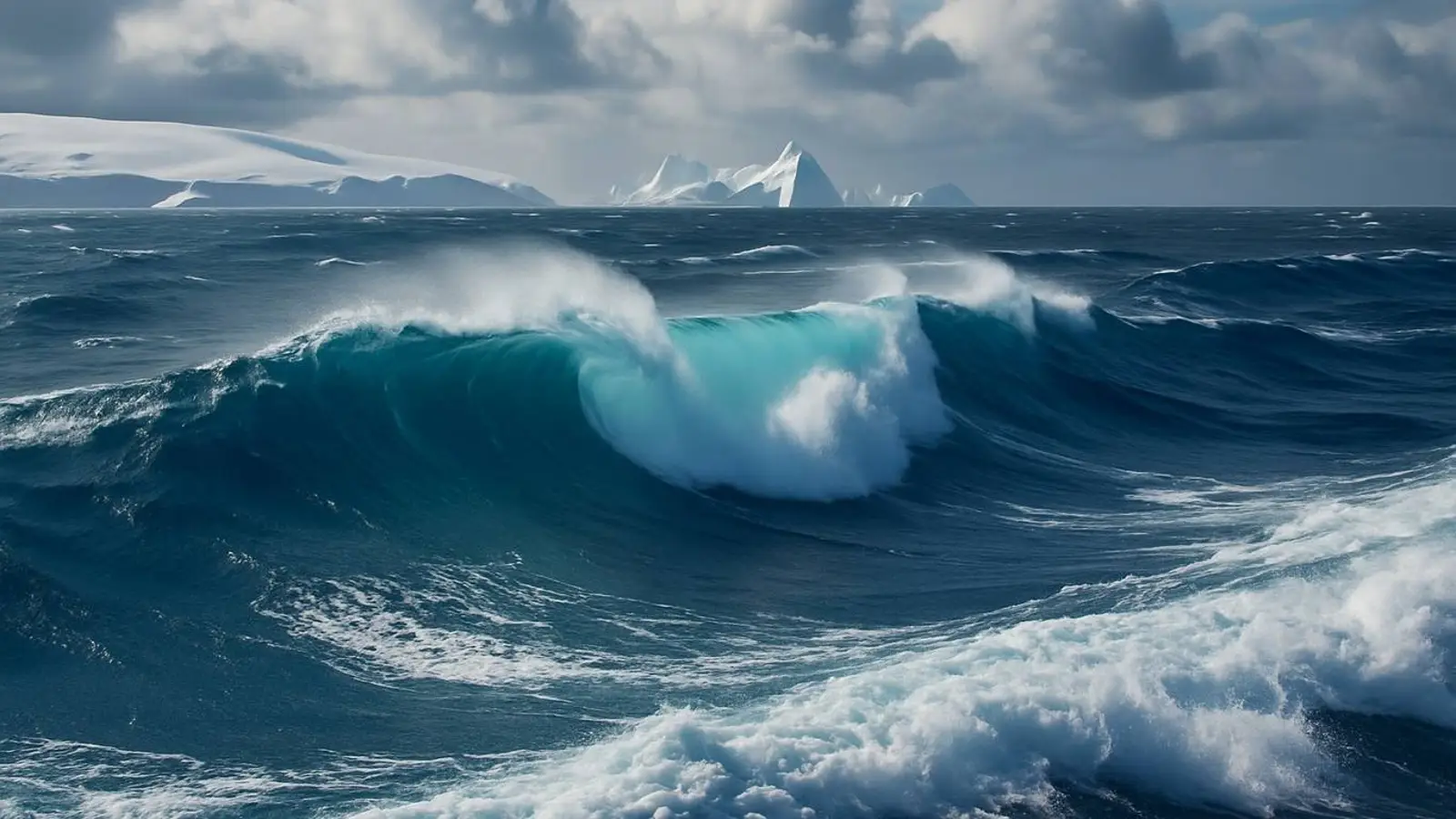
Generated by DALL·E
From school days, the idea seemed hammered in: our planet has four oceans. Then, in 2021, the familiar map shifted—humanity officially recognized a fifth. No new continent rose from the deep and no expedition unearthed forgotten charts. We simply acknowledged what nature had been showing for centuries: the waters encircling Antarctica aren’t just the fringes of the Pacific, Atlantic, or Indian, but a force of their own. The change felt less like bureaucracy and more like belated recognition.
The Southern Ocean has always been there. Its energy, its ferocity, and its isolation have long made sailors feel as if they were slipping across a border into another world.
A world without shores
To see the logic behind the science, picture the stretch between the 40th and 60th parallels south—where old charts were annotated with a shaky hand. This is where the Roaring Forties and the Furious Fifties begin.
Those poetic names didn’t appear by chance. In the age of sail, the route to India or China led past the Cape of Good Hope, and the southern latitudes spared no one. With no continents to slow it, the wind gathers terrifying speed, stacking waves into multi-story walls. Ships could be slingshot across the ocean on a howling conveyor of air—unless a storm tore them apart first.
South of the 50th parallel, nature grew harsher still. Temperatures dropped, icebergs emerged from the fog, and tales of the Flying Dutchman unsettled even the boldest captains.
Early hints: an ocean hiding in plain sight
For a long time, it was simpler to pretend there was no special zone around Antarctica. Yes, the storms were worse. Yes, the water was colder. But why carve out a separate ocean? Even so, scientists kept returning to the question. In 1937, the International Hydrographic Organization drew a provisional Southern Ocean boundary at 60° south. By 1953, the decision was rescinded—agreement on exact borders proved elusive. The issue seemed destined for the archives.
So why an ocean after all? The answer is in how the water moves
The key wasn’t the coastline but the behavior of the water itself. The Southern Ocean’s defining engine is the Antarctic Circumpolar Current, a vast band of flow that wraps around the planet from west to east. It’s the only current on Earth that never meets land, moving without interruption and transporting volumes far beyond all the world’s rivers combined.
In effect, it’s a natural hydraulic wall. It blocks warmer mid-latitude waters from reaching Antarctica, helping to hold the ice sheet in place—an essential piece of Earth’s climate system. Its northern edge lines up closely with that 60th parallel. In other words, the ocean’s boundary isn’t an arbitrary cartographic compromise but a physical threshold.
When official science caught up with reality
For years, oceanographers urged formal recognition of the Southern Ocean. The decisive move came from the National Geographic Society—the organization whose maps shape what schoolchildren learn worldwide—when it chose clarity over hesitation.
On June 8, 2021, World Oceans Day, the society announced that:
- The Southern Ocean is the planet’s fifth ocean.
- Its boundary is officially set at 60° south latitude.
From that moment, school maps were updated, textbooks rewritten, and the long-running argument about how many oceans we have was laid to rest.
Where maps end and the elements begin
The Southern Ocean remains one of Earth’s most unforgiving places. It shapes climate, steers global currents, and its icy waters help keep Antarctica in the state that allows our planet to stay in balance. This isn’t the southern tail of other oceans. It’s a distinct realm of wind, ice, and colossal waves—once a trial for sailors, now a cornerstone of the climate. The Southern Ocean has always been there. We’ve simply learned to see it.