
Steam mop or wet vacuum: how to choose for your home
Compare a steam mop and a wet vacuum to pick the best fit for your floors. Pros, cons, hybrids, and buying tips for homes with carpets, pets, or allergies.
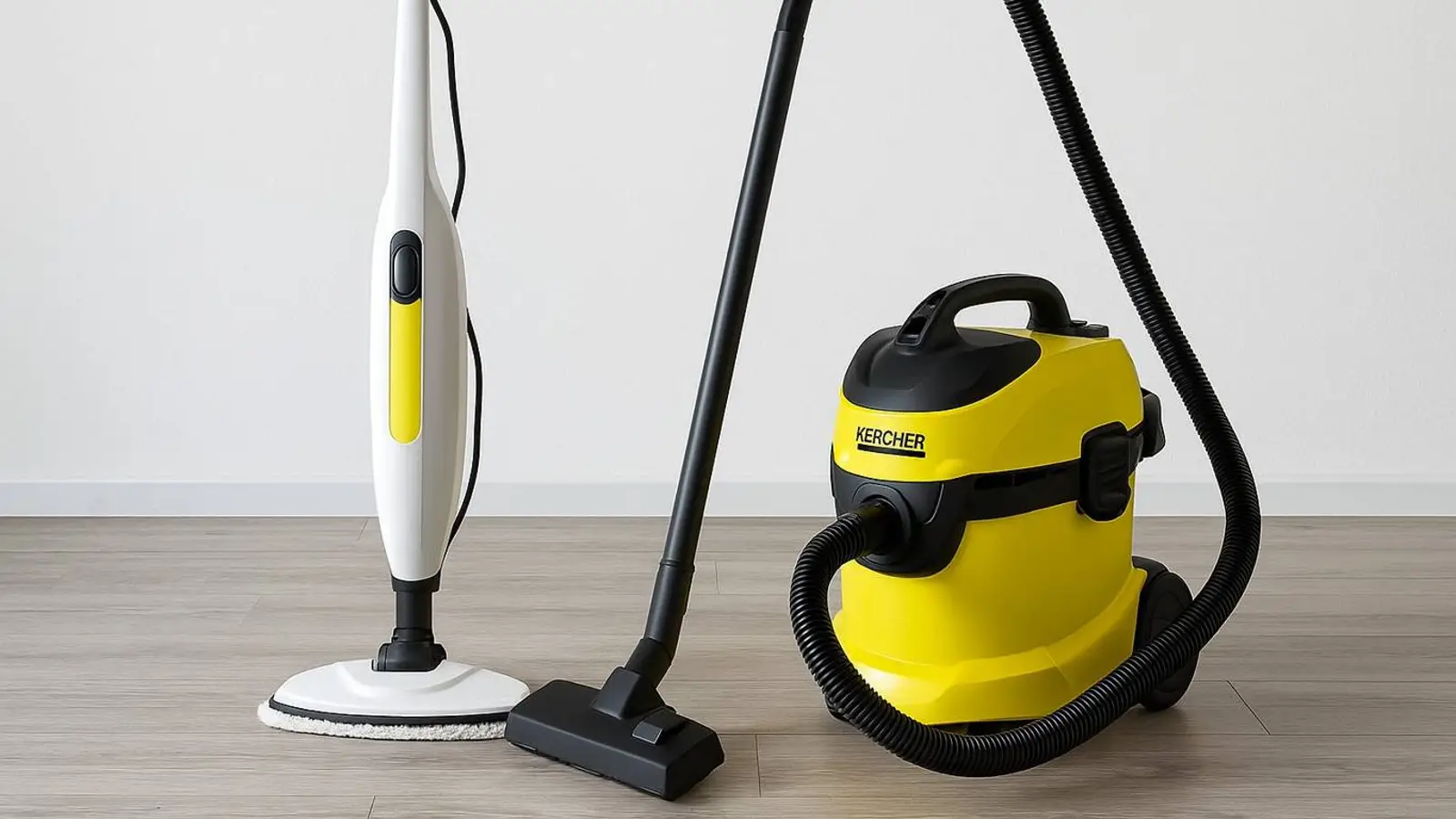
Generated by DALL·E
Cleaning tech: why the choice has become harder
Demand for convenient wet-cleaning gadgets grows every year. Makers keep rolling out devices that promise to replace the mop, the bucket, and even a couple of household chemicals. That abundance, however, turns the decision into a puzzle: which proves more reliable and practical — a steam mop or a wet vacuum?
Both handle damp cleaning, yet they work in fundamentally different ways. And it’s in those differences that you find which one fits a specific home.
How steam mops and wet vacuums work
Their operating principles diverge noticeably.
Steam mop
Water in the tank heats up, turns into steam, and flows to the steam head. A microfiber pad collects the loosened grime. No cleaning agents are required, which matters for families with allergies and small children.
A steam mop suits tile, linoleum, stone, concrete, and vinyl. Some models can also refresh textiles — from chair upholstery to mattresses.
Wet vacuum
It sprays a solution of water and detergent and then sucks it back in. That way it removes dirt, dust, and fine particles, leaving the floor almost dry. The device copes with carpets, upholstered furniture, and delicate surfaces where steam is best avoided.
Pros and cons of a steam mop
A steam mop is handy when you need to quickly tidy a kitchen or bathroom without chemicals. High temperature helps lift old stains and grease, and the light weight makes it easier to clean walls and floors. In day-to-day use, it’s the speed that stands out — as long as your surfaces are up for it.
Advantages
- ideal for quick cleaning on hard surfaces;
- no detergents needed;
- helps tackle grease and buildup;
- lightweight and maneuverable;
- some models handle textiles.
Disadvantages
- not suitable for parquet, laminate, or engineered wood;
- does not pick up debris — a separate vacuum is needed;
- small tanks require frequent refills;
- to kill bacteria, steam must be held on a spot for several minutes — which is hard to do at home;
- there’s a risk of damaging surfaces with prolonged exposure.
Steam mops shine for spot jobs, but they won’t replace a full-fledged vacuum.
Pros and cons of a wet vacuum
A wet vacuum combines water application with strong suction, turning cleanup into a more complete process. It cleans surfaces, pulls grime from carpets, and even freshens the air in models with a water filter. In practice, it feels like the more versatile route in mixed-surface homes.
Advantages
- suitable for most flooring, including laminate;
- handles carpets and textiles;
- can work without chemicals if it heats the water;
- vacuums up liquid and leaves floors almost dry;
- traps allergens in its filtration system.
Disadvantages
- heavier and bulkier than a steam mop;
- requires cleaning after every use;
- some models are notably more expensive;
- upright hybrids cost a lot yet trail floor units in wash performance.
A wet vacuum suits regular upkeep in homes with carpets, pet hair, and a mix of surfaces.
Hybrids: can you get “two in one”
The market offers solutions that combine steam and suction. They come in two types:
- wet vacuums with steam, where steam is applied before spraying water;
- steam mops with a turbine that pick up dry debris before wet cleaning.
Hybrids speed up and strengthen cleaning, but they cost more and can be heavier than standard models. On paper they look like a perfect compromise; in reality, the extra weight and price are what you feel first.
What to choose
Pick a steam mop if:
- there’s no laminate or parquet in the apartment;
- you need fast cleaning on smooth, hard surfaces;
- avoiding chemicals is important;
- you want a lightweight device.
Choose a wet vacuum if:
- there are carpets and pets at home;
- you need to clean large areas regularly;
- deep removal of dust and allergens matters;
- you want one solution for different surfaces.
A hybrid fits if:
- you want to combine both approaches;
- you’re fine with extra weight and price;
- you’re planning regular deep cleaning.
What to consider before buying
A steam mop is a quick helper for kitchens and bathrooms, while a wet vacuum is a full-scale tool for thorough cleanups. Hybrids blend the convenience of both but demand a bigger budget.
The key is to decide in advance which tasks the device must handle and how often you’ll use it — in most homes, the flooring and routine quietly make the choice for you.