
Peru and Bolivia shamanic rituals: why music heals, not noise
Explore shamanic rituals in Peru and Bolivia: from ayahuasca icaros to San Pedro songs, learn why healing relies on calming music, not noise or cacophony.
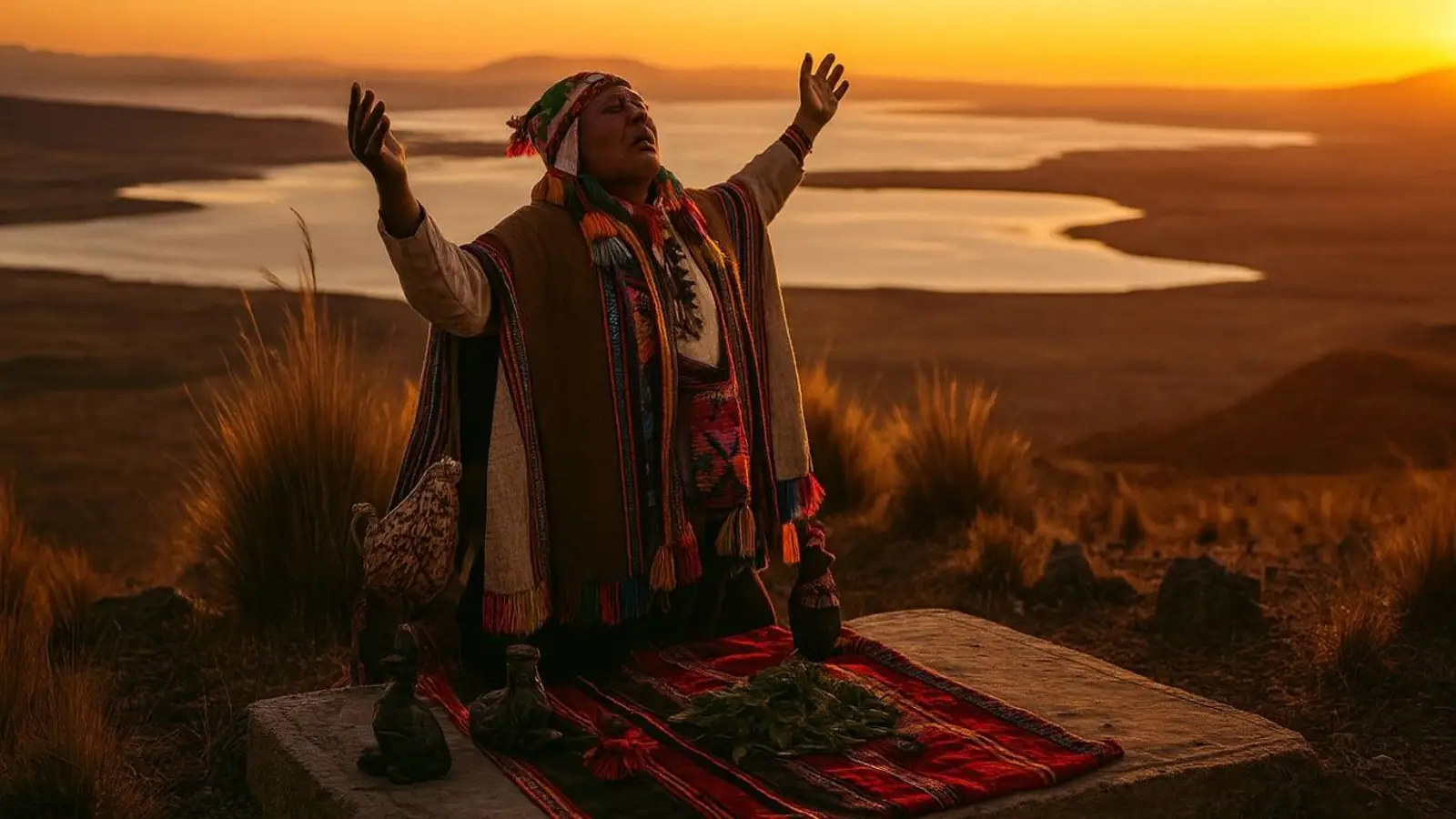
Generated by DALL·E
Interest in unconventional self-care is on the rise: some turn to meditation, others to breathwork, and still others to ancient rituals. Against this backdrop, Peru and Bolivia have long stood out as places where shamanic traditions and plant-based ceremonies endure. That naturally raises a question: do these countries host rituals where healing relies on noise—on sharp, chaotic sound?
Music is part of the rituals. But it isn’t noisy
In Bolivia, the Kallawaya people practice their own forms of healing that weave together herbal medicine, breathing techniques, touch, and music. UNESCO recognizes these traditions as intangible cultural heritage. Music is indeed part of the rite, yet it leans on calm, repetitive rhythms meant to relax and focus rather than create sonic tension.
In Peru’s ayahuasca ceremonies, shamans perform special songs known as icaros. These melodies are thought to help participants go deeper, feel supported, and steer the inner process. In practice, it is melodic, intentional singing—far from anything resembling sonic chaos.
Similar principles guide ceremonies with the San Pedro cactus. Songs and traditional instruments—drums, flutes—are also used. The rituals unfold outdoors, with the aim of restoring inner balance and harmony with the surrounding world.
What about cacophony?
One could imagine that somewhere in remote areas there are practices built on noise. After all, other countries experiment with so‑called noise therapy that uses gongs, vibrations, and even harsh industrial sounds. However, in Peru and Bolivia such rites have not been documented.
Reviews of ceremony offerings, academic publications, and cultural materials from these countries turn up no mention of healing through cacophony. On the contrary, the emphasis is consistent: sound in a ritual should soothe and guide rather than frighten or throw a person off balance. The pattern is telling—and remarkably steady.
There is a study of a group that practices collective music and movement as a way to attune to the vibrations of nature. Even there, the focus is on coordination and harmony, not on a disorderly rush of sound.
Why it matters
In Peru and Bolivia, music inside a rite is not an accessory—it carries meaning. Through song, people believe energy is transmitted, a connection with nature’s spirits is established, and a sense of calm is reached. Anything that breaks this state, including sharp noise and cacophony, simply doesn’t fit the traditional logic of healing.
Noise used as a therapeutic tool seems more at home in urban or Western contexts. In the Andes, the emphasis remains on quiet, the natural environment, and the human voice.
Could that be changing?
It can’t be ruled out that new ritual forms will appear over time. People travel, share experiences, and test practices drawn from different cultures. Perhaps someone is already exploring sound in a different way, but there is no confirmed evidence yet. As of today, there are no reports of rituals using cacophony in Peru or Bolivia.