https://boda.su/en/posts/id3311-disappearing-islands-from-atlantis-myth-to-real-losses
Disappearing islands: from Atlantis myth to real losses
Why islands vanish: myths, map errors, and climate reality
Disappearing islands: from Atlantis myth to real losses
Explore disappearing islands beyond Atlantis: a Caspian mud-volcano islet, Sandy Island’s map ghost, and real losses from storms, erosion, and rising seas.
2025-12-14T12:05:20+03:00
2025-12-14T12:05:20+03:00
2025-12-14T12:05:20+03:00
Atlantis has long stood as a symbol of a mysterious lost civilization, gone in what feels like a single blink. It’s a graceful legend, but the more surprising truth is that, today, islands really do disappear—in geography, not mythology. What’s happening is far more intricate than any tale of a world collapsing overnight.A phantom in the Caspian SeaIn early 2023, a tiny island suddenly rose in the Caspian Sea. No one planned its arrival: it formed after the eruption of the Kumani Bank mud volcano and was spotted by NASA satellites. Its life was brief. By late 2024, the sea had slowly erased the fresh surface, leaving only a trace in the records. A fleeting episode, yet a sharp reminder of how fragile new land can be the moment it breaks the waterline.Map errors: islands that never existedSometimes the disappearance happens only on paper. Sandy Island, long drawn between Australia and New Caledonia, stayed on charts for decades until researchers confirmed there was only open water. It was later removed from official datasets. Bermeja in the Gulf of Mexico followed a similar path. Mentioned since the 16th century, it has not been confirmed by modern surveys. Whether it once stood or was merely a cartographic mistake remains an unanswered question.When an island truly disappearsAt other times, the loss is painfully real. In 2018, a hurricane wrecked East Island near Hawaii. The change wasn’t instantaneous, but it was irreversible: most of the land went under, with no way to restore it. Cases like this are appearing more often. Storms, erosion, and rising seas batter small stretches of land and redraw familiar regions. Some islands that once supported residents are no longer suitable for living—and that’s not a mapping error, but a hard fact.The myth endures, just in a different formThe image of Atlantis still fires the imagination, yet today’s reality is more down-to-earth. Modern islands don’t vanish in a heartbeat or take ancient cities with them, but their slow surrender to the sea is difficult to dispute. This shift now demands attention not from mythmakers, but from geologists, climatologists, and everyone watching the pace of natural change.Will there be a new Atlantis?Possibly—but not as legend. More likely, it would be an ordinary island in the Pacific or Indian Ocean that one day ceases to exist. Warnings increasingly point to real risks for nations and communities on low-lying coasts. We’re looking less at tales of the past and more at evidence from the present, and the question becomes uncomfortably direct: which shoreline will slip away next?
disappearing islands, Atlantis myth, Caspian Sea island, mud volcano, Sandy Island, Bermeja, East Island Hawaii, sea level rise, erosion, storms, hurricanes, cartographic error, phantom islands
2025
articles
Why islands vanish: myths, map errors, and climate reality
Explore disappearing islands beyond Atlantis: a Caspian mud-volcano islet, Sandy Island’s map ghost, and real losses from storms, erosion, and rising seas.
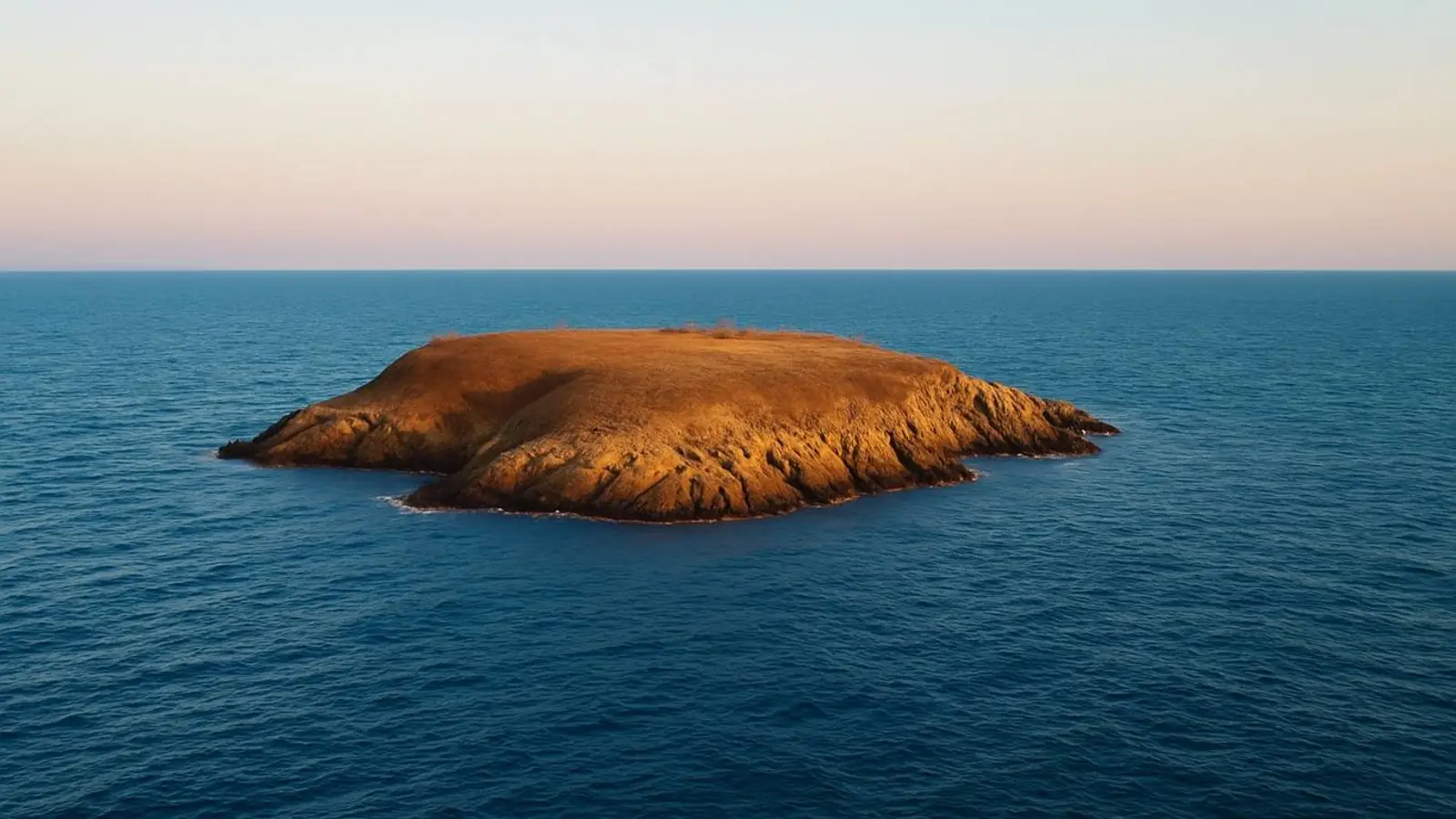
Generated by DALL·E
Atlantis has long stood as a symbol of a mysterious lost civilization, gone in what feels like a single blink. It’s a graceful legend, but the more surprising truth is that, today, islands really do disappear—in geography, not mythology. What’s happening is far more intricate than any tale of a world collapsing overnight.
A phantom in the Caspian Sea
In early 2023, a tiny island suddenly rose in the Caspian Sea. No one planned its arrival: it formed after the eruption of the Kumani Bank mud volcano and was spotted by NASA satellites. Its life was brief. By late 2024, the sea had slowly erased the fresh surface, leaving only a trace in the records. A fleeting episode, yet a sharp reminder of how fragile new land can be the moment it breaks the waterline.
Map errors: islands that never existed
Sometimes the disappearance happens only on paper. Sandy Island, long drawn between Australia and New Caledonia, stayed on charts for decades until researchers confirmed there was only open water. It was later removed from official datasets. Bermeja in the Gulf of Mexico followed a similar path. Mentioned since the 16th century, it has not been confirmed by modern surveys. Whether it once stood or was merely a cartographic mistake remains an unanswered question.
When an island truly disappears
At other times, the loss is painfully real. In 2018, a hurricane wrecked East Island near Hawaii. The change wasn’t instantaneous, but it was irreversible: most of the land went under, with no way to restore it. Cases like this are appearing more often. Storms, erosion, and rising seas batter small stretches of land and redraw familiar regions. Some islands that once supported residents are no longer suitable for living—and that’s not a mapping error, but a hard fact.
The myth endures, just in a different form
The image of Atlantis still fires the imagination, yet today’s reality is more down-to-earth. Modern islands don’t vanish in a heartbeat or take ancient cities with them, but their slow surrender to the sea is difficult to dispute. This shift now demands attention not from mythmakers, but from geologists, climatologists, and everyone watching the pace of natural change.
Will there be a new Atlantis?
Possibly—but not as legend. More likely, it would be an ordinary island in the Pacific or Indian Ocean that one day ceases to exist. Warnings increasingly point to real risks for nations and communities on low-lying coasts. We’re looking less at tales of the past and more at evidence from the present, and the question becomes uncomfortably direct: which shoreline will slip away next?