
How to charge a cordless vacuum battery the right way
Learn how to charge a cordless vacuum battery right: when to plug in, safe temperatures, storage levels, and how original chargers protect lifespan longer.
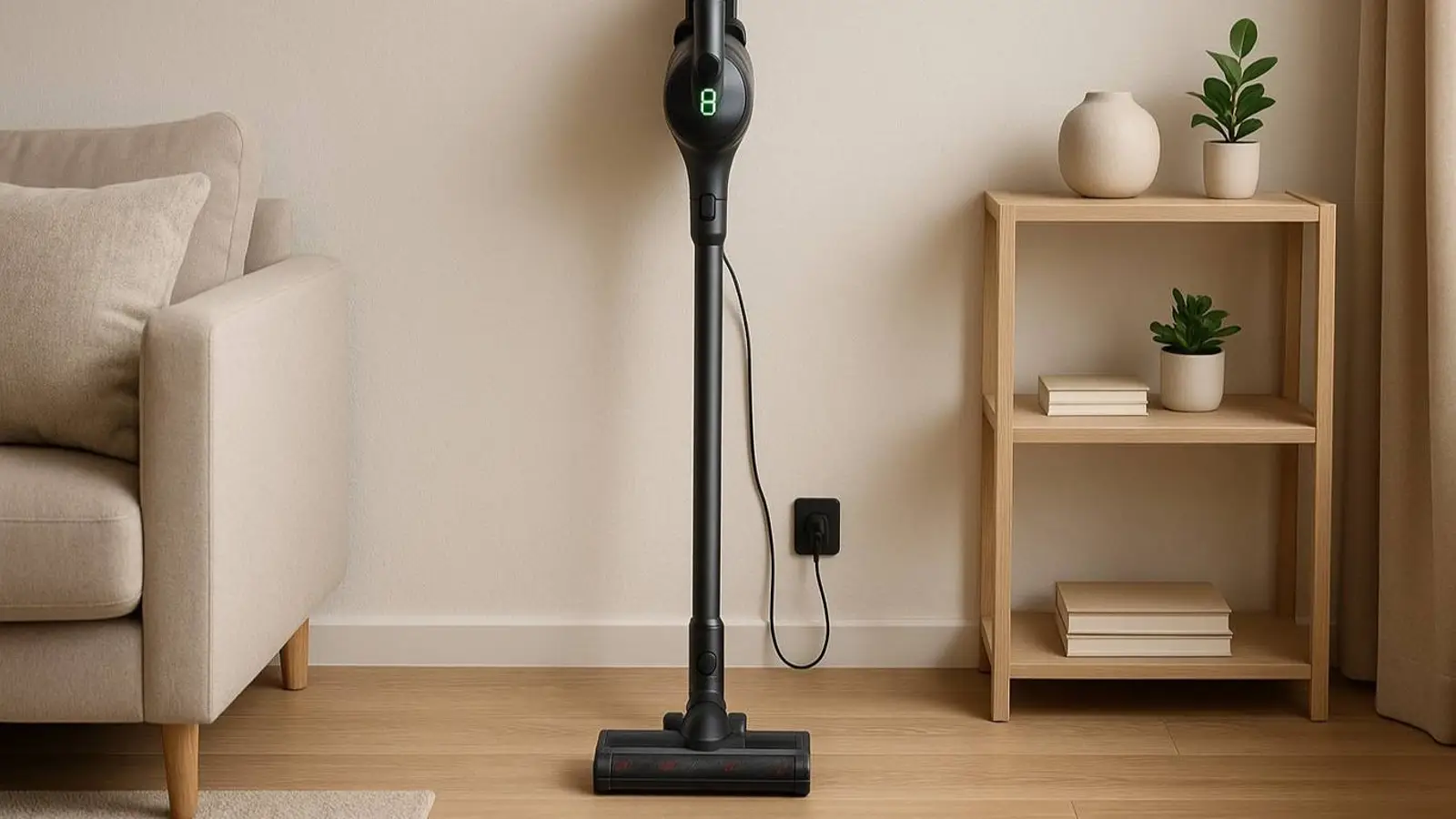
Generated by DALL·E
Cordless vacuums have become everyday staples: they’re convenient, simple to use, and make tidying up quick. To keep them running longer, though, the battery needs thoughtful charging. Guidance online is plentiful—from manufacturers, service centers, and niche publications. The boda editorial team distilled the tips that come up most often.
When to start charging
Most sources advise against letting the battery hit zero. Lithium‑ion cells don’t like deep discharge, so it’s best to put the vacuum on charge when the level drops to roughly 20–30%. That window is gentler on the pack and helps avoid premature wear.
Many publications also mention what’s known as the 20–80 rule: in daily use, try to keep the charge within those bounds. Some manufacturers suggest letting the battery fully discharge about once a month—this advice appears in materials that reference Dyson. In practice, recommendations vary by model, so it’s worth following your vacuum’s manual.
Should you wait for the vacuum to cool down
Experts note that the battery heats up significantly in turbo mode, which is why they don’t recommend charging immediately after cleaning. Different sources suggest waiting 15–30 minutes so the device can cool. A brief pause eases the load on the battery and reduces the risk of overheating.
Temperature and where to charge
Manufacturers and service articles emphasize suitable conditions. Avoid charging in freezing weather or very hot rooms. Several publications call 10 to 25 degrees Celsius an optimal range. It’s also wise to steer clear of radiators, stovetops, and direct sunlight.
Keep the air dry as well—high humidity is bad for both the electronics and the battery.
Can you leave the vacuum on its dock all the time
Modern batteries have overcharge protection, yet many articles point out that staying on the dock after hitting 100% can trigger small top‑up cycles. According to experts, those can speed up battery aging.
That’s why you’ll often see advice to take the vacuum off the dock once it’s fully charged, if you’re not about to use it. Some brands do allow permanent storage on the station, but even then, unplugging is described as a healthy habit.
How to charge if the vacuum is used rarely
If you clean infrequently or plan to be away for a while, it’s better to leave the battery around half full. Most sources suggest 40–60%. Store the device in a dry room at a stable, room temperature.
Long‑term storage at 0% or 100% is generally considered harmful.
Care that affects charge
Some recommendations concern the condition of the vacuum rather than charging itself. Authors stress that clogged filters, an overfilled dustbin, or hair wrapped around the brush make the motor work harder—so the battery drains faster.
Regularly emptying the bin and cleaning the filters and brush lightens the motor’s load and helps the battery discharge more evenly.
Only original chargers
Manuals and articles consistently repeat the same warning: use chargers that are made for your exact model. Units with the wrong voltage can cause overheating and damage the battery.
If the vacuum has a removable battery
Models with removable packs are practical—you can buy a second battery if needed. Some publications suggest swapping the batteries from time to time so both go through charge–discharge cycles instead of leaving one idling at full charge.
The same storage rules apply: roughly half a charge and a steady temperature.
Editorial note
Advice on charging cordless vacuums largely converges, though different sources emphasize different points. The sensible baseline is to avoid full depletion, watch the heat, and not keep the battery parked at 100%; beyond that, lean on your model’s manual for specifics.