https://boda.su/en/posts/id3241-home-electrical-safety-checklist-outlets-panel-rcds
Home electrical safety checklist: outlets, panel, RCDs
Room-by-room home electrical safety inspection guide
Home electrical safety checklist: outlets, panel, RCDs
Room-by-room home electrical safety checklist: outlets, switches, lighting, wiring, load and panel. See when to add RCD protection and call an electrician.
2025-12-13T22:24:31+03:00
2025-12-13T22:24:31+03:00
2025-12-13T22:24:31+03:00
Take a systematic walk through your home and give the electrics a calm, careful once-over. Room by room, start with the essentials below.Outlets: are they safe?Check every outlet in turn and watch for the following.A loose faceplate or housing — a sign of damaged mounting or weakened contacts.A plug that wobbles or slips out — poor contact; the outlet should be replaced.A warm surface after use — a risk of overheating.Sparks when you plug in — call an electrician immediately.Soot marks or yellowed plastic — indicators of aged wiring.Additionally:Do not daisy-chain extension cords or power strips.In bathrooms and kitchens, look for moisture protection rated IP44–IP55.Switches: do they work consistently?Test every switch in the home. Warning signs include:The rocker sticks or needs excessive force.Crackling sounds from inside the housing.Light flickers during a normal press.These symptoms point to poor contact or a worn internal mechanism.Electrical panel: the heart of the homeOpen the panel cover and make sure everything looks in order. Check for:Clearly labeled breakers (lighting, kitchen, air conditioner, water heater, etc.).No odor of melted plastic.No noticeable heating on a breaker’s body.An RCD or RCBO protecting wet zones (bathroom, kitchen).If there is no RCD, it’s the first upgrade to consider for safety.Lighting fixtures: match the wattageFor each fixture, check the marking inside.Important:If it says "MAX 60W," do not install a 75W or 100W bulb.With LED lamps, make sure the driver isn’t overheating.E27 and E14 sockets should show no soot or cracks.Wiring: condition and ageNo need to open walls — a surface-level assessment is enough.Signs of outdated wiring:Aluminum conductors (common in buildings from the 1960s–1980s).No grounding (outlets with only two holes).Breakers often trip when appliances are switched on.Lights dim when a powerful device is running.If two or more signs show up, consult a professional.Household load: how safe is it?Make a simple list:RefrigeratorWashing machineWater heaterAir conditionerKettle / microwave / ironSpace heaterElectric stoveIf several high-draw appliances share one circuit, the breaker will be under constant strain.Home electrical safety red flagsIf any of the following are present, a check is needed:An outlet gets hot.A burning smell is noticeable.Sparking anywhere.Lights flicker for no clear reason.Extension cords are chained together.Appliances shut off on their own or brightness jumps.The washing machine tingles when touched with a damp hand (current leakage).What every home should haveRCD or RCBOFire extinguisher (CO₂ or powder)Working extension cords or power strips with overload protectionSpare breakers (for the panel)A list of emergency phone numbersBottom line: when do you need an electrician?Call a professional if:a breaker trips regularly;outlets or switches heat up;a burning smell appears even once;appliances frequently shut off without a clear reason;the home is 25–30 years old and the wiring has never been replaced.
home electrical safety checklist, outlets, switches, electrical panel, RCD, RCBO, wiring inspection, lighting wattage, grounding, circuit breakers, household load, extension cords, overheating
2025
articles
Room-by-room home electrical safety inspection guide
Room-by-room home electrical safety checklist: outlets, switches, lighting, wiring, load and panel. See when to add RCD protection and call an electrician.
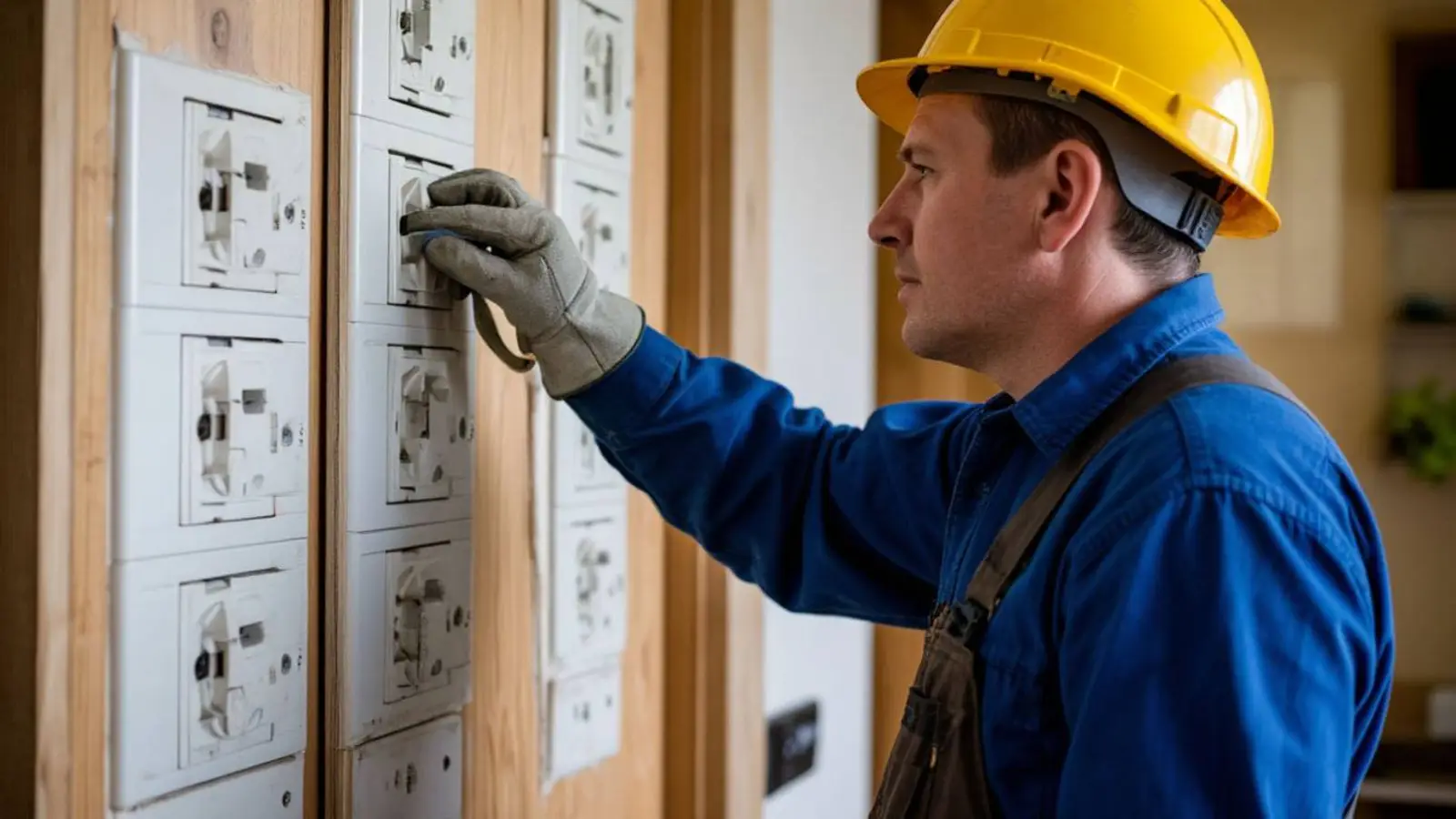
Generated by DALL·E
Take a systematic walk through your home and give the electrics a calm, careful once-over. Room by room, start with the essentials below.
Outlets: are they safe?
Check every outlet in turn and watch for the following.
- A loose faceplate or housing — a sign of damaged mounting or weakened contacts.
- A plug that wobbles or slips out — poor contact; the outlet should be replaced.
- A warm surface after use — a risk of overheating.
- Sparks when you plug in — call an electrician immediately.
- Soot marks or yellowed plastic — indicators of aged wiring.
Additionally:
- Do not daisy-chain extension cords or power strips.
- In bathrooms and kitchens, look for moisture protection rated IP44–IP55.
Switches: do they work consistently?
Test every switch in the home. Warning signs include:
- The rocker sticks or needs excessive force.
- Crackling sounds from inside the housing.
- Light flickers during a normal press.
These symptoms point to poor contact or a worn internal mechanism.
Electrical panel: the heart of the home
Open the panel cover and make sure everything looks in order. Check for:
- Clearly labeled breakers (lighting, kitchen, air conditioner, water heater, etc.).
- No odor of melted plastic.
- No noticeable heating on a breaker’s body.
- An RCD or RCBO protecting wet zones (bathroom, kitchen).
- If there is no RCD, it’s the first upgrade to consider for safety.
Lighting fixtures: match the wattage
For each fixture, check the marking inside.
Important:
- If it says "MAX 60W," do not install a 75W or 100W bulb.
- With LED lamps, make sure the driver isn’t overheating.
- E27 and E14 sockets should show no soot or cracks.
Wiring: condition and age
No need to open walls — a surface-level assessment is enough.
Signs of outdated wiring:
- Aluminum conductors (common in buildings from the 1960s–1980s).
- No grounding (outlets with only two holes).
- Breakers often trip when appliances are switched on.
- Lights dim when a powerful device is running.
If two or more signs show up, consult a professional.
Household load: how safe is it?
Make a simple list:
- Refrigerator
- Washing machine
- Water heater
- Air conditioner
- Kettle / microwave / iron
- Space heater
- Electric stove
If several high-draw appliances share one circuit, the breaker will be under constant strain.
Home electrical safety red flags
If any of the following are present, a check is needed:
- An outlet gets hot.
- A burning smell is noticeable.
- Sparking anywhere.
- Lights flicker for no clear reason.
- Extension cords are chained together.
- Appliances shut off on their own or brightness jumps.
- The washing machine tingles when touched with a damp hand (current leakage).
What every home should have
- RCD or RCBO
- Fire extinguisher (CO₂ or powder)
- Working extension cords or power strips with overload protection
- Spare breakers (for the panel)
- A list of emergency phone numbers
Bottom line: when do you need an electrician?
Call a professional if:
- a breaker trips regularly;
- outlets or switches heat up;
- a burning smell appears even once;
- appliances frequently shut off without a clear reason;
- the home is 25–30 years old and the wiring has never been replaced.