
Inside the Chara Basin: Kodar, Udokan, Old and New Chara
Discover the Chara Basin in Transbaikalia: Kodar’s jagged peaks, Udokan’s ore-rich plateau, Old and New Chara, BAM heritage, Chara Sands and endless taiga bogs.
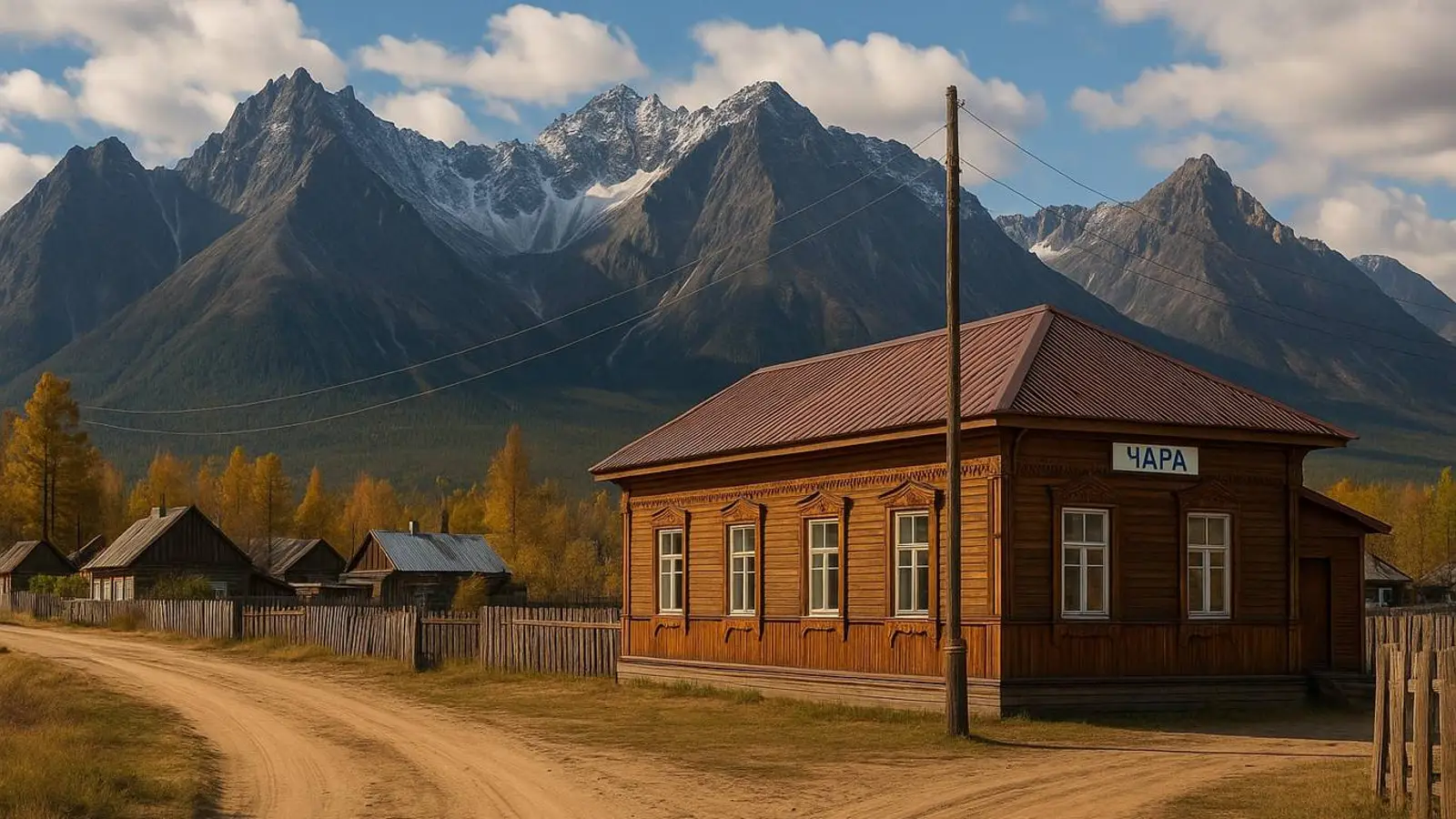
Generated by DALL·E
A valley where nature and history seem to move in step. The name Chara is interpreted in different ways, and each version in its own manner captures the mood of the place—beautiful, austere, sometimes unsettling. On the northern edge of Transbaikalia lies the Chara Basin, stretched between the Udokan and Kodar ranges. It’s here that the Baikal–Amur Mainline crosses the upper reaches of the Chara River, one of the largest tributaries of the Olyokma.
This land has long stood out on the map. It holds rare mountain vistas, traces of a hard past, and two settlements that share a single name—Old Chara and New Chara.
Udokan and Kodar: two ranges, two temperaments
Both massifs belong to the Stanovoy Upland, yet they could hardly be more different. Udokan resembles a vast flat chest packed with ores and minerals. Roads cut across it, and its riches draw workers from every corner of the country. Kodar is the opposite: a frozen blaze of rock, abrupt and torn, with sheer walls and no foothills. Tourists often refer to it as the Chita Alps, and sometimes even the Siberian Himalayas—its slopes are that unforgiving when the frost winds bite.
The main gateway to this world is the valley of the Middle Sakukan, where in the late 1940s prisoners of Borlag forced a road to haul out uranium ore. Today it serves as the starting point for treks, and the Chara Sands feel like the valley’s roots.
Why there are two Charas
Old Chara came first. In 1932 it was a trading post for the Evenki people, later growing into a district center. An airport was built to keep it connected to the wider world—and it still operates. When it came time to build a station for the BAM, the more practical site lay on the opposite bank. A few kilometers away, New Chara emerged and quickly became the economic hub.
Both settlements have shrunk in population, but the gap remains: New Chara is three times larger. PAZ buses run between them every two hours, and a taxi costs roughly what you’d pay in a big city. By local standards, that’s almost a gift.
Old Chara: a touch of Mongolia in Transbaikalia
Sunny and sandy, with tall wooden houses and wide fences—that’s Old Chara. The streets move to a measured rural rhythm, while the homes recall small Mongolian district centers: simple lines, spacious yards, open air all around.
Older buildings suggest the settlement existed long before the BAM. It stretches for about three kilometers along the road—from the air terminal to the turnoff toward Kodar. By a small lake sits the hamlet of Lyabich, a quiet spot that feels like the outer edge of the world, where barking dogs greet every stranger. The village echoes northern fishing communities—modest houses, smoke curling from chimneys, water at every turn.
The Chara bogs: taiga without end
The floor of the Chara Basin is a chain of bogs and lakes. This terrain gives the entire region its character: wet, hard to cross, and strangely captivating. From here begins the route into Kodar—to summits attempted only by experienced hikers. Even those who stay in the valley sense a particular energy. Nature here refuses to let you forget how fragile a person is.
New Chara: a junction on a vast map
New Chara was founded for the BAM and for a long time remained the district’s most populous settlement. Depots, services, and shops work here; geologists, builders, travelers, and seasonal workers pass through. District offices held on to Old Chara until recently, but they are gradually moving, and it’s already clear which place will lead the way.
A place people return to
Chara doesn’t lure those who prize comfort. People come for purpose—to test themselves, to take in unusual landscapes, to follow trails where the taiga’s breath is palpable. Locals stay for reasons that are harder to quantify: habit, an inner bond with the land, a sense of home that seems to arise only in places this remote.