https://boda.su/en/posts/id3181-nag-panchami-india-s-festival-honoring-sacred-snakes
Nag Panchami: India’s festival honoring sacred snakes
Nag Panchami: meaning, rituals, and modern ecological value
Nag Panchami: India’s festival honoring sacred snakes
Explore Nag Panchami, India’s summer festival honoring snakes through rituals and myth, with cultural roots and ecological benefits promoting coexistence.
2025-12-13T10:41:38+03:00
2025-12-13T10:41:38+03:00
2025-12-13T10:41:38+03:00
In India there is a special day when snakes are not objects of fear but of reverence. People recite mantras to them, offer milk, and ask for protection. It may sound unusual at first, yet Nag Panchami is an ancient festival that reveals how deeply faith, nature, and tradition intertwine in Indian culture.What the festival is aboutNag Panchami is celebrated in summer—usually in July or August. Its name translates as “the fifth day of the serpent” and is tied to the lunar calendar. On this day, people perform specific rites: some bring milk to temples, others pour it into anthills, and some decorate their homes with snake images. These gestures are not for show; they express respect for beings regarded as sacred in India.In myth, snakes are guardians, not foesWithin Indian tradition, a snake is not only a dangerous animal but also a wise creature linked to the gods. In legends, snakes guard treasures and support deities. Shiva is depicted with a cobra around his neck, while Vishnu reclines upon the great serpent Shesha. The epic Mahabharata mentions a sage who saved snakes from death, a story later seen as the basis for a festival of reconciliation between people and nature.How Nag Panchami is observedThe festival varies by region, yet its core remains the same. People in India:paint snake motifs on doors and walls,bring milk and flowers to temples,recite prayers asking for their family’s protection.Women often pray for their brothers’ health that day, since the snake symbolizes not only danger but also prosperity. Digging into the soil is avoided: snakes may be underground and must not be disturbed.In some temples, live snakes—most often cobras—are brought in. The animals are not subjected to cruel rituals: they are cared for, fed, and then released back into the wild. All of this takes place under the supervision of priests and professional snake-catchers.Why venerate snakes at allThe reverence is rooted in more than myth. During the monsoon, snakes often venture closer to homes, which can indeed be dangerous. The festival becomes a way to show respect for nature and to strive for a form of coexistence with what inspires fear. In rural areas, where encounters with wildlife are common, that idea carries particular weight.A contemporary view: a festival with an ecological meaningToday, scientists and conservationists note that Nag Panchami helps protect snakes and support ecological balance. These animals keep rodent numbers in check and help shield farms from pests. A respectful attitude toward snakes benefits both ecosystems and people. Some ecologists describe the festival as green because of its understated conservation message.Where snakes are especially reveredIndia has many temples dedicated to snakes. One of the best known is the Nagvasuki Temple in Prayagraj, where the serpent king Vasuki is worshipped. The temple is several centuries old, and during Nag Panchami thousands of pilgrims arrive. Similar rites take place in many other regions, which makes the festival truly nationwide.What the festival means todayIn an era when nature increasingly suffers from human interference, Nag Panchami serves as a reminder that all living beings are neighbors on this planet. The festival encourages people to view snakes not as a threat but as part of the world worth understanding and respecting.Nag Panchami is more than a day devoted to snakes. It is a reminder that people can find harmony even with what they fear.
Nag Panchami, India festival, snakes, Hindu traditions, rituals, Shiva, Vishnu, Shesha, cobras, ecology, conservation, monsoon, temples, Nagvasuki Temple, Prayagraj, folklore, cultural heritage
2025
articles
Nag Panchami: meaning, rituals, and modern ecological value
Explore Nag Panchami, India’s summer festival honoring snakes through rituals and myth, with cultural roots and ecological benefits promoting coexistence.
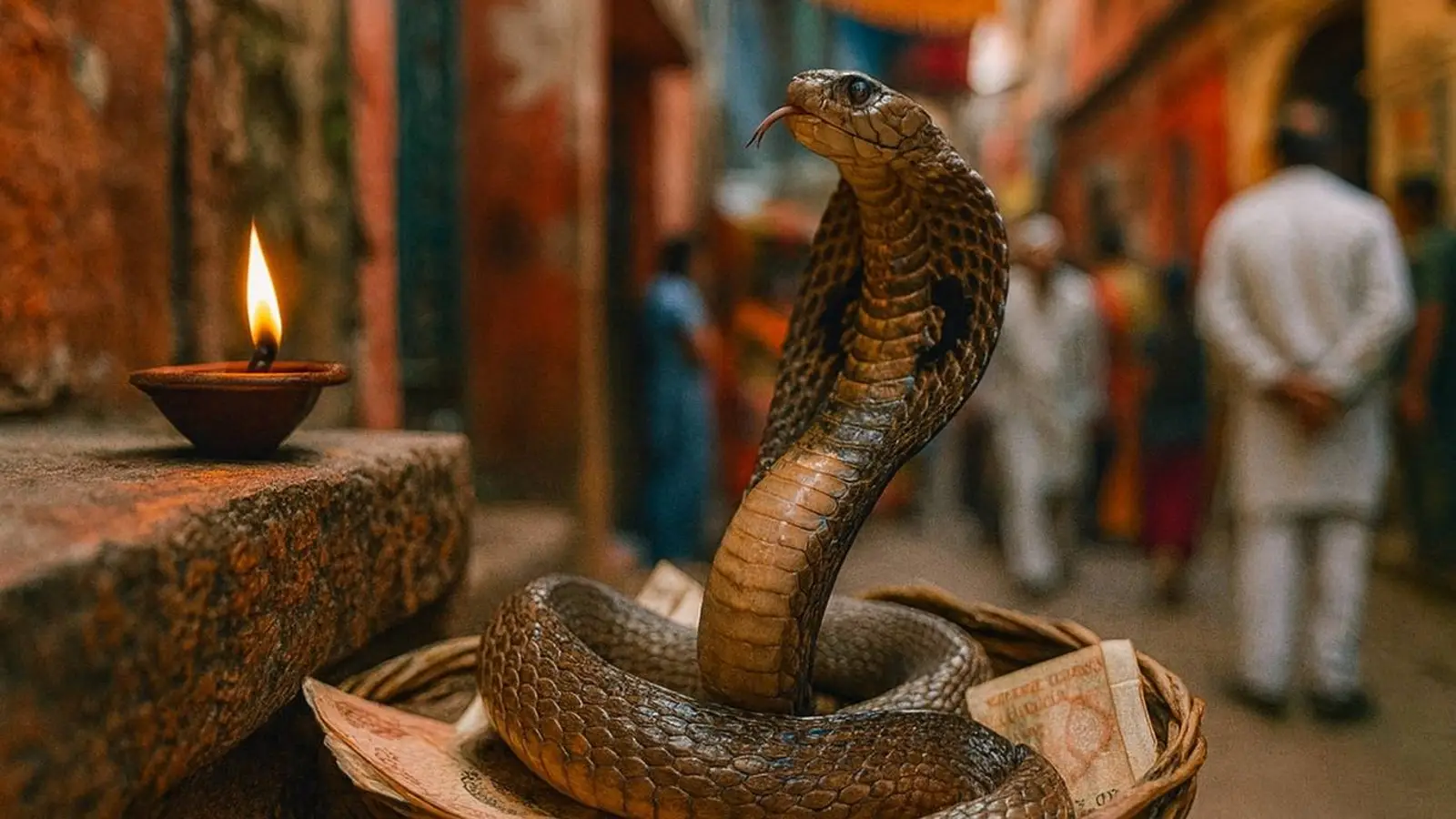
Generated by DALL·E
In India there is a special day when snakes are not objects of fear but of reverence. People recite mantras to them, offer milk, and ask for protection. It may sound unusual at first, yet Nag Panchami is an ancient festival that reveals how deeply faith, nature, and tradition intertwine in Indian culture.
What the festival is about
Nag Panchami is celebrated in summer—usually in July or August. Its name translates as “the fifth day of the serpent” and is tied to the lunar calendar. On this day, people perform specific rites: some bring milk to temples, others pour it into anthills, and some decorate their homes with snake images. These gestures are not for show; they express respect for beings regarded as sacred in India.
In myth, snakes are guardians, not foes
Within Indian tradition, a snake is not only a dangerous animal but also a wise creature linked to the gods. In legends, snakes guard treasures and support deities. Shiva is depicted with a cobra around his neck, while Vishnu reclines upon the great serpent Shesha. The epic Mahabharata mentions a sage who saved snakes from death, a story later seen as the basis for a festival of reconciliation between people and nature.
How Nag Panchami is observed
The festival varies by region, yet its core remains the same. People in India:
- paint snake motifs on doors and walls,
- bring milk and flowers to temples,
- recite prayers asking for their family’s protection.
Women often pray for their brothers’ health that day, since the snake symbolizes not only danger but also prosperity. Digging into the soil is avoided: snakes may be underground and must not be disturbed.
In some temples, live snakes—most often cobras—are brought in. The animals are not subjected to cruel rituals: they are cared for, fed, and then released back into the wild. All of this takes place under the supervision of priests and professional snake-catchers.
Why venerate snakes at all
The reverence is rooted in more than myth. During the monsoon, snakes often venture closer to homes, which can indeed be dangerous. The festival becomes a way to show respect for nature and to strive for a form of coexistence with what inspires fear. In rural areas, where encounters with wildlife are common, that idea carries particular weight.
A contemporary view: a festival with an ecological meaning
Today, scientists and conservationists note that Nag Panchami helps protect snakes and support ecological balance. These animals keep rodent numbers in check and help shield farms from pests. A respectful attitude toward snakes benefits both ecosystems and people. Some ecologists describe the festival as green because of its understated conservation message.
Where snakes are especially revered
India has many temples dedicated to snakes. One of the best known is the Nagvasuki Temple in Prayagraj, where the serpent king Vasuki is worshipped. The temple is several centuries old, and during Nag Panchami thousands of pilgrims arrive. Similar rites take place in many other regions, which makes the festival truly nationwide.
What the festival means today
In an era when nature increasingly suffers from human interference, Nag Panchami serves as a reminder that all living beings are neighbors on this planet. The festival encourages people to view snakes not as a threat but as part of the world worth understanding and respecting.
Nag Panchami is more than a day devoted to snakes. It is a reminder that people can find harmony even with what they fear.