
Georgenswalde railway station restoration into a boutique hotel
Discover how a ruined Georgenswalde railway station on the Baltic coast is becoming Grand Hotel Vokzal—an elegant boutique hotel and revived heritage landmark
Generated by DALL·E
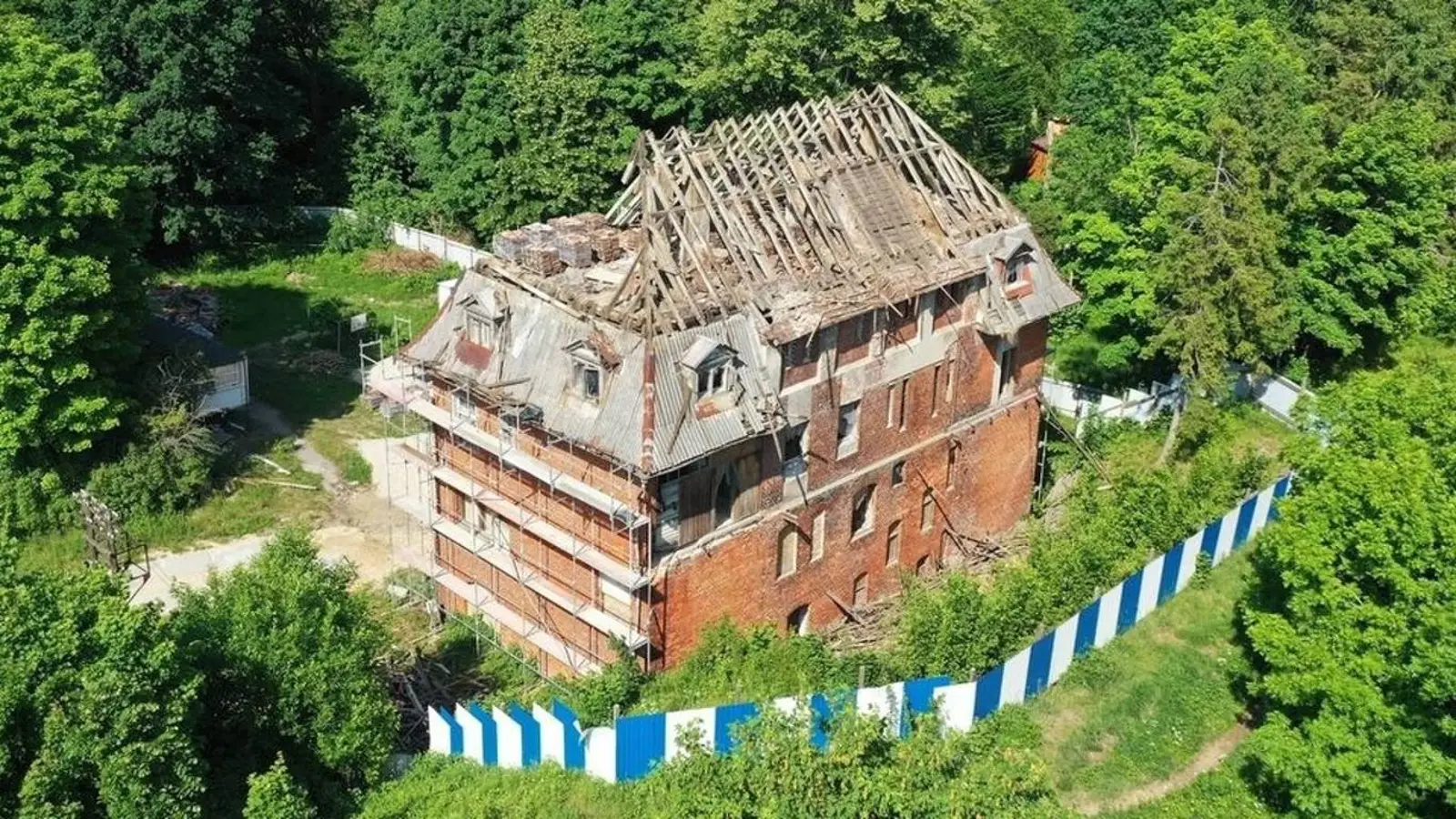
Once, the Georgenswalde railway station on the Baltic coast welcomed well-to-do holidaymakers arriving from Königsberg. Its red-brick walls, lofty mansard and Neo-Baroque flourishes gave it the air of a seaside palace. By the 2010s, though, it had become a hazardous ruin—scorched by fires, scarred by vandalism, the yard overgrown, the windows shattered.
Few believed this heritage landmark would ever stir back to life. Then a family looked past the wreckage and saw potential.
From resort grandeur to decades of neglect
The station was built in 1912–1913 to a design by Max Schönwald and soon became one of the resort area’s most recognizable emblems. Its architecture combined Classicism, Jugendstil and Neo-Baroque—a bold blend for the early 20th century.
After World War II, the building remained in use, but its original look steadily eroded. By the 1990s it barely served its purpose, later being refitted as housing. By 2016 it stood empty, had survived several fires and was on the brink of being lost.
Several times a year, volunteer groups would arrive to slow the decay: clearing trash, cutting back brush, patching holes. Without an owner, though, it felt like a fight against the inevitable.
They saw not ruins, but a future
The revival began with a different house. Entrepreneur Oleg Barmin and his wife Ksenia bought an old pastor’s home in the nearby settlement of Zalivnoye. It was in a sorry state—damp basement, collapsed roof, a plot swallowed by weeds. For a while, the family slept in a tent inside the building.
They restored it to the look its architects envisioned a century ago: cleaned the walls, brought the doors back to life, commissioned wooden windows and laid a tile roof. The renovation swallowed all their savings and just as much again, but the result spurred them on.
Barmin recalled that friends were baffled by their choice; they saw decay, while he and his wife saw the future. The success of that first restoration became a springboard for a far larger project.
A bold move: buying the entire station
In 2022, the Georgenswalde station went up for auction with a price tag of 10 million rubles. It was a modest sum for a heritage asset—one that hid tens of millions in additional costs. Barmin took the risk and bought it.
On social media, he said he hoped the building would become Grand Hotel Vokzal, with an atmosphere reminiscent of The Grand Budapest Hotel.
Right after the purchase, the family and volunteers from the “Keepers of Ruins” organized a thorough cleanup: they hauled out debris, cleared the grounds and secured hazardous sections. Then came conservation and preparation of the restoration project.
What the restoration looks like now
The work advances step by step. In recent months they have managed to:
- prepare the documentation;
- rebuild and pour the concrete floor slabs;
- start installing a new roof;
- collect the required roof tiles from across the region.
The tile hunt became a small showcase of local support.
In Sovetsk, rare ridge tiles were on sale. When Barmin explained he was restoring the station, the seller unexpectedly said he would hand them over free of charge. Similar stories, the owner noted, are common: people help with materials, labor and advice.
What it costs to resurrect a landmark
By Barmin’s preliminary estimate, a full restoration will require at least 300 million rubles. That includes restoring the facades, engineering systems and interiors, as well as landscaping the grounds. The figure is daunting, yet the project already draws attention from architects, volunteers and local residents. For many, this feels less like a renovation and more like an attempt to return the place’s historical memory.
What lies ahead for the station
If the plan holds, the station will become a boutique hotel with the ambience of old Europe. Restored interiors, preserved architecture and modern comfort could turn it into a new point of attraction for the Kaliningrad region.