https://boda.su/en/posts/id2731-old-school-salt-test-for-milk-a-simple-way-to-spot-quality
Old-school salt test for milk: a simple way to spot quality
How to check milk quality at home with a pinch of salt
Old-school salt test for milk: a simple way to spot quality
Learn the simple salt test for milk: how to spot dilution and additives, why it works, and when to use it—an old Soviet home trick to choose natural, quality milk.
2025-12-08T05:33:53+03:00
2025-12-08T05:33:53+03:00
2025-12-08T05:33:53+03:00
In Soviet households there were no home labs, test strips, or apps, yet home cooks managed perfectly well without modern technology. A pinch of salt and a couple of minutes were enough to judge the quality of the milk on the table. The method passed from mother to daughter and was considered essential, especially when the product came from a market stall.Today, with shelves overflowing and trust in labels not always unconditional, this time-tested trick is quietly returning to use.How the salt test worksThe idea is simple: add a small pinch of salt to a glass of milk and watch how it behaves. If the milk is natural, the salt dissolves evenly, and the taste stays gentle, without bitterness or odd notes.But if water, powder, or other additives have been mixed in, the picture changes: a bitter edge may appear, flakes can form, and a residue may settle at the bottom. Soviet homemakers took that as a clear sign to skip the milk—both for baking and for starter cultures.Why it really worksModern specialists note that salt interacts with milk proteins and fat. When their amount is insufficient or the structure is disturbed, the reaction shows up right away. In effect, salt serves as a simple indicator of how natural the milk is. Laboratory analyses are more precise, of course, but for home use this check remains a reliable, accessible option.Why the method matters especially at marketsMilk bought directly from private sellers often raises questions. Buyers rarely know how conscientious the vendor is or how the animals are kept, so a quick check helps avoid a disappointing purchase. In villages the salt test was considered mandatory before setting a starter; if the milk didn’t pass, it wasn’t used—poor-quality product could spoil sour cream or curd.A forgotten method that still holds upMany city dwellers no longer know this simple trick, but older generations continue to rely on it. Nutritionists also point out that the naturalness of milk directly affects its benefits. Understanding a product’s quality makes it easier to care for health and make sensible choices.The salt test is a modest example of practical wisdom that works without fancy devices. One pinch can tell you more about milk than a glossy label and spare you a bad buy. Sometimes the most dependable tools are the ones we’ve kept from the past.
salt test, milk quality, natural milk, adulterated milk, home milk test, Soviet household tip, market milk, check milk with salt, dilution, additives, DIY milk test, kitchen tips
2025
articles
How to check milk quality at home with a pinch of salt
Learn the simple salt test for milk: how to spot dilution and additives, why it works, and when to use it—an old Soviet home trick to choose natural, quality milk.
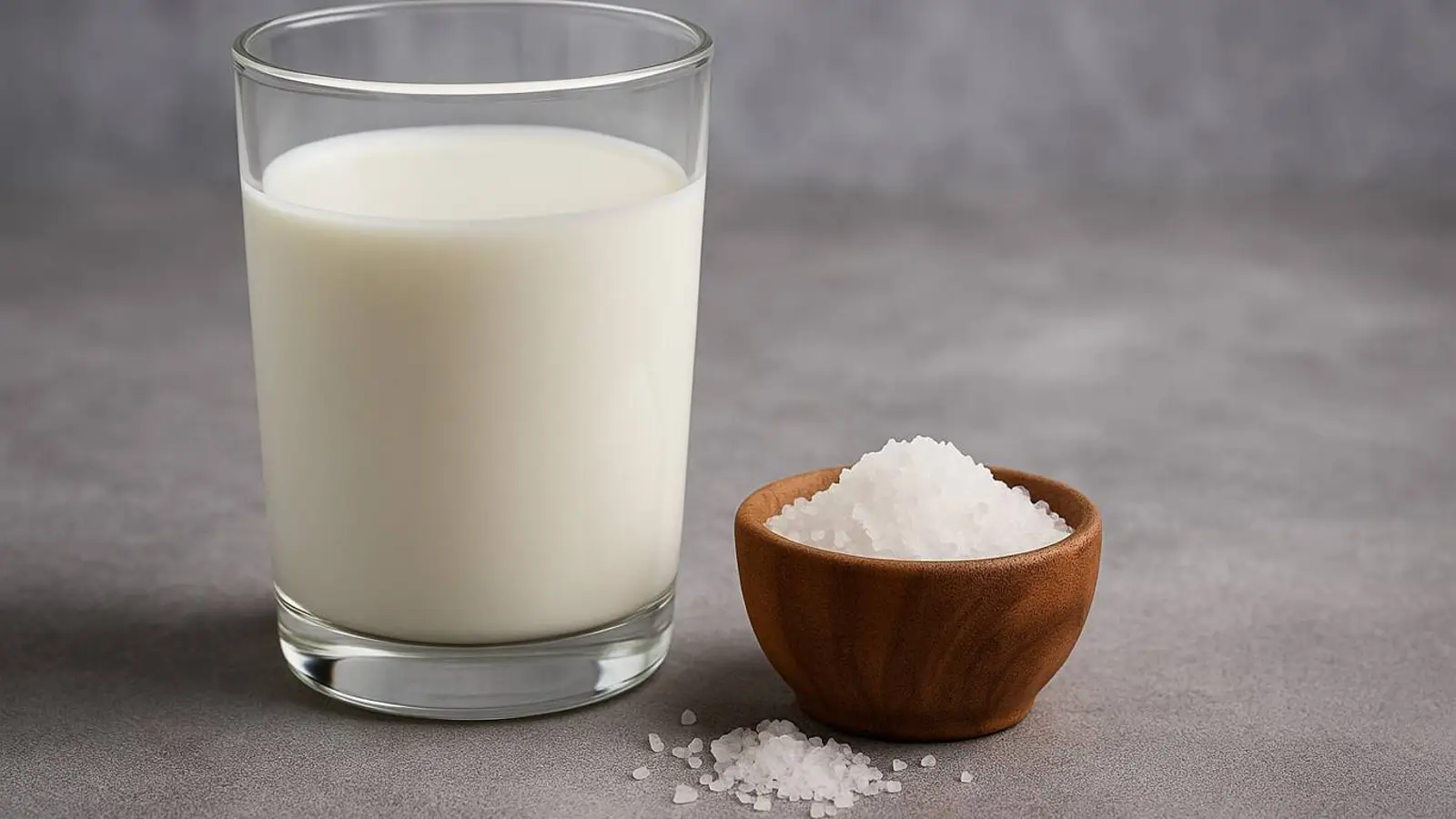
Generated by DALL·E
In Soviet households there were no home labs, test strips, or apps, yet home cooks managed perfectly well without modern technology. A pinch of salt and a couple of minutes were enough to judge the quality of the milk on the table. The method passed from mother to daughter and was considered essential, especially when the product came from a market stall.
Today, with shelves overflowing and trust in labels not always unconditional, this time-tested trick is quietly returning to use.
How the salt test works
The idea is simple: add a small pinch of salt to a glass of milk and watch how it behaves. If the milk is natural, the salt dissolves evenly, and the taste stays gentle, without bitterness or odd notes.
But if water, powder, or other additives have been mixed in, the picture changes: a bitter edge may appear, flakes can form, and a residue may settle at the bottom. Soviet homemakers took that as a clear sign to skip the milk—both for baking and for starter cultures.
Why it really works
Modern specialists note that salt interacts with milk proteins and fat. When their amount is insufficient or the structure is disturbed, the reaction shows up right away. In effect, salt serves as a simple indicator of how natural the milk is. Laboratory analyses are more precise, of course, but for home use this check remains a reliable, accessible option.
Why the method matters especially at markets
Milk bought directly from private sellers often raises questions. Buyers rarely know how conscientious the vendor is or how the animals are kept, so a quick check helps avoid a disappointing purchase. In villages the salt test was considered mandatory before setting a starter; if the milk didn’t pass, it wasn’t used—poor-quality product could spoil sour cream or curd.
A forgotten method that still holds up
Many city dwellers no longer know this simple trick, but older generations continue to rely on it. Nutritionists also point out that the naturalness of milk directly affects its benefits. Understanding a product’s quality makes it easier to care for health and make sensible choices.
The salt test is a modest example of practical wisdom that works without fancy devices. One pinch can tell you more about milk than a glossy label and spare you a bad buy. Sometimes the most dependable tools are the ones we’ve kept from the past.