https://boda.su/en/posts/id2651-milad-tower-tehran-history-design-and-visitor-guide
Milad Tower, Tehran: history, design and visitor guide
Milad Tower in Tehran: origins, architecture and views
Milad Tower, Tehran: history, design and visitor guide
Explore Milad Tower in Tehran: history, architecture, observation decks, a revolving restaurant, and its role as a communications hub and city landmark.
2025-12-07T13:35:15+03:00
2025-12-07T13:35:15+03:00
2025-12-07T13:35:15+03:00
Find yourself in Tehran, a fast, dense city that rarely slows down, and your eyes skim across street bazaars, cars, vendors and weathered facades. Look up, though, and a single outline takes over: the Milad Tower, slim, vast and unmistakably modern.The tower's story: from idea to realityThe idea for such a structure surfaced back in the 1970s, but it stayed on paper for years. Construction picked up again in 1997, and a decade later, in 2007, the tower was finished. Rising to 435 meters, it became Iran's tallest tower, intended as a communications facility yet embraced as a city emblem.How it is builtMade of concrete, glass and metal, the structure houses three elevator shafts and six high-speed lifts that carry visitors more than 300 meters up to the so-called pod. Inside are 12 floors, each with its own role. The pod's form nods to traditional Persian architecture, a deliberate effort to fuse present-day design with cultural roots.Inside: more than a mast, a hub of city lifeThe interior works on several fronts: observation decks with sweeping views of the city and surrounding mountains; a revolving restaurant where the skyline moves while you stay seated; exhibition areas and event spaces; cafes, shops and places to pause; and facilities for conferences and business meetings.The tower sits within a larger business complex, bringing together tourism, commerce, culture and science under one skyline-defining landmark.Is there a hidden side?For all its scale, open sources do not mention secret levels or unusual capabilities. The available information focuses on its core functions: communications, tourism and events. One detail stands out: there is no official website, so most details reach the public through blogs, reports and guidebooks. That absence shapes its public image less as mystery than as a word-of-mouth landmark.Why Milad matters to TehranThe tower reflects the city itself. Against a backdrop of traffic jams, polluted air and visible social contrasts, it signals that Tehran keeps pushing forward. Visible from almost any district, it acts as a waypoint and a magnet, a place where people spend time, take in the view and grasp the sheer scale of the capital.
Milad Tower, Tehran, Iran, tallest tower, observation deck, revolving restaurant, architecture, history, communications tower, landmark, travel guide, pod, elevators, events, skyline views
2025
articles
Milad Tower in Tehran: origins, architecture and views
Explore Milad Tower in Tehran: history, architecture, observation decks, a revolving restaurant, and its role as a communications hub and city landmark.
Generated by DALL·E
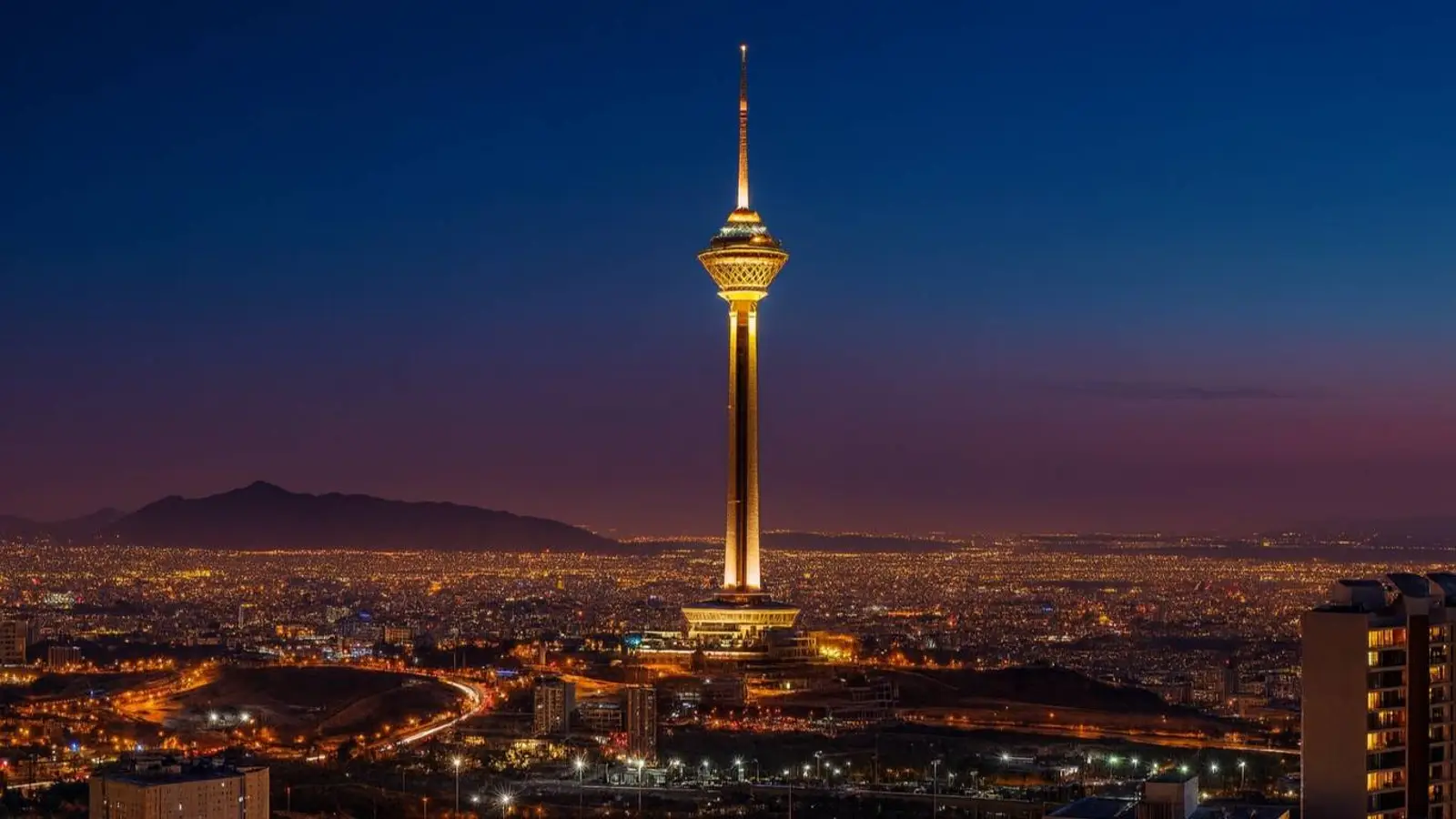
Find yourself in Tehran, a fast, dense city that rarely slows down, and your eyes skim across street bazaars, cars, vendors and weathered facades. Look up, though, and a single outline takes over: the Milad Tower, slim, vast and unmistakably modern.
The tower's story: from idea to reality
The idea for such a structure surfaced back in the 1970s, but it stayed on paper for years. Construction picked up again in 1997, and a decade later, in 2007, the tower was finished. Rising to 435 meters, it became Iran's tallest tower, intended as a communications facility yet embraced as a city emblem.
How it is built
Made of concrete, glass and metal, the structure houses three elevator shafts and six high-speed lifts that carry visitors more than 300 meters up to the so-called pod. Inside are 12 floors, each with its own role. The pod's form nods to traditional Persian architecture, a deliberate effort to fuse present-day design with cultural roots.
Inside: more than a mast, a hub of city life
The interior works on several fronts: observation decks with sweeping views of the city and surrounding mountains; a revolving restaurant where the skyline moves while you stay seated; exhibition areas and event spaces; cafes, shops and places to pause; and facilities for conferences and business meetings.
The tower sits within a larger business complex, bringing together tourism, commerce, culture and science under one skyline-defining landmark.
Is there a hidden side?
For all its scale, open sources do not mention secret levels or unusual capabilities. The available information focuses on its core functions: communications, tourism and events. One detail stands out: there is no official website, so most details reach the public through blogs, reports and guidebooks. That absence shapes its public image less as mystery than as a word-of-mouth landmark.
Why Milad matters to Tehran
The tower reflects the city itself. Against a backdrop of traffic jams, polluted air and visible social contrasts, it signals that Tehran keeps pushing forward. Visible from almost any district, it acts as a waypoint and a magnet, a place where people spend time, take in the view and grasp the sheer scale of the capital.