
Exploring Lago-Naki in Adygea: Western Caucasus meadows, caves, and Route 30 views
Discover Lago-Naki in Adygea: a UNESCO-listed Western Caucasus plateau with alpine meadows, Route 30 panoramas, karst sinkholes, Sunny Grotto, and snowfields.
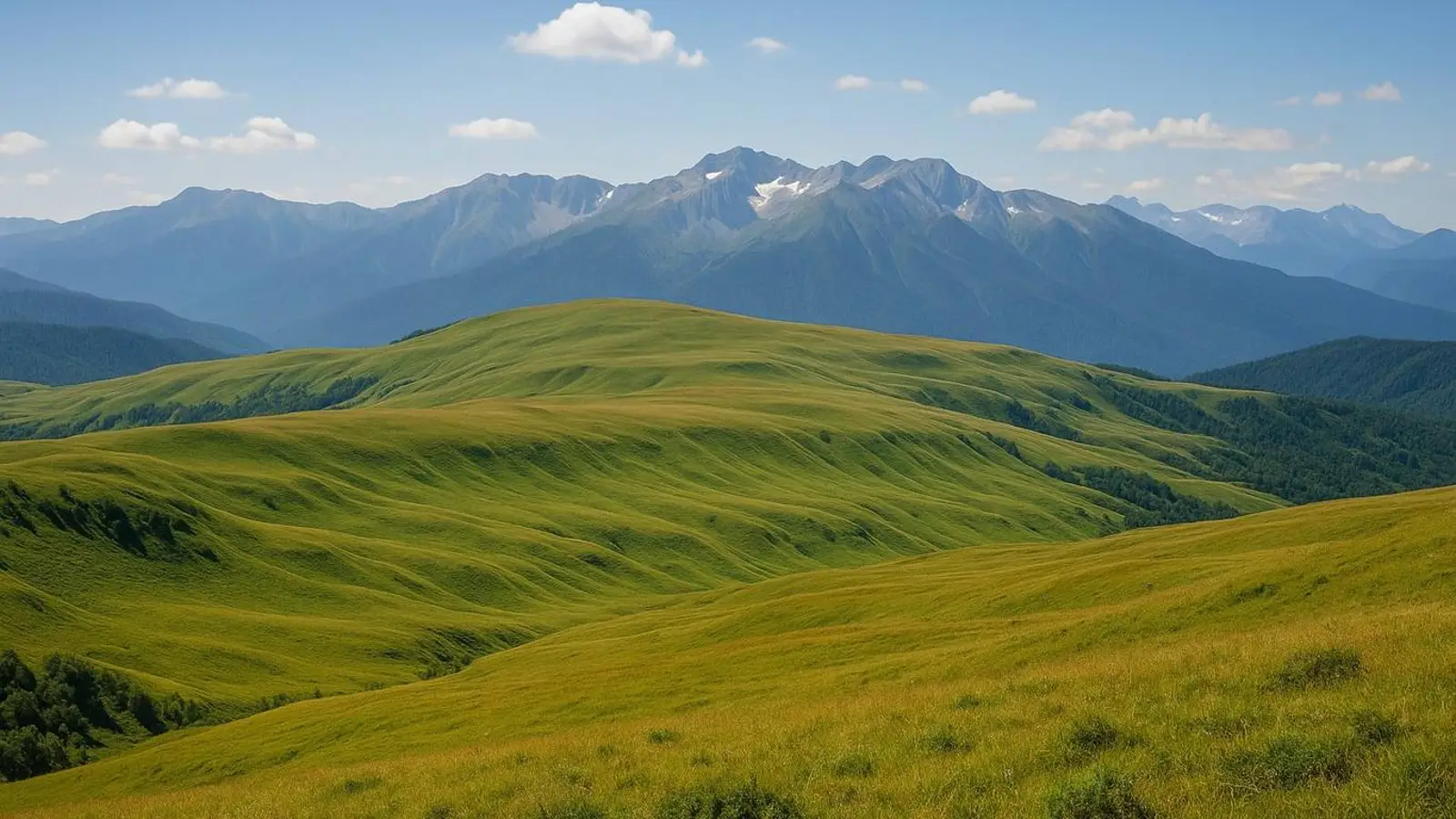
Generated by DALL·E
The road into the mountains of Adygea begins predictably: smooth asphalt, a sign pointing to the Bolshaya Azishskaya Cave, hikers with backpacks. Then, after a turn, the pavement vanishes and the route climbs, twisting between cliffs. That’s when the true walk across Lago-Naki starts—a plateau wrapped in legend, where the views stir something ancient.
From the pass to Utyug Rock and the Abadzekhs’ golden meadows
Azish Pass greets visitors with cool air and dense forest. From here, the trail leads to Utyug Rock, a stone outcrop cut off from the Lago-Naki plateau by the deep valley of the Kurdzhips. For the Abadzekhs, the largest Adyghe tribe, these lands were a treasure: alpine pastures that fed vast herds. Turning such a place into princely estates was out of the question—the land was held in common.
The contrast between two neighboring slopes is striking: one, flooded with sun and dressed in meadows right up to the lingering snowfields; the other, drowned in the shade of thick forest.
Sunny Grotto and Lago-Naki panoramas
Follow the cliff edge a little farther and the trail brings you to the Sunny Grotto, a natural arch where daylight pours through. Dry and warm, it frames an impeccable view of the plateau—nature’s own picture window. Farther down the road are informal stalls with Adyghe cheese, small guesthouses, fresh builds, and a steady stream of cars. Everything funnels toward the checkpoint of the Caucasus Biosphere Reserve.
Lago-Naki Reserve: a UNESCO landscape
Since 1992, Lago-Naki has been part of the protection zone of the Caucasus Reserve. In 1999, the Western Caucasus was added to the UNESCO World Heritage list. Entry to the reserve costs 300 rubles per day. The payoff is generous: tens of kilometers of high-mountain meadows stretching over the forests like an island in the sky.
Autumn is calmer than summer here, yet the green season stands out with emerald grass and a scatter of flowers. In the distance rise the powerful peaks of Abadzesh, Oshten, and Fisht. Their glaciers sit surprisingly low—this mountain climate feels mild, but snow-heavy winters leave their mark.
The legendary Route 30 and a weekend trail
The famous Route No. 30—Across the Mountains to the Sea—crosses the plateau, a path devised back in 1949. The classic trek starts in Guzeripl and ends in Dagomys, taking two weeks on foot. Shorter versions let hikers cover a portion in a few days. For an easy outing, many choose the local weekend trail that runs along the rim of the plateau, where Lago-Naki’s main wonder is hidden underground.
Karst sinkholes and snowfields that refuse to melt
Lago-Naki is known for its abundance of karst sinkholes, some looking like doorways to an underground city. The largest lies about three kilometers from the checkpoint, with a cell tower as the landmark that you’re on track. Here a perennial snowfield clings on—by September it’s only dusted with grit, not gone. Unlike true glaciers, it’s loose underfoot and risky to climb.
A Sea of Stone and a test for new roads
The edge of the plateau is called the Stone Sea—Mizhehi in Adyghe. Below, a long switchback has been under construction from Guzeripl since 2018. The new route is meant to bring visitors closer to Instruktorskaya Gorge, one of the main gateways to the plateau.
Regional officials are discussing a plan to connect the roads into a loop. If it happens, traveling around Lago-Naki will get easier, though the argument over conservation will almost certainly flare up again.
Panoramas that are hard to leave
Beyond, a line of Western Caucasus peaks completes the picture: Bolshoy and Maly Tkhach, the fantastical Achezhbok, the austere Chugush. They draw a horizon you couldn’t mistake for anywhere else in Russia. From here, the nickname “the highlanders’ gold” makes perfect sense—this wealth doesn’t glitter, but it gives freedom, sustains, protects, and leaves a memory that outlives generations.