
Inside China’s ghost cities: causes, examples, and what’s next
Explore China’s ghost cities: modern districts with vacant apartments, from Kangbashi to Zhengdong New Area, and whether the infrastructure-first bet works.
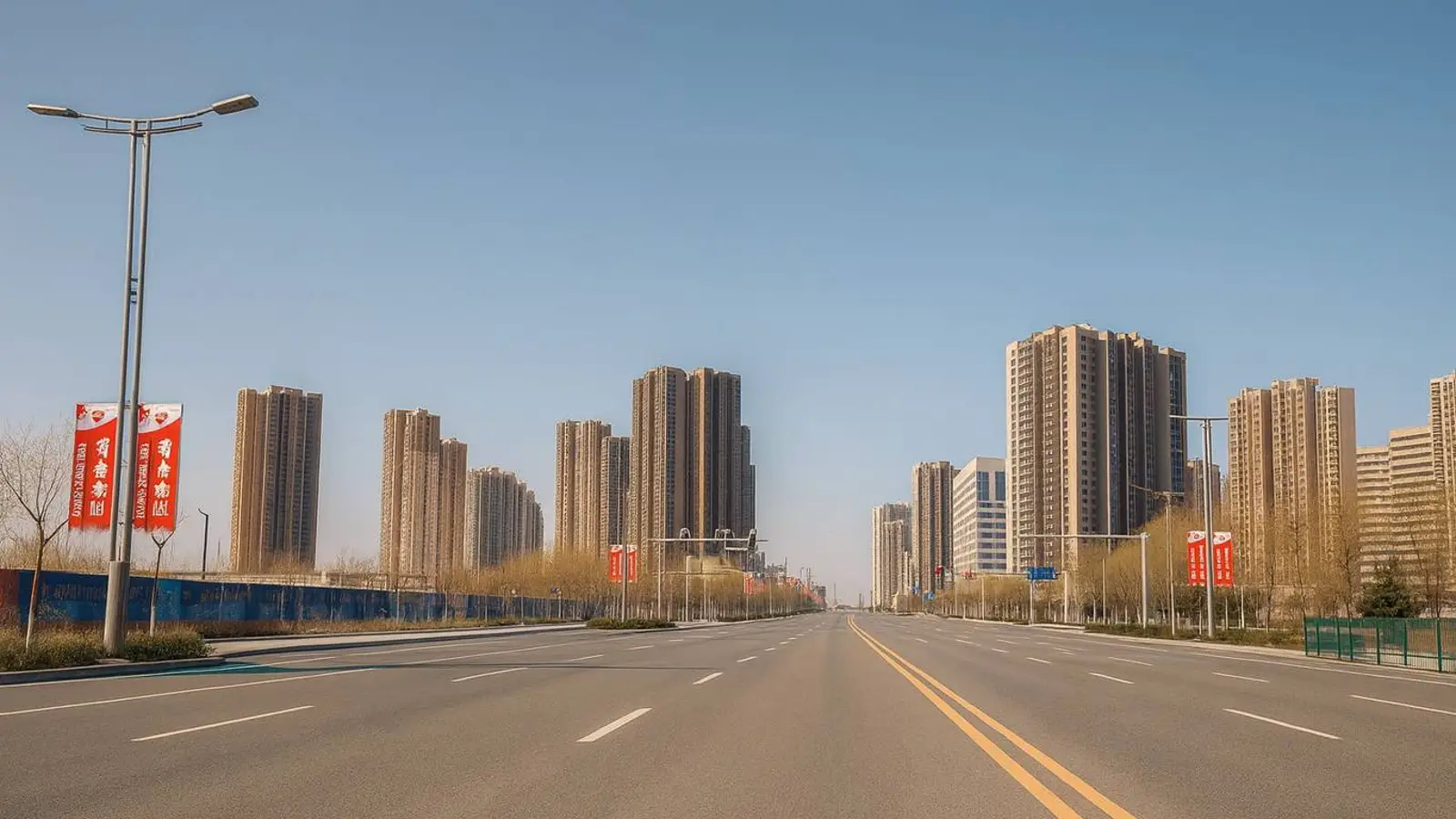
Generated by DALL·E
High-rises line up in neat rows, broad avenues stretch like empty corridors, and manicured parks seem to await their first visitors. The scene feels impeccably modern, almost futuristic—yet one detail breaks the spell: there are hardly any people. Cars pass only occasionally, and the windows stay dark.
This is the face of China’s ghost cities—not crumbling ruins or abandoned villages, but newly built districts where everyday life never quite began.
Why build so much when so few move in?
In recent decades, China went through sweeping urbanization: millions moved to cities, the economy grew, and authorities championed the construction of new neighborhoods “for the future.”
At the same time, apartments became a go-to investment vehicle. Buyers often treated homes less as places to live and more as assets to resell or rent out. Entire areas looked occupied on paper—yet in practice, many buildings had few residents.
New builds without residents
Unlike the classic ghost towns seen elsewhere, which are defined by decay, the Chinese counterparts are fully equipped, contemporary districts. Roads, schools, shops—they have it all, except the crowds.
By various estimates, the country may have between 65 and 80 million vacant apartments. That doesn’t mean absolute emptiness, but a significant share of housing is indeed unoccupied.
Kangbashi: expectations that never fully materialized
One of the best-known examples is Kangbashi, a district of Ordos in northern China. A complete city rose there—residential blocks, theaters, museums. Planners expected hundreds of thousands of newcomers, but the inflow never became massive, and the area remains sparsely populated.
When emptiness doesn’t last forever
There are more optimistic stories as well. Some districts eventually do attract residents. Zhengdong New Area, long labeled a ghost city, had about 1.3 million people by 2023. This suggests that not every project stays empty—sometimes life arrives on a delay to meet the infrastructure.
Who actually lives in these districts?
Recent data are scarce—especially for 2024–2025. The number of vacant apartments is cited, but not who occupies the rest. These could include young families, retirees, or temporary residents. For now, detailed research is missing, leaving the profile of these neighborhoods a blank spot.
Misstep or long game?
Some argue the problem is overbuilding; others see a strategy at work: create the infrastructure first, then let the population follow. In China, that sequence is used fairly often—build the urban fabric, and wait for everyday life to catch up.
For now, ghost cities remain a striking phenomenon: new, modern, and nearly empty. And it’s entirely possible that in a few years many will blend into ordinary residential areas, with those dark windows finally lighting up—proof that the bet on tomorrow sometimes just needs time.