https://boda.su/en/posts/id2551-stop-ruining-hinges-washing-machine-door-open-or-closed
Stop ruining hinges: washing machine door open or closed
Should you leave the washing machine door open or closed?
Stop ruining hinges: washing machine door open or closed
Should the washing machine door stay open or closed? Learn why manufacturers advise closing, how open doors strain hinges, and a routine to prevent mold.
2025-12-06T17:28:33+03:00
2025-12-06T17:28:33+03:00
2025-12-06T17:28:33+03:00
A habit that can get expensive: leaving the washing machine door open after a cycle feels natural. Air circulates, the tub dries faster, and mold is less likely. Yet many manuals insist on the opposite—close the door. This isn’t box-ticking; there are practical technical reasons behind it.What manufacturers sayUser guides differ. Some never mention door position, others call for closing it after every wash. Certain models are explicit: once the laundry is out, the seal and glass should be wiped, and the door closed.Manufacturers stress that the door isn’t just a cover. It’s part of the safety lock system that keeps the cycle secure, especially at high temperatures and with substantial water inside.The hidden risk of an open doorWhen the door is left open all the time, the hinges carry extra load. Over time they can sag—much like kitchen cabinet doors. The difference lies in the outcome. In a washing machine, that sag can stop the lock from engaging reliably.As a result, the appliance may refuse to start. That’s a safety feature: if the door can’t lock tightly, the risk of leaks goes up, and water can damage your home and the neighbors below.What about mold?The concern is fair: a closed door means a damp drum, and dampness can cause odors. But leaving the door wide open isn’t the best answer either. There’s a middle ground, and the fixes are straightforward.Leave it open brieflyAfter washing, wipe the seal and the glass, open the door for 30–60 minutes to let moisture escape, then close it.Use a slightly ajar positionSome models have a limiter that keeps the door from sealing shut. If there isn’t one, you can gently support the door so it rests without putting weight on the hinges.Close the door, open the dispenserPulling out the detergent drawer gives moisture another way out. It helps the interior dry without stressing the hinges.A sensible compromiseKeeping the door wide open feels convenient, but hinge sag leads to repairs and sometimes part replacements. Sealing the door without any drying invites other issues. The better routine blends both: let the machine air out, then close it until the next load. It protects the hardware, saves money, and keeps the drum smelling clean—and it simply feels like the right balance between convenience and care.
washing machine door, open or closed, manufacturer advice, hinge sag, mold prevention, odors, detergent drawer, safety lock, prevent leaks, drying drum, maintenance tips
2025
articles
Should you leave the washing machine door open or closed?
Should the washing machine door stay open or closed? Learn why manufacturers advise closing, how open doors strain hinges, and a routine to prevent mold.
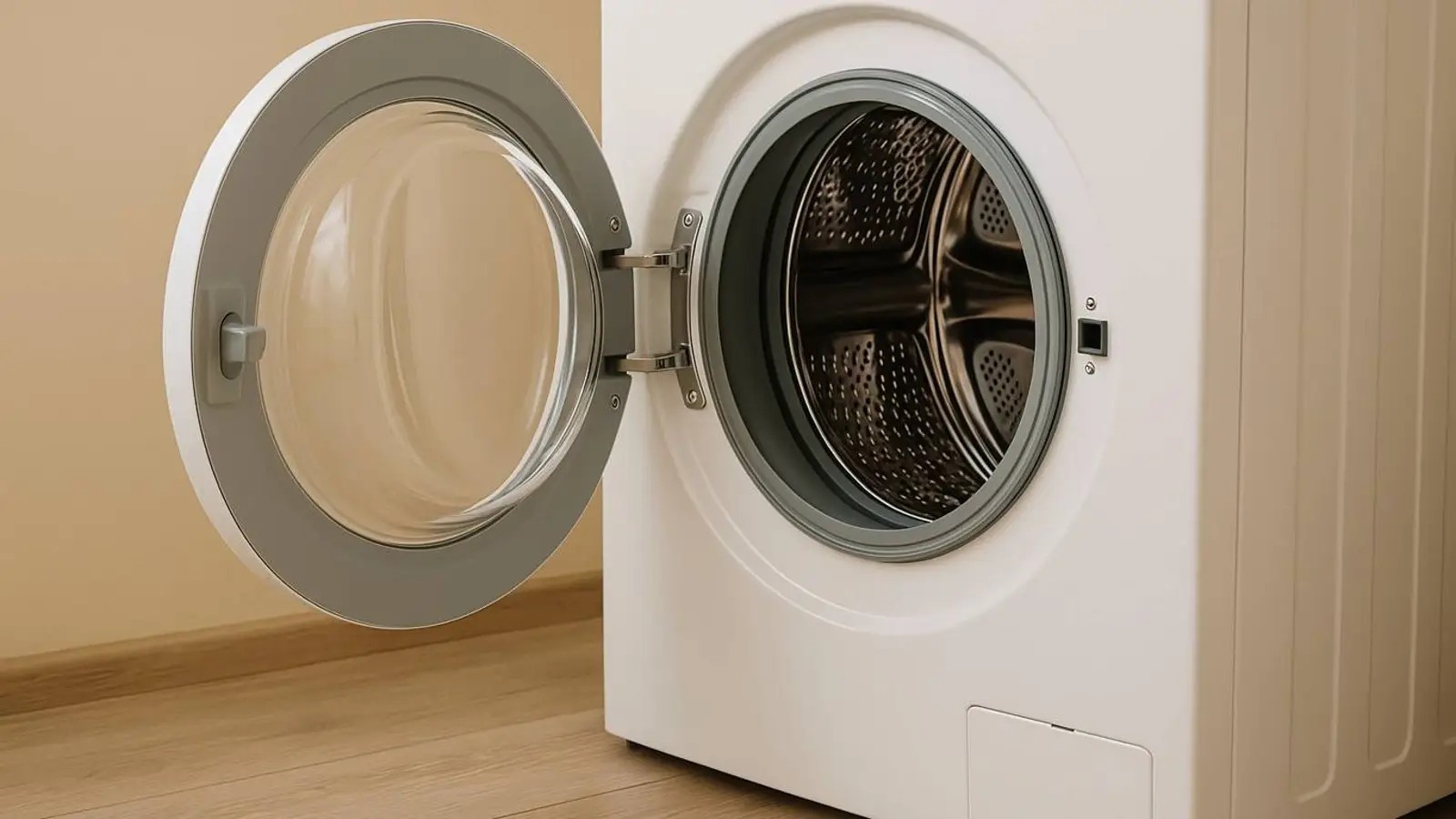
Generated by DALL·E
A habit that can get expensive: leaving the washing machine door open after a cycle feels natural. Air circulates, the tub dries faster, and mold is less likely. Yet many manuals insist on the opposite—close the door. This isn’t box-ticking; there are practical technical reasons behind it.
What manufacturers say
User guides differ. Some never mention door position, others call for closing it after every wash. Certain models are explicit: once the laundry is out, the seal and glass should be wiped, and the door closed.
Manufacturers stress that the door isn’t just a cover. It’s part of the safety lock system that keeps the cycle secure, especially at high temperatures and with substantial water inside.
The hidden risk of an open door
When the door is left open all the time, the hinges carry extra load. Over time they can sag—much like kitchen cabinet doors. The difference lies in the outcome. In a washing machine, that sag can stop the lock from engaging reliably.
As a result, the appliance may refuse to start. That’s a safety feature: if the door can’t lock tightly, the risk of leaks goes up, and water can damage your home and the neighbors below.
What about mold?
The concern is fair: a closed door means a damp drum, and dampness can cause odors. But leaving the door wide open isn’t the best answer either. There’s a middle ground, and the fixes are straightforward.
Leave it open briefly
After washing, wipe the seal and the glass, open the door for 30–60 minutes to let moisture escape, then close it.
Use a slightly ajar position
Some models have a limiter that keeps the door from sealing shut. If there isn’t one, you can gently support the door so it rests without putting weight on the hinges.
Close the door, open the dispenser
Pulling out the detergent drawer gives moisture another way out. It helps the interior dry without stressing the hinges.
A sensible compromise
Keeping the door wide open feels convenient, but hinge sag leads to repairs and sometimes part replacements. Sealing the door without any drying invites other issues. The better routine blends both: let the machine air out, then close it until the next load. It protects the hardware, saves money, and keeps the drum smelling clean—and it simply feels like the right balance between convenience and care.