https://boda.su/en/posts/id2541-diy-gelatin-glue-natural-flexible-adhesive-recipe
DIY gelatin glue: natural, flexible adhesive recipe
How to make a tough, flexible gelatin-based glue at home
DIY gelatin glue: natural, flexible adhesive recipe
Learn to make a natural gelatin glue with rosin and glycerin—flexible, strong, and easy to reverse; perfect for crafts, small wood repairs, and restoration.
2025-12-06T15:18:57+03:00
2025-12-06T15:18:57+03:00
2025-12-06T15:18:57+03:00
In everyday life, it’s easy to overlook how familiar substances can yield surprising outcomes. One such case is a homemade glue mixed from everyday ingredients. What began as a simple trial of an old recipe ended up producing a tough, flexible compound—surprising enough to give even seasoned tinkerers pause.How a powder turns into glueThe base of the mixture is gelatin. Heated in water, it forms a thick, translucent mass that behaves like something out of a science show. The transformation is gradual: the longer you stir, the denser the texture becomes. Gelatin has been used in glues for centuries. Derived from animal sources, this natural foundation brings reliable adhesion and flexibility.An old staple in a new roleTo boost performance, the blend is fortified with rosin, a natural pine resin. In the past it found its way into music, shipbuilding, and even furniture. In this experiment, the resin was dissolved in alcohol, giving the glue extra tack and a hint of water resistance. The mass turned clearer and more uniform.The fine pointsTo prevent cracks after drying, a little glycerin is added—a known way to improve elasticity. Some recipes mention honey or sugar, yet even without them the mix gains the right give.A result that surprisesTrials on paper and small wooden parts showed a firm bond. It stays natural, safe, and easy to use. And if needed, a joint can be gently taken apart by wetting it—a trait rare in modern synthetic formulas and, frankly, a practical bonus.How to store and use itThe mixture can be reused: keep it in the refrigerator and warm it briefly over a bain-marie before work. It suits small repairs, creative projects, and restoration tasks. A bit of care goes a long way—the stuff is genuinely sticky, and it’s easy to bond what you didn’t plan to.Why old recipes are back in favorNatural materials are regaining popularity for safety and environmental reasons. A gelatin-based homemade glue shows how a simple experiment can steer attention back to techniques that were close to being forgotten—it’s easy to see the appeal.This hands-on approach attracts those who want to understand their materials and control the process from start to finish. With a little patience, the home workshop gains a tool long used by carpenters, musicians, and restorers.
homemade glue, DIY gelatin glue, natural adhesive, gelatin-based glue, rosin resin glue, glycerin additive, flexible glue, reversible adhesive, wood repair, crafts, restoration
2025
articles
How to make a tough, flexible gelatin-based glue at home
Learn to make a natural gelatin glue with rosin and glycerin—flexible, strong, and easy to reverse; perfect for crafts, small wood repairs, and restoration.
Generated by DALL·E
In everyday life, it’s easy to overlook how familiar substances can yield surprising outcomes. One such case is a homemade glue mixed from everyday ingredients. What began as a simple trial of an old recipe ended up producing a tough, flexible compound—surprising enough to give even seasoned tinkerers pause.
How a powder turns into glue
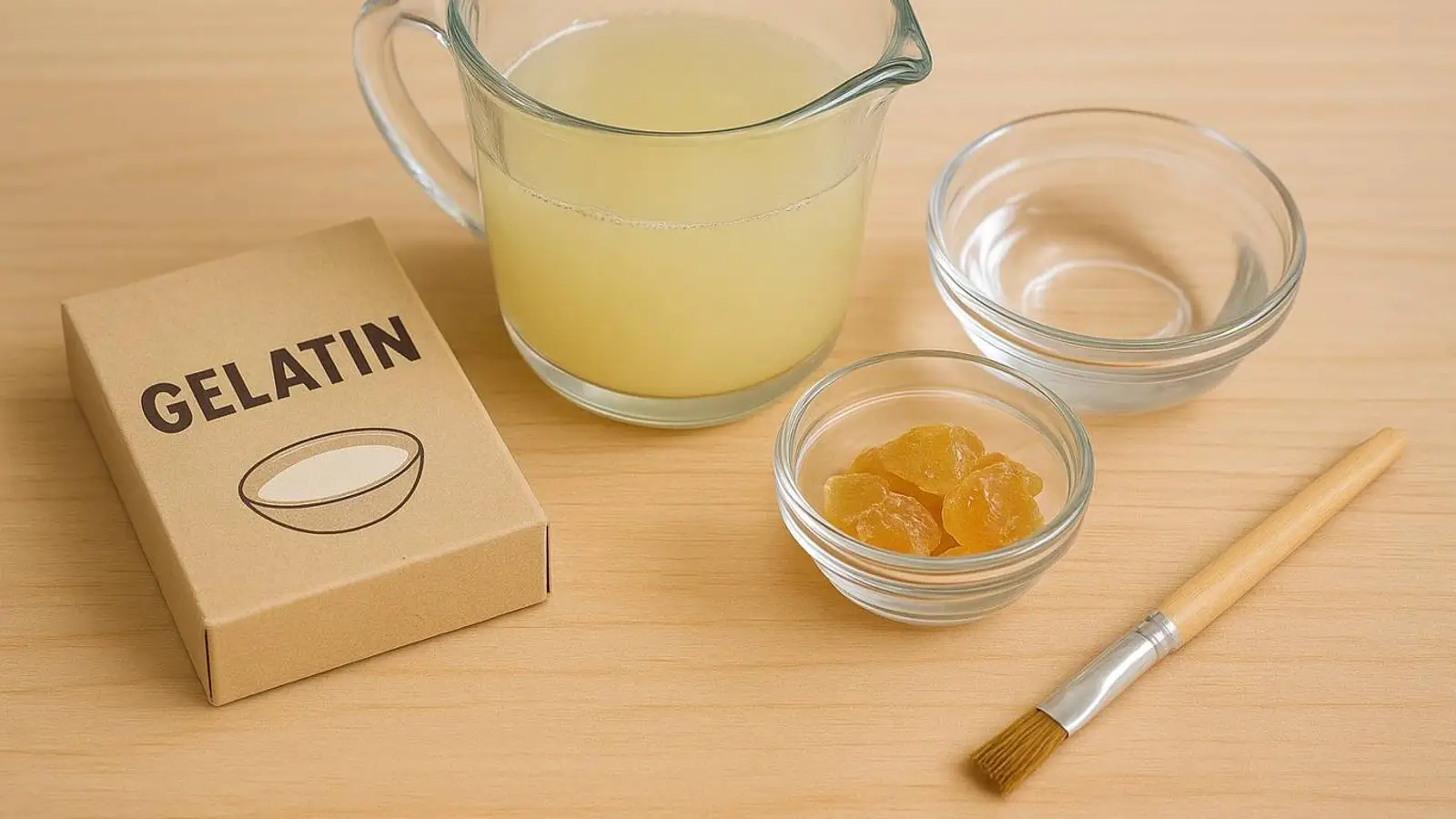
The base of the mixture is gelatin. Heated in water, it forms a thick, translucent mass that behaves like something out of a science show. The transformation is gradual: the longer you stir, the denser the texture becomes. Gelatin has been used in glues for centuries. Derived from animal sources, this natural foundation brings reliable adhesion and flexibility.
An old staple in a new role
To boost performance, the blend is fortified with rosin, a natural pine resin. In the past it found its way into music, shipbuilding, and even furniture. In this experiment, the resin was dissolved in alcohol, giving the glue extra tack and a hint of water resistance. The mass turned clearer and more uniform.
The fine points
To prevent cracks after drying, a little glycerin is added—a known way to improve elasticity. Some recipes mention honey or sugar, yet even without them the mix gains the right give.
A result that surprises
Trials on paper and small wooden parts showed a firm bond. It stays natural, safe, and easy to use. And if needed, a joint can be gently taken apart by wetting it—a trait rare in modern synthetic formulas and, frankly, a practical bonus.
How to store and use it
The mixture can be reused: keep it in the refrigerator and warm it briefly over a bain-marie before work. It suits small repairs, creative projects, and restoration tasks. A bit of care goes a long way—the stuff is genuinely sticky, and it’s easy to bond what you didn’t plan to.
Why old recipes are back in favor
Natural materials are regaining popularity for safety and environmental reasons. A gelatin-based homemade glue shows how a simple experiment can steer attention back to techniques that were close to being forgotten—it’s easy to see the appeal.
This hands-on approach attracts those who want to understand their materials and control the process from start to finish. With a little patience, the home workshop gains a tool long used by carpenters, musicians, and restorers.