https://boda.su/en/posts/id2481-stop-leaks-bellows-and-rigid-alternatives-to-flex-hoses
Stop leaks: bellows and rigid alternatives to flex hoses
Why flexible supply hoses fail—and what to use instead
Stop leaks: bellows and rigid alternatives to flex hoses
Learn why flexible supply hoses often fail and how bellows connections or rigid hookups prevent leaks. Choose durable plumbing solutions to protect your home.
2025-12-06T03:19:25+03:00
2025-12-06T03:19:25+03:00
2025-12-06T03:19:25+03:00
Under the sink often hides a detail people remember only when it’s too late. Flexible supply hoses are convenient and install in minutes, yet they’re behind most household deluges. Give the hose the slightest slack and water quickly ends up on the floor—often when no one is home.Why flexible supply lines are a risk, not a convenienceFlexible hoses are popular for their price and easy installation, but those very qualities make them unpredictable. Sometimes even a brand-new line begins to leak within a day. Plumbers point to familiar causes:loose or over-tightened fittings,twisting during installation,sharp bends,water hammer,rapid wear of the rubber gasket,factory defects.Another common misstep is trying to boost sealing with PTFE thread tape. It disrupts the seat of the built-in gasket, turning a flood into a matter of time. The service life of such hoses rarely exceeds 3–7 years. Sometimes brushing the hose with a bucket or bumping it with a cabinet door is enough to trigger a leak. It’s no surprise professionals increasingly treat flexible lines as consumables—and, judging by how often they fail, that description doesn’t feel exaggerated.Bellows connection: stainless steel that takes a hitA reliable alternative is the bellows connection: a corrugated stainless-steel tube with no textile braid and no weak spots. It handles pressure, temperature swings, and serious water hammer, and it lasts 20–25 years.Its advantages include:resistance to corrosion,no kinks when bent,strong, stable joints,versatility for cold and hot water, as well as heating.The bellows tolerates accidental knocks and stays tight even under active, everyday use.Rigid hookup: maximum reliabilityThose who want to eliminate the risk of leaks choose a rigid connection. It’s assembled from a 16 mm multilayer metal-plastic pipe and a special insert, creating a monolithic connection to the mixer.The benefits are clear:a service life measured in decades,no outer braid that ages,superior pressure resistance,immunity to accidental impacts.The inserts are most often made of nickel-plated brass. The design is simple and sturdy, though installation takes a bit more time. The gain in reliability more than pays for the effort.What to choose for peace of mindModern plumbing offers options far safer than the usual hoses. If you want to stop worrying about a flood:a bellows connection is a durable, practical choice,a rigid connection suits those who want maximum assurance.Both are markedly more reliable than flexible hoses and fit any type of apartment. Install once and stop worrying.
flexible supply hoses, flex hose leaks, bellows connection, stainless steel bellows, rigid connection, sink plumbing, prevent leaks, water hammer, home plumbing, supply lines, under-sink, rigid hookup
2025
articles
Why flexible supply hoses fail—and what to use instead
Learn why flexible supply hoses often fail and how bellows connections or rigid hookups prevent leaks. Choose durable plumbing solutions to protect your home.
Generated by DALL·E
Under the sink often hides a detail people remember only when it’s too late. Flexible supply hoses are convenient and install in minutes, yet they’re behind most household deluges. Give the hose the slightest slack and water quickly ends up on the floor—often when no one is home.
Why flexible supply lines are a risk, not a convenience
Flexible hoses are popular for their price and easy installation, but those very qualities make them unpredictable. Sometimes even a brand-new line begins to leak within a day. Plumbers point to familiar causes:
- loose or over-tightened fittings,
- twisting during installation,
- sharp bends,
- water hammer,
- rapid wear of the rubber gasket,
- factory defects.
Another common misstep is trying to boost sealing with PTFE thread tape. It disrupts the seat of the built-in gasket, turning a flood into a matter of time. The service life of such hoses rarely exceeds 3–7 years. Sometimes brushing the hose with a bucket or bumping it with a cabinet door is enough to trigger a leak. It’s no surprise professionals increasingly treat flexible lines as consumables—and, judging by how often they fail, that description doesn’t feel exaggerated.
Bellows connection: stainless steel that takes a hit
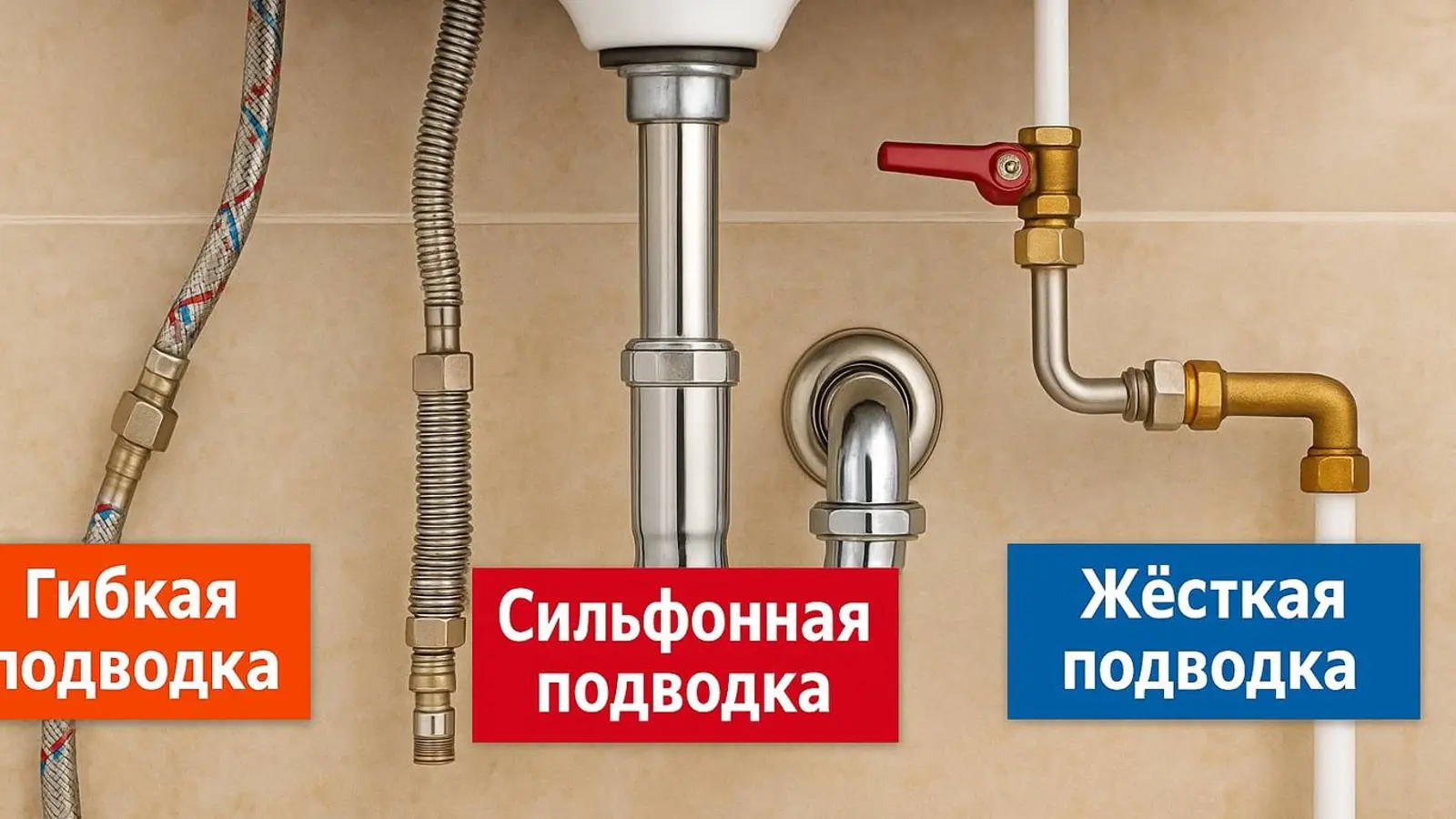
A reliable alternative is the bellows connection: a corrugated stainless-steel tube with no textile braid and no weak spots. It handles pressure, temperature swings, and serious water hammer, and it lasts 20–25 years.
Its advantages include:
- resistance to corrosion,
- no kinks when bent,
- strong, stable joints,
- versatility for cold and hot water, as well as heating.
The bellows tolerates accidental knocks and stays tight even under active, everyday use.
Rigid hookup: maximum reliability
Those who want to eliminate the risk of leaks choose a rigid connection. It’s assembled from a 16 mm multilayer metal-plastic pipe and a special insert, creating a monolithic connection to the mixer.
The benefits are clear:
- a service life measured in decades,
- no outer braid that ages,
- superior pressure resistance,
- immunity to accidental impacts.
The inserts are most often made of nickel-plated brass. The design is simple and sturdy, though installation takes a bit more time. The gain in reliability more than pays for the effort.
What to choose for peace of mind
Modern plumbing offers options far safer than the usual hoses. If you want to stop worrying about a flood:
- a bellows connection is a durable, practical choice,
- a rigid connection suits those who want maximum assurance.
Both are markedly more reliable than flexible hoses and fit any type of apartment. Install once and stop worrying.