https://boda.su/en/posts/id2221-smart-ways-to-hide-an-electrical-panel-with-art-at-home
Smart ways to hide an electrical panel with art at home
How to conceal a breaker box with canvases and frames
Smart ways to hide an electrical panel with art at home
Turn an eyesore into a feature: hide your electrical panel behind a frameless canvas or a box-profile frame. Tips, measurements, styles, and hallway ideas.
2025-12-03T23:38:56+03:00
2025-12-03T23:38:56+03:00
2025-12-03T23:38:56+03:00
In many city apartments, the electrical panel sits in plain view and clashes with the corridor’s look. More and more, designers suggest seeing it not as a flaw but as a chance to add a striking visual accent.A painting instead of a cover: the frameless routeOne of the most convenient options is to hide the panel behind a canvas. The image is printed and stretched over a deep stretcher bar, creating enough room inside to conceal the protruding box.The canvas mounts on L-shaped screws, so access to the panel stays simple. The result looks clean and suits minimalist and contemporary settings. If the mood shifts, the image is easy to swap—you can refresh it as often as you like, even monthly.Designers offer a small tip: abstractions and graphic art best disguise uneven walls and add depth to the composition.A frame with a hidden compartment: a clever double bottomAnother route is to use a frame with a box-profile moulding. Its depth typically exceeds the width of the face, which creates a cavity inside where the panel fits neatly. The piece turns into a frame-box. This approach not only conceals the technical element but also brings extra function. Inside the “box,” you can add hooks for keys—a practical, space-savvy touch for a narrow hallway.Designers note that this tactic stands out for its practicality: the utility stays hidden, while the wall gains an object that performs on several fronts.Three rules for tidy concealmentMeasure not just the height and width of the panel, but its projection from the wall.For the frameless option, choose a lightweight canvas to make removal easier.Match the framing to the interior style: ornate moulding for classics, a pared-back frame for Scandi and modern schemes.Why box-profile moulding worksA profile depth of 4–6 centimeters can hide even bulkier setups. The frame’s side walls cover gaps and create the impression that the artwork sits flush with the surface.This option supports heavier decorative frames—wood, metal, or mixed. In loft interiors, designers often pick a black metal frame and posters with urban graphics. The panel slips out of sight, and in its place appears a bold decorative accent.Decor that does the jobHiding an electrical panel removes visual noise and adds a small element of surprise. Treated this way, the area becomes part of the overall composition without drawing extra attention. Designers say these techniques are a smart way to highlight the strengths of a space and keep the technical details out of frame. The space simply feels calmer.
hide electrical panel, conceal breaker box, frameless canvas cover, box-profile frame, hallway decor, minimalist interior, loft style, graphic art, measurement tips, frame depth 4-6 cm, key hooks
2025
articles
How to conceal a breaker box with canvases and frames
Turn an eyesore into a feature: hide your electrical panel behind a frameless canvas or a box-profile frame. Tips, measurements, styles, and hallway ideas.
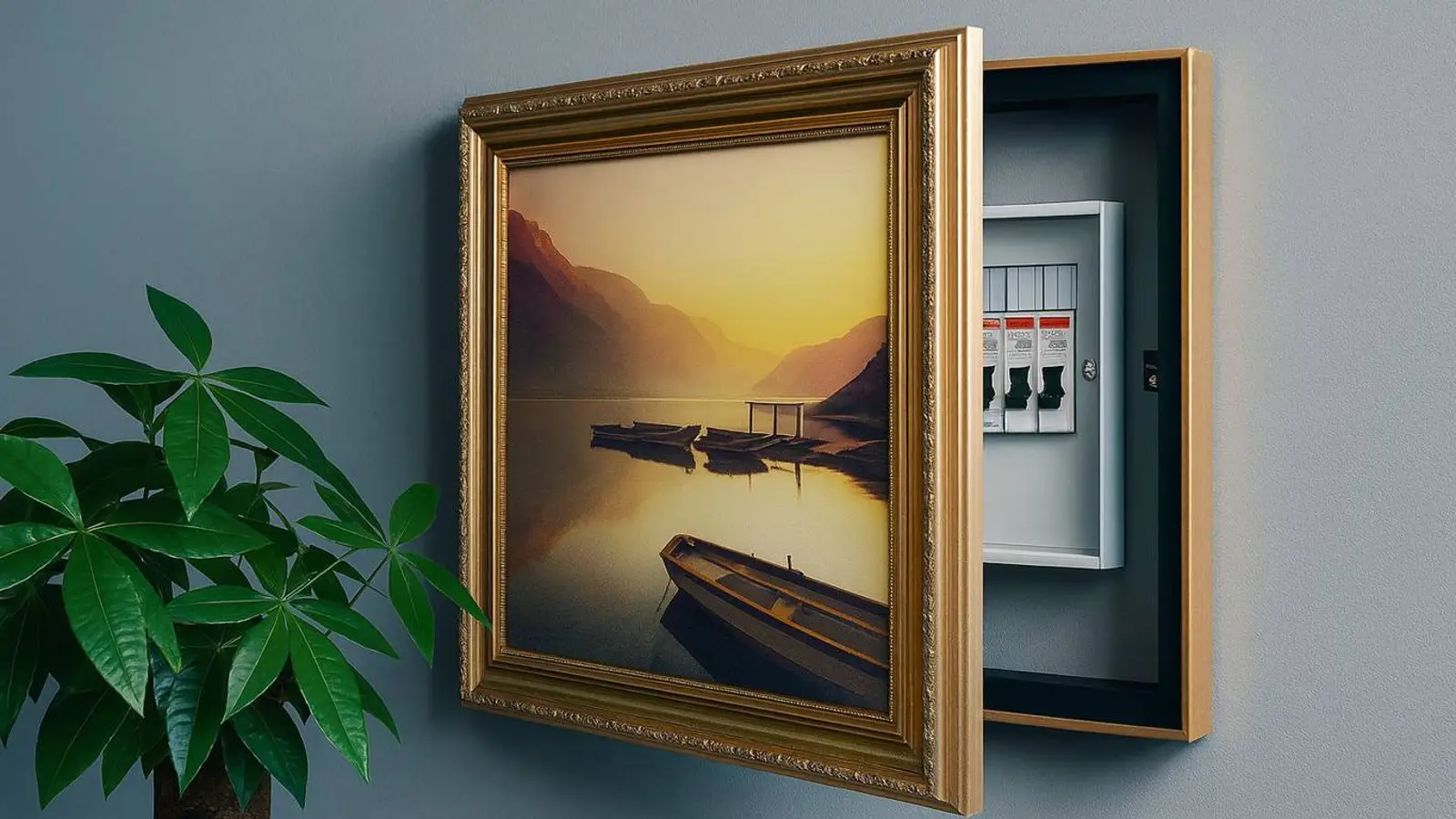
Generated by DALL·E
In many city apartments, the electrical panel sits in plain view and clashes with the corridor’s look. More and more, designers suggest seeing it not as a flaw but as a chance to add a striking visual accent.
A painting instead of a cover: the frameless route
One of the most convenient options is to hide the panel behind a canvas. The image is printed and stretched over a deep stretcher bar, creating enough room inside to conceal the protruding box.
The canvas mounts on L-shaped screws, so access to the panel stays simple. The result looks clean and suits minimalist and contemporary settings. If the mood shifts, the image is easy to swap—you can refresh it as often as you like, even monthly.
Designers offer a small tip: abstractions and graphic art best disguise uneven walls and add depth to the composition.
A frame with a hidden compartment: a clever double bottom
Another route is to use a frame with a box-profile moulding. Its depth typically exceeds the width of the face, which creates a cavity inside where the panel fits neatly. The piece turns into a frame-box. This approach not only conceals the technical element but also brings extra function. Inside the “box,” you can add hooks for keys—a practical, space-savvy touch for a narrow hallway.
Designers note that this tactic stands out for its practicality: the utility stays hidden, while the wall gains an object that performs on several fronts.
Three rules for tidy concealment
- Measure not just the height and width of the panel, but its projection from the wall.
- For the frameless option, choose a lightweight canvas to make removal easier.
- Match the framing to the interior style: ornate moulding for classics, a pared-back frame for Scandi and modern schemes.
Why box-profile moulding works
A profile depth of 4–6 centimeters can hide even bulkier setups. The frame’s side walls cover gaps and create the impression that the artwork sits flush with the surface.
This option supports heavier decorative frames—wood, metal, or mixed. In loft interiors, designers often pick a black metal frame and posters with urban graphics. The panel slips out of sight, and in its place appears a bold decorative accent.
Decor that does the job
Hiding an electrical panel removes visual noise and adds a small element of surprise. Treated this way, the area becomes part of the overall composition without drawing extra attention. Designers say these techniques are a smart way to highlight the strengths of a space and keep the technical details out of frame. The space simply feels calmer.