https://boda.su/en/posts/id2051-da-nang-s-iconic-bridges-han-river-pivot-dragon-show
Da Nang's iconic bridges: Han River pivot, Dragon show
Da Nang's Han River and Dragon bridges: rotating icon and fire-and-water spectacle
Da Nang's iconic bridges: Han River pivot, Dragon show
Discover Da Nang's Han River Bridge that pivots at night and the Dragon Bridge with weekly fire-and-water shows. Timings, facts, and how they shape the skyline.
2025-12-02T13:27:09+03:00
2025-12-02T13:27:09+03:00
2025-12-02T13:27:09+03:00
Da Nang, Vietnam is a place where bridges are attractions in their own right. This coastal city doesn’t treat them as mere crossings: they shape the skyline, draw travelers, and double as stages for evening shows. The Turistas portal points to two standouts—the Han River Bridge, which pivots, and the Dragon Bridge, which puts on fire-and-water performances.A bridge that moves at nightAmong Da Nang’s most recognizable landmarks is the Han River Bridge, the first bridge in Vietnam built by local specialists. Opened in 2000, it quickly came to symbolize the city’s rapid growth.The bridge stretches nearly 488 meters.Its signature feature is the ability to rotate to let vessels pass.On weekdays it turns at about 1–2 a.m.; on weekends, around 11:00 p.m.The nightly pivot has become a small city ritual as residents and visitors gather to watch the structure slowly swing open. The bridge isn’t just an engineering feat; it also helped spur development on the opposite bank, closer to the sea—a reminder that infrastructure can be both practical and quietly theatrical.A dragon bridge that breathes fire and waterThe Dragon Bridge plays a very different role. Shaped like a giant golden dragon, it runs 666 meters across the river and carries six lanes of traffic.Every Friday, Saturday, and Sunday at 21:00, the bridge turns into a stage: the dragon first breathes fire, then releases streams of water.Its form draws on Vietnamese tradition, where the dragon stands for strength, prosperity, and good fortune.Over time, the bridge has become one of Da Nang’s most recognizable spots. People come not only for photos, but for the pulse of the nighttime show—a spectacle that has woven itself into the city’s identity.Why the bridges matterIn Da Nang, bridges are more than links between shores. They’re places to walk, to pause, and to watch the evening lights that turn the riverfront into a luminous panorama.The Han River Bridge gave coastal districts a powerful lift.The Dragon Bridge became the city’s face—its emotional calling card.Together they let Da Nang blend function, design, and visitor appeal—an equilibrium that feels intentional rather than incidental.Challenges behind the beautySuch engineering comes with obligations. When the Han River Bridge begins its pivot, traffic has to be halted. And the Dragon Bridge’s fire-and-water shows can be canceled in strong winds or heavy rain.There isn’t much detailed information about current maintenance, but their seaside location means constant exposure to humidity, salt air, and corrosion—conditions that are hard on metal and paint, and rarely give engineers an easy day.Bridges as part of city lifeIn Da Nang, bridges long ago outgrew the confines of pure architecture. They are symbols, landmarks, and fixtures of urban culture:Han River Bridge—about progress and practicality,Dragon Bridge—about spectacle and emotion.Together they show that engineering can do more than redraw a city’s outline—it can give a place character and mood.
Da Nang bridges, Han River Bridge, Dragon Bridge, fire and water show, rotating bridge, pivot bridge, Vietnam travel, night show, attractions, engineering, skyline, timings
2025
articles
Da Nang's Han River and Dragon bridges: rotating icon and fire-and-water spectacle
Discover Da Nang's Han River Bridge that pivots at night and the Dragon Bridge with weekly fire-and-water shows. Timings, facts, and how they shape the skyline.
Generated by DALL·E
Da Nang, Vietnam is a place where bridges are attractions in their own right. This coastal city doesn’t treat them as mere crossings: they shape the skyline, draw travelers, and double as stages for evening shows. The Turistas portal points to two standouts—the Han River Bridge, which pivots, and the Dragon Bridge, which puts on fire-and-water performances.
A bridge that moves at night
Among Da Nang’s most recognizable landmarks is the Han River Bridge, the first bridge in Vietnam built by local specialists. Opened in 2000, it quickly came to symbolize the city’s rapid growth.
- The bridge stretches nearly 488 meters.
- Its signature feature is the ability to rotate to let vessels pass.
- On weekdays it turns at about 1–2 a.m.; on weekends, around 11:00 p.m.
The nightly pivot has become a small city ritual as residents and visitors gather to watch the structure slowly swing open. The bridge isn’t just an engineering feat; it also helped spur development on the opposite bank, closer to the sea—a reminder that infrastructure can be both practical and quietly theatrical.
A dragon bridge that breathes fire and water
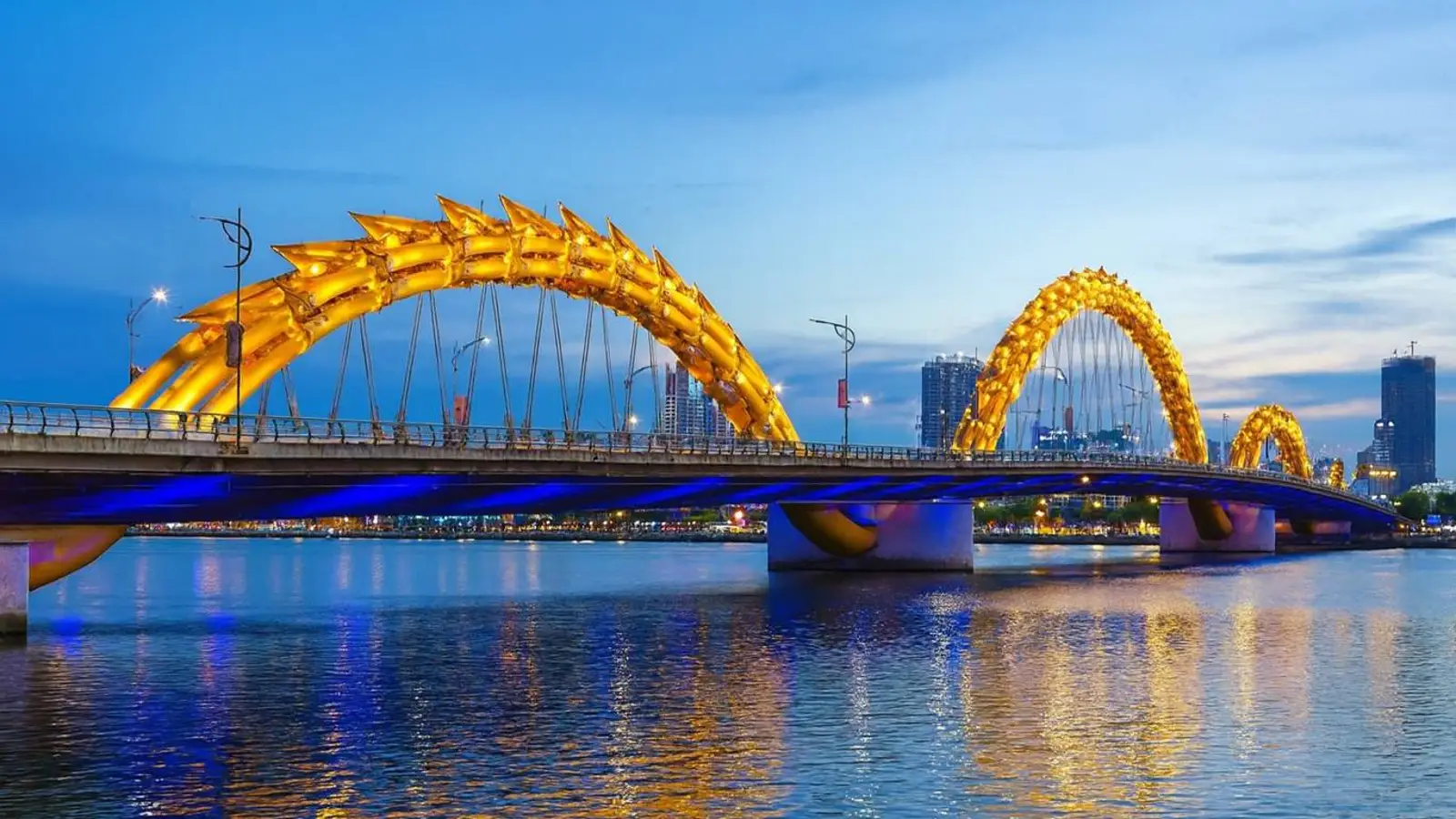
The Dragon Bridge plays a very different role. Shaped like a giant golden dragon, it runs 666 meters across the river and carries six lanes of traffic.
- Every Friday, Saturday, and Sunday at 21:00, the bridge turns into a stage: the dragon first breathes fire, then releases streams of water.
- Its form draws on Vietnamese tradition, where the dragon stands for strength, prosperity, and good fortune.
Over time, the bridge has become one of Da Nang’s most recognizable spots. People come not only for photos, but for the pulse of the nighttime show—a spectacle that has woven itself into the city’s identity.
Why the bridges matter
In Da Nang, bridges are more than links between shores. They’re places to walk, to pause, and to watch the evening lights that turn the riverfront into a luminous panorama.
- The Han River Bridge gave coastal districts a powerful lift.
- The Dragon Bridge became the city’s face—its emotional calling card.
Together they let Da Nang blend function, design, and visitor appeal—an equilibrium that feels intentional rather than incidental.
Challenges behind the beauty
Such engineering comes with obligations. When the Han River Bridge begins its pivot, traffic has to be halted. And the Dragon Bridge’s fire-and-water shows can be canceled in strong winds or heavy rain.
There isn’t much detailed information about current maintenance, but their seaside location means constant exposure to humidity, salt air, and corrosion—conditions that are hard on metal and paint, and rarely give engineers an easy day.
Bridges as part of city life
In Da Nang, bridges long ago outgrew the confines of pure architecture. They are symbols, landmarks, and fixtures of urban culture:
- Han River Bridge—about progress and practicality,
- Dragon Bridge—about spectacle and emotion.
Together they show that engineering can do more than redraw a city’s outline—it can give a place character and mood.