https://boda.su/en/posts/id2021-inside-unk-protvino-the-soviet-collider-that-never-ran
Inside UNK Protvino: the Soviet collider that never ran
UNK Protvino: the abandoned 21‑km Soviet collider ring
Inside UNK Protvino: the Soviet collider that never ran
Explore the UNK underground complex in Protvino—a 21‑km Soviet collider linked to the U‑70. Learn how a particle physics project stalled and what remains today.
2025-12-02T07:33:32+03:00
2025-12-02T07:33:32+03:00
2025-12-02T07:33:32+03:00
About 130 kilometers from the capital lies a site on the scale of a metro circle line. This is the UNK underground complex—a ring stretching 21 kilometers with a diameter of roughly five meters. Conceived as a leap into the future of Soviet science, it ultimately turned into one of the country’s most enigmatic abandoned ventures.A city that rose on an ancient seabedThe chosen location sits on the border of Moscow and Kaluga regions. In the 1960s, the science town of Protvino was built here. The area rests on the sediments of a long-vanished sea—soils stable against vibration—which made it ideal for large structures that needed protection from seismic risks.Protvino was planned as a research hub with a comfortable urban fabric. Housing went up to individual designs, and entire blocks were threaded with preserved forest. The town had schools, shops, and a House of Scientists that hosted visiting performers. For physicists, the conditions were, by the standards of the era, distinctly privileged.How the first accelerator came to beConstruction began in 1961, backed by unprecedented funding and led by military specialists who already had experience with such facilities. That is how the U-70 accelerator emerged—today the most powerful in Russia. The installation is a large ring about one and a half kilometers long, housed inside a colossal 20,000‑ton magnet. Here, particles are accelerated to near light speed for collision studies; researchers also test radiation effects on electronics and develop techniques for pinpoint tumor irradiation.Why a collider was neededThe accelerator’s logic is often likened to taking apart a toy: to understand how something is built, you sometimes have to break it. In physics, particles collide at immense energies and their “fragments” reveal processes at the heart of matter. But research at that level demands towering technology—and equally towering budgets. That is why the next step, the UNK accelerator-storage complex, became the late Soviet era’s largest construction project.The Union’s last ringIn 1983, work began on a new underground tunnel. The plan called for two rings: the existing U-70 and a giant 20‑kilometer UNK ring. Progress was slow until a 1987 decision to accelerate the schedule. A year later, the Soviet Union purchased modern tunneling machines, and digging sped up dramatically. By 1989, most of the tunnels had been driven.Then, in the early 1990s, the project ran into a financial crisis. There was an attempt to mothball the site, but even conservation proved too costly. Without proper maintenance, the tunnels themselves could become a risk for the region.The ring was closed—too lateBy 1994, crews had connected the final segments, effectively completing the 21‑kilometer tunnel. But funds were no longer sufficient even for wages. What sealed the project’s fate was Russia’s decision to take part in building the Large Hadron Collider in Europe. From that point, UNK’s prospects became uncertain, and finishing it was deemed economically pointless.What remains todayParts of the UNK infrastructure lie abandoned, while others are guarded. Money is allocated annually to pump out water and keep the site safe. Proposals range from reviving it as a research center to turning it into a tourist route, but they all hit the same wall: cost.Even so, the U-70 continues to operate. It remains a significant research facility where experiments of global caliber are still carried out.
UNK, Protvino, Soviet collider, U-70 accelerator, underground complex, 21-km ring, particle physics, Russia, abandoned project, accelerator-storage complex, Large Hadron Collider, Moscow region
2025
articles
UNK Protvino: the abandoned 21‑km Soviet collider ring
Explore the UNK underground complex in Protvino—a 21‑km Soviet collider linked to the U‑70. Learn how a particle physics project stalled and what remains today.
Generated by DALL·E
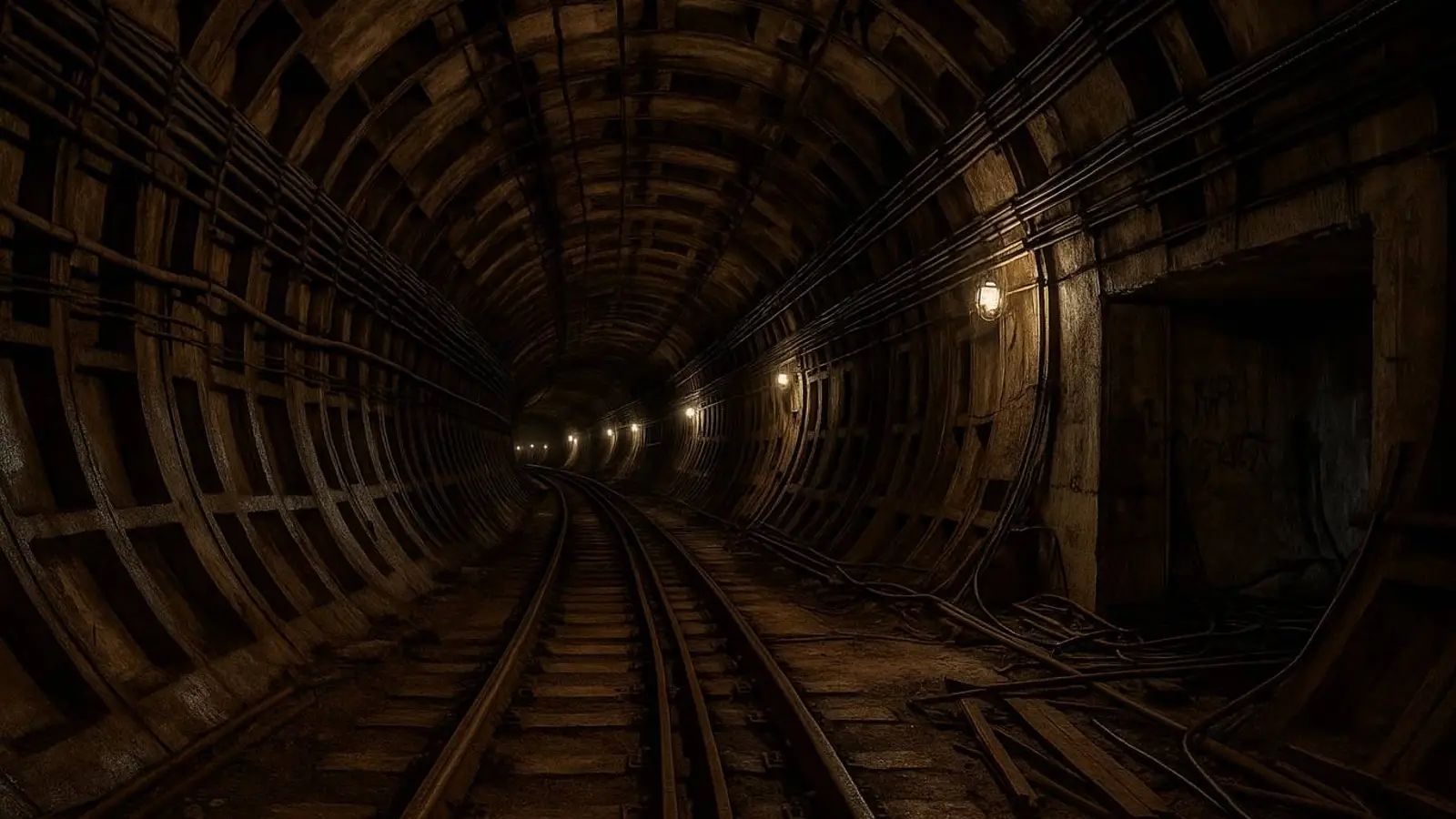
About 130 kilometers from the capital lies a site on the scale of a metro circle line. This is the UNK underground complex—a ring stretching 21 kilometers with a diameter of roughly five meters. Conceived as a leap into the future of Soviet science, it ultimately turned into one of the country’s most enigmatic abandoned ventures.
A city that rose on an ancient seabed
The chosen location sits on the border of Moscow and Kaluga regions. In the 1960s, the science town of Protvino was built here. The area rests on the sediments of a long-vanished sea—soils stable against vibration—which made it ideal for large structures that needed protection from seismic risks.
Protvino was planned as a research hub with a comfortable urban fabric. Housing went up to individual designs, and entire blocks were threaded with preserved forest. The town had schools, shops, and a House of Scientists that hosted visiting performers. For physicists, the conditions were, by the standards of the era, distinctly privileged.
How the first accelerator came to be
Construction began in 1961, backed by unprecedented funding and led by military specialists who already had experience with such facilities. That is how the U-70 accelerator emerged—today the most powerful in Russia. The installation is a large ring about one and a half kilometers long, housed inside a colossal 20,000‑ton magnet. Here, particles are accelerated to near light speed for collision studies; researchers also test radiation effects on electronics and develop techniques for pinpoint tumor irradiation.
Why a collider was needed
The accelerator’s logic is often likened to taking apart a toy: to understand how something is built, you sometimes have to break it. In physics, particles collide at immense energies and their “fragments” reveal processes at the heart of matter. But research at that level demands towering technology—and equally towering budgets. That is why the next step, the UNK accelerator-storage complex, became the late Soviet era’s largest construction project.
The Union’s last ring
In 1983, work began on a new underground tunnel. The plan called for two rings: the existing U-70 and a giant 20‑kilometer UNK ring. Progress was slow until a 1987 decision to accelerate the schedule. A year later, the Soviet Union purchased modern tunneling machines, and digging sped up dramatically. By 1989, most of the tunnels had been driven.
Then, in the early 1990s, the project ran into a financial crisis. There was an attempt to mothball the site, but even conservation proved too costly. Without proper maintenance, the tunnels themselves could become a risk for the region.
The ring was closed—too late
By 1994, crews had connected the final segments, effectively completing the 21‑kilometer tunnel. But funds were no longer sufficient even for wages. What sealed the project’s fate was Russia’s decision to take part in building the Large Hadron Collider in Europe. From that point, UNK’s prospects became uncertain, and finishing it was deemed economically pointless.
What remains today
Parts of the UNK infrastructure lie abandoned, while others are guarded. Money is allocated annually to pump out water and keep the site safe. Proposals range from reviving it as a research center to turning it into a tourist route, but they all hit the same wall: cost.
Even so, the U-70 continues to operate. It remains a significant research facility where experiments of global caliber are still carried out.