https://boda.su/en/posts/id1961-emder-uncovered-an-ob-ugric-epic-that-guided-archaeology
Emder uncovered: an Ob-Ugric epic that guided archaeology
How a Ugric epic led archaeologists to the city of Emder
Emder uncovered: an Ob-Ugric epic that guided archaeology
Discover Emder, a lost Ob-Ugric fortress found through epic lore. From larch walls to fur trade and downfall, archaeology and legend converge on Yendyr River.
2025-12-01T19:38:47+03:00
2025-12-01T19:38:47+03:00
2025-12-01T19:38:47+03:00
The tale of a Russian epic turning into a working map for researchers could pass for an adventure story. Yet that is exactly how, in the late twentieth century, the ancient city of Emder was found — a fortified hub of the Ob-Ugrians that had lived for centuries only in songs and lore.The epic that pointed the wayIn the late nineteenth century, ethnographers recorded Khanty legends, including the bylina about Emder’s heroes. It read like a saga of five brothers, but folklorist Serafim Patkanov noticed a crucial clue: the city stood on a river that did not freeze in winter, with banks rimmed by hoarfrost. It is hard to miss how a single descriptive detail shifted the hunt from guesswork to something closer to cartography.Nearly a century later, archaeologists Alexey Zykov and Sergey Koksharov aligned that description with the Yendyr River, a tributary of the Ob. Geophysicist Vladimir Dolganov later told them about odd embankments and hollows along its banks. A hypothesis took shape. In 1993, an expedition uncovered a fortified settlement 68 kilometers from Nyagan. On the promontory where the stronghold stood grew a giant larch — just as the epic spoke of an owl princess perched on a tree with peeling bark. If any site shows that oral tradition can carry coordinates across centuries, this is it.A fortress born of the taigaYears of excavation revealed Emder as a true wooden castle of the eleventh to sixteenth centuries. The layout reads less like ruins and more like the blueprint of a small polity.Fortification walls of larch stood in two rows;between them lay a moat, likely filled with water;inside were dozens of buildings, from noble dwellings to warriors’ quarters;nearby stood a smithy where weapons and armor were forged.The city burned more than once, but its residents rebuilt it, which speaks to its strategic value. Emder was not a village on the fringe — it functioned as a political center of a small Ugric principality.Trade, arms, and links to distant landsThe fortress economy rested on hunting, fishing, and herding. The real wealth was fur — a currency valued everywhere.Archaeologists found:silver and bronze ornaments,beads and mirrors,fragments of Russian mail armor from the thirteenth to fourteenth centuries.These finds indicate wide trade ties — from Novgorod to Tatar lands. Through intermediaries, furs traveled as far as Europe and Central Asia. Emder’s craftsmen worked bone, leather, and bronze casting, and power passed along family lines. By the sixteenth century, the city had become a vassal of the Koda principality, without losing its importance.The saga of the brothers and its tragic endAt the heart of Emder’s legend is the bylina of five warrior brothers. It carries the full arc of an epic: an elder fighter famed for strength; the younger hero Yag, swift as the wind; a search for a bride in a distant town on the Konda; a quarrel that spirals into bloodshed; the death of three brothers and the vow of revenge. Though it is poetry, archaeologists note that many details — river names, larches, mentions of enemies — echo what the spade has confirmed. The intersection of verse and evidence feels unusually persuasive.Emder’s last daysThe city ceased to exist at the end of the sixteenth century. It was taken by storm and razed. The final foe remains uncertain — perhaps neighboring groups, perhaps forces arriving from the west. After the stronghold fell, its memory survived only in epic song, until archaeology restored it to the record.Heritage under threatToday, the Yendyr hillfort is a site of regional historical heritage. Its preservation, however, is constantly at risk. Archaeologists each year find traces of looters, and in the deep taiga they are hard to stop. Every item lost is an irreplaceable page of history.Even so, work continues. The Nyagan museum runs educational programs, and archaeological camps are organized for teenagers. There are plans to build a reconstruction of Emder’s fortress as part of a future cultural complex. Perhaps one day visitors will walk those walls and catch the echo of the epic that guided scholars to a vanished city.
Emder, Ob-Ugric, Khanty, Yendyr River, archaeology, epic, bylina, fortress, taiga, fur trade, Novgorod, Koda principality, Nyagan, Ugric legends, heritage, looters, reconstruction
2025
articles
How a Ugric epic led archaeologists to the city of Emder
Discover Emder, a lost Ob-Ugric fortress found through epic lore. From larch walls to fur trade and downfall, archaeology and legend converge on Yendyr River.
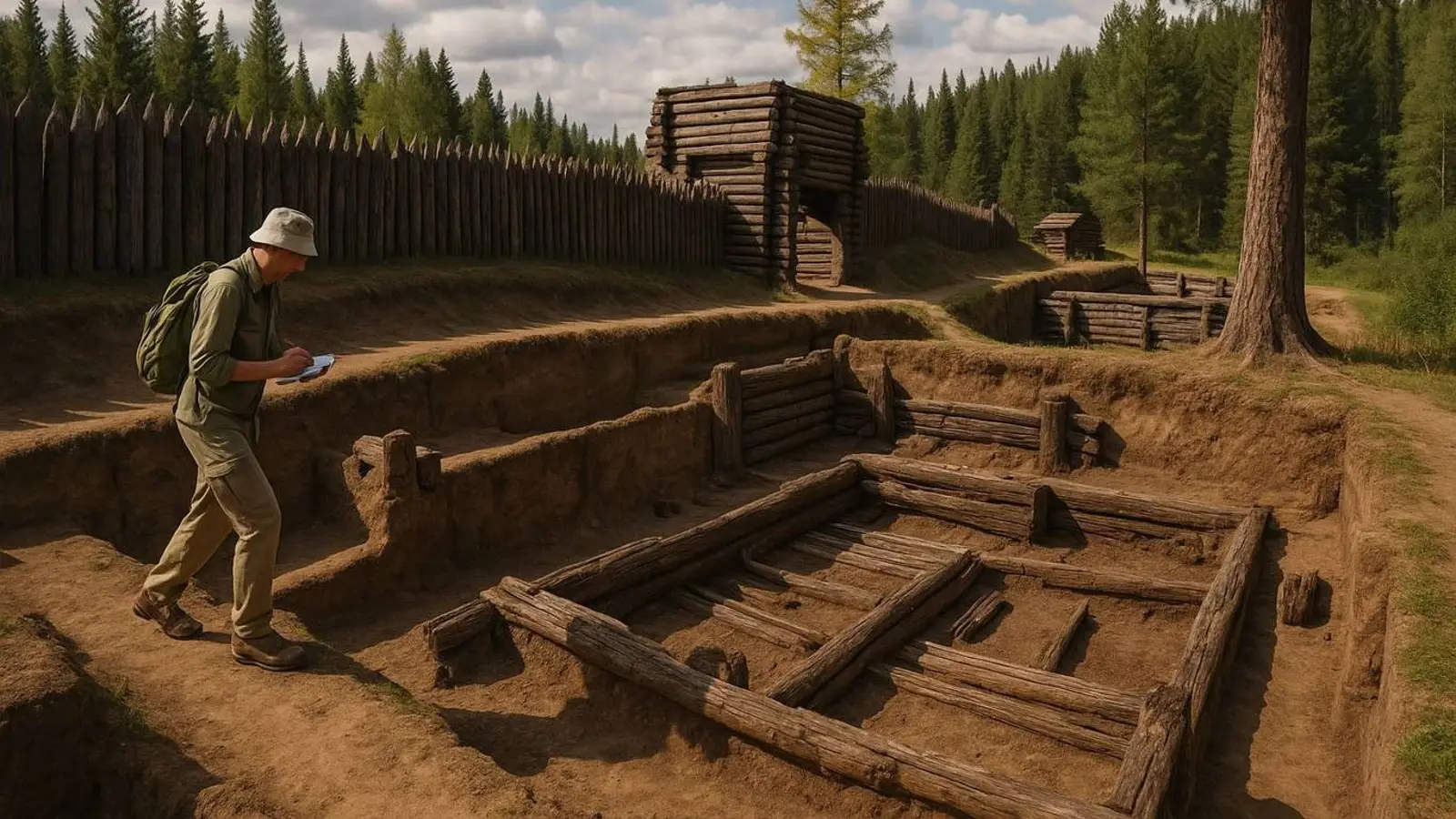
Generated by DALL·E
The tale of a Russian epic turning into a working map for researchers could pass for an adventure story. Yet that is exactly how, in the late twentieth century, the ancient city of Emder was found — a fortified hub of the Ob-Ugrians that had lived for centuries only in songs and lore.
The epic that pointed the way
In the late nineteenth century, ethnographers recorded Khanty legends, including the bylina about Emder’s heroes. It read like a saga of five brothers, but folklorist Serafim Patkanov noticed a crucial clue: the city stood on a river that did not freeze in winter, with banks rimmed by hoarfrost. It is hard to miss how a single descriptive detail shifted the hunt from guesswork to something closer to cartography.
Nearly a century later, archaeologists Alexey Zykov and Sergey Koksharov aligned that description with the Yendyr River, a tributary of the Ob. Geophysicist Vladimir Dolganov later told them about odd embankments and hollows along its banks. A hypothesis took shape. In 1993, an expedition uncovered a fortified settlement 68 kilometers from Nyagan. On the promontory where the stronghold stood grew a giant larch — just as the epic spoke of an owl princess perched on a tree with peeling bark. If any site shows that oral tradition can carry coordinates across centuries, this is it.
A fortress born of the taiga
Years of excavation revealed Emder as a true wooden castle of the eleventh to sixteenth centuries. The layout reads less like ruins and more like the blueprint of a small polity.
- Fortification walls of larch stood in two rows;
- between them lay a moat, likely filled with water;
- inside were dozens of buildings, from noble dwellings to warriors’ quarters;
- nearby stood a smithy where weapons and armor were forged.
The city burned more than once, but its residents rebuilt it, which speaks to its strategic value. Emder was not a village on the fringe — it functioned as a political center of a small Ugric principality.
Trade, arms, and links to distant lands
The fortress economy rested on hunting, fishing, and herding. The real wealth was fur — a currency valued everywhere.
Archaeologists found:
- silver and bronze ornaments,
- beads and mirrors,
- fragments of Russian mail armor from the thirteenth to fourteenth centuries.
These finds indicate wide trade ties — from Novgorod to Tatar lands. Through intermediaries, furs traveled as far as Europe and Central Asia. Emder’s craftsmen worked bone, leather, and bronze casting, and power passed along family lines. By the sixteenth century, the city had become a vassal of the Koda principality, without losing its importance.
The saga of the brothers and its tragic end
At the heart of Emder’s legend is the bylina of five warrior brothers. It carries the full arc of an epic: an elder fighter famed for strength; the younger hero Yag, swift as the wind; a search for a bride in a distant town on the Konda; a quarrel that spirals into bloodshed; the death of three brothers and the vow of revenge. Though it is poetry, archaeologists note that many details — river names, larches, mentions of enemies — echo what the spade has confirmed. The intersection of verse and evidence feels unusually persuasive.
Emder’s last days
The city ceased to exist at the end of the sixteenth century. It was taken by storm and razed. The final foe remains uncertain — perhaps neighboring groups, perhaps forces arriving from the west. After the stronghold fell, its memory survived only in epic song, until archaeology restored it to the record.
Heritage under threat
Today, the Yendyr hillfort is a site of regional historical heritage. Its preservation, however, is constantly at risk. Archaeologists each year find traces of looters, and in the deep taiga they are hard to stop. Every item lost is an irreplaceable page of history.
Even so, work continues. The Nyagan museum runs educational programs, and archaeological camps are organized for teenagers. There are plans to build a reconstruction of Emder’s fortress as part of a future cultural complex. Perhaps one day visitors will walk those walls and catch the echo of the epic that guided scholars to a vanished city.