https://boda.su/en/posts/id1901-yakutia-s-valley-of-death-cauldrons-myth-and-science
Yakutia’s Valley of Death: cauldrons, myth and science
The enigmatic cauldrons of Yakutia’s Valley of Death
Yakutia’s Valley of Death: cauldrons, myth and science
Explore Yakutia’s Valley of Death: the mysterious metal 'cauldrons,' round lakes, hunters’ tales, and scientific answers from gas seeps, permafrost, and geology
2025-12-01T07:18:29+03:00
2025-12-01T07:18:29+03:00
2025-12-01T07:18:29+03:00
Yakutia’s Valley of Death remains one of Siberia’s most discussed enigmas. Unlike its American namesake, there’s no blistering heat and no desert here. Instead come deep taiga, the flow of the Vilyuy, and the occasional hunters’ camp. Yet this secluded stretch has provoked questions for decades: where did the mysterious "cauldrons" come from, and why did the area earn such a grim name?Where a "cauldron" stands with trees growing insideHunters’ oral accounts laid the groundwork for legends that gathered details over time. Most stories converge on one point: in the upper reaches of the Vilyuy lie huge metal basins, half-buried in the ground. Locals say the "cauldrons" are large enough to walk into and even use as shelter from the cold—inside it supposedly stays above freezing.Researchers first encountered references to these objects in 19th-century documents. The Russian naturalist Richard Maak mentioned a "giant cauldron" by the Algiy timirnit tributary. No one measured its size: only the rim was visible, but hunters maintained that trees grew inside. Strictly speaking, this is not verifiable—Maak never went there himself and relied on local accounts. Still, those very tales became the backbone of the legend.Illness, fear, and the first theoriesAccording to tradition, hunters who climbed down into one of the cauldrons felt unwell. Those who entered once suffered malaise, while those who spent the night there several times died of unexplained illnesses. That is how the name took hold—Елюю Чёркёчюёк, which translates as "valley of death."Mikhail Koretsky’s letter: the most detailed accountThe biggest stir came from a letter by Mikhail Koretsky, published in Trud in 1996. Koretsky said he saw seven cauldrons in the 1930s–1940s and noted several odd features:diameter of 6–9 meters;metal unlike copper and impervious to tools;a surface coated with something resembling sandpaper;"unusual" vegetation around them: giant burdock, tall grass, very thick tree trunks.Koretsky and his companions climbed inside; afterward one man lost all his hair. The author himself developed sores on his head. He also found a black stone of perfect shape that could easily cut glass.Two round lakes and strange moundsAfter the letter appeared, the editorial office received many similar stories. The map of alleged artifacts widened, and so did the confusion. In the 21st century, enthusiasts ran their own expeditions. They found no actual cauldrons, but two striking clues kept turning up:round lakes whose shape suggested craters;even earthen mounds, as if poured from a giant bucket.Near the lakes, the compass needle behaved erratically, which only fed the intrigue.Scientists’ explanations: gas, permafrost, and geologySpecialists keep the story grounded. The State Committee for Geology of Yakutia notes that the area is rich in gas seeps. Breathing methane can trigger hallucinations and a sudden decline in well‑being. As for the circular lakes and the mounds, most researchers see them as expressions of cryogenic processes:heave mounds form when thaw water forces up loose sediments;when a mound subsides, a thermokarst lake forms.Such lakes often trace an almost perfectly circular outline.What about the "cauldrons"?Historians suggest the image of a copper bowl may trace back to early finds of bronze vessels. Siberia was home to tribes connected with the Scythians, and they had huge cauldrons mentioned by Herodotus. Perhaps early hunters really did glimpse one such vessel—and that single sighting grew into the legend.A place where myths outlive peopleTales of "black one‑eyed creatures," "iron men," mysterious metal, and strange grass still circulate in conversations and articles. Yet the more the taiga is studied, the more down‑to‑earth answers appear where mysticism once stood. Even so, the Valley of Death remains a place where lore can sound more persuasive than evidence—maybe that’s why people keep returning to the story.
Yakutia’s Valley of Death, Yakutia cauldrons, Vilyuy River, hunters’ tales, round lakes, mounds, permafrost, thermokarst, gas seeps, methane, geology, Mikhail Koretsky, Scythian cauldrons
2025
articles
The enigmatic cauldrons of Yakutia’s Valley of Death
Explore Yakutia’s Valley of Death: the mysterious metal 'cauldrons,' round lakes, hunters’ tales, and scientific answers from gas seeps, permafrost, and geology
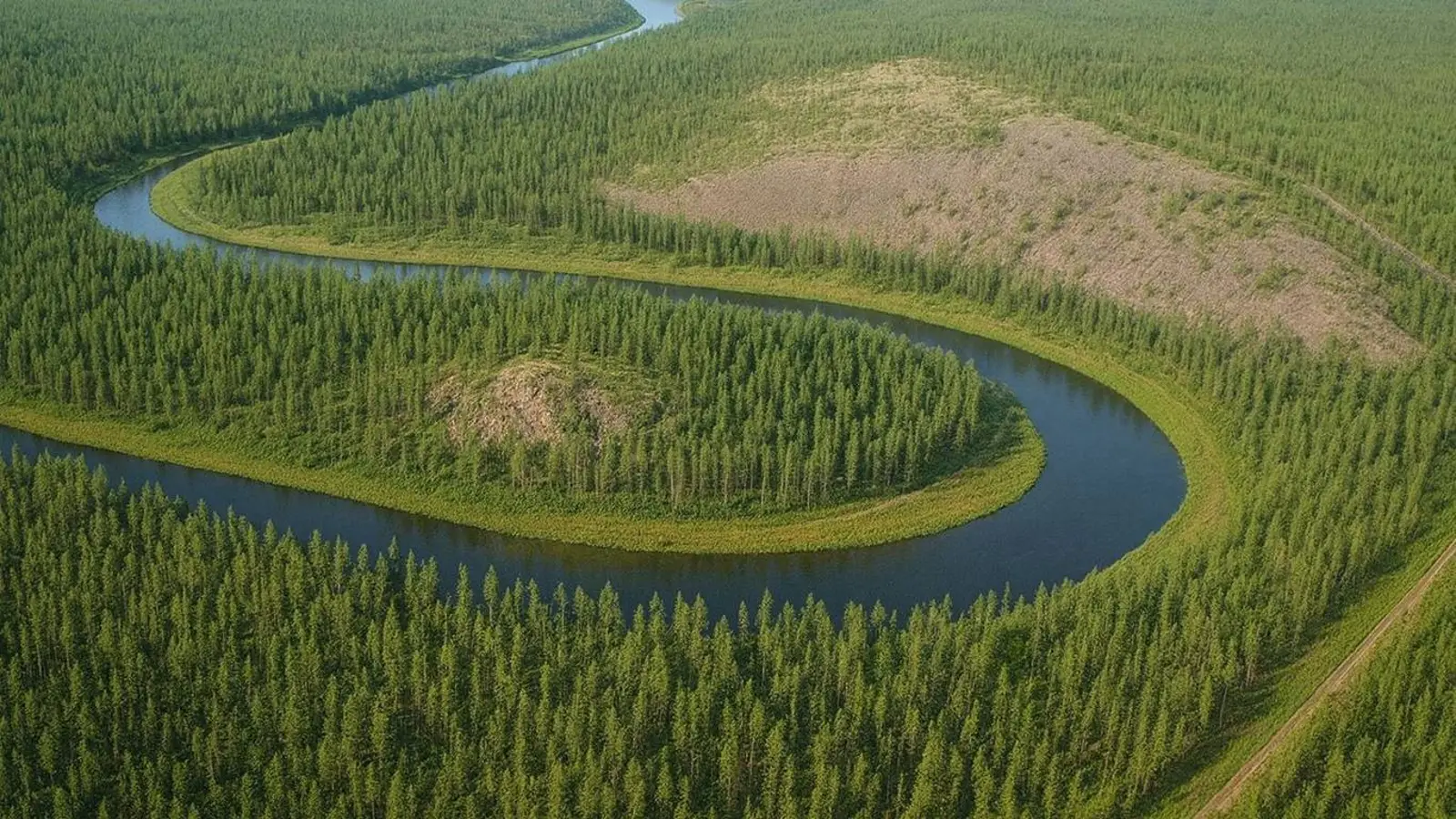
Generated by DALL·E
Yakutia’s Valley of Death remains one of Siberia’s most discussed enigmas. Unlike its American namesake, there’s no blistering heat and no desert here. Instead come deep taiga, the flow of the Vilyuy, and the occasional hunters’ camp. Yet this secluded stretch has provoked questions for decades: where did the mysterious "cauldrons" come from, and why did the area earn such a grim name?
Where a "cauldron" stands with trees growing inside
Hunters’ oral accounts laid the groundwork for legends that gathered details over time. Most stories converge on one point: in the upper reaches of the Vilyuy lie huge metal basins, half-buried in the ground. Locals say the "cauldrons" are large enough to walk into and even use as shelter from the cold—inside it supposedly stays above freezing.
Researchers first encountered references to these objects in 19th-century documents. The Russian naturalist Richard Maak mentioned a "giant cauldron" by the Algiy timirnit tributary. No one measured its size: only the rim was visible, but hunters maintained that trees grew inside. Strictly speaking, this is not verifiable—Maak never went there himself and relied on local accounts. Still, those very tales became the backbone of the legend.
Illness, fear, and the first theories
According to tradition, hunters who climbed down into one of the cauldrons felt unwell. Those who entered once suffered malaise, while those who spent the night there several times died of unexplained illnesses. That is how the name took hold—Елюю Чёркёчюёк, which translates as "valley of death."
Mikhail Koretsky’s letter: the most detailed account
The biggest stir came from a letter by Mikhail Koretsky, published in Trud in 1996. Koretsky said he saw seven cauldrons in the 1930s–1940s and noted several odd features:
- diameter of 6–9 meters;
- metal unlike copper and impervious to tools;
- a surface coated with something resembling sandpaper;
- "unusual" vegetation around them: giant burdock, tall grass, very thick tree trunks.
Koretsky and his companions climbed inside; afterward one man lost all his hair. The author himself developed sores on his head. He also found a black stone of perfect shape that could easily cut glass.
Two round lakes and strange mounds
After the letter appeared, the editorial office received many similar stories. The map of alleged artifacts widened, and so did the confusion. In the 21st century, enthusiasts ran their own expeditions. They found no actual cauldrons, but two striking clues kept turning up:
- round lakes whose shape suggested craters;
- even earthen mounds, as if poured from a giant bucket.
Near the lakes, the compass needle behaved erratically, which only fed the intrigue.
Scientists’ explanations: gas, permafrost, and geology
Specialists keep the story grounded. The State Committee for Geology of Yakutia notes that the area is rich in gas seeps. Breathing methane can trigger hallucinations and a sudden decline in well‑being. As for the circular lakes and the mounds, most researchers see them as expressions of cryogenic processes:
- heave mounds form when thaw water forces up loose sediments;
- when a mound subsides, a thermokarst lake forms.
Such lakes often trace an almost perfectly circular outline.
What about the "cauldrons"?
Historians suggest the image of a copper bowl may trace back to early finds of bronze vessels. Siberia was home to tribes connected with the Scythians, and they had huge cauldrons mentioned by Herodotus. Perhaps early hunters really did glimpse one such vessel—and that single sighting grew into the legend.
A place where myths outlive people
Tales of "black one‑eyed creatures," "iron men," mysterious metal, and strange grass still circulate in conversations and articles. Yet the more the taiga is studied, the more down‑to‑earth answers appear where mysticism once stood. Even so, the Valley of Death remains a place where lore can sound more persuasive than evidence—maybe that’s why people keep returning to the story.