https://boda.su/en/posts/id1781-diy-penetrating-oil-blends-that-beat-wd-40-on-seized-bolts
DIY penetrating oil blends that beat WD-40 on seized bolts
Two DIY penetrating oil recipes that free seized bolts
DIY penetrating oil blends that beat WD-40 on seized bolts
Free seized bolts with two DIY penetrating oil blends that outperform WD-40. Recipes use rust converter, graphite, and Prolong additive for faster repairs.
2025-11-30T07:54:03+03:00
2025-11-30T07:54:03+03:00
2025-11-30T07:54:03+03:00
In repair work, people often reach for familiar fixes. WD-40 looks like a cure-all, and many are sure it will conquer any frozen fastener. But meet a bolt that hasn’t budged in decades, and that confidence fades fast. Nerves fray, threads strip, and a snapped stud turns into a long, joyless session with a drill.Those who deal with this regularly turned to alternatives long ago. They cost less yet take apart the most stubborn connections.The first blend — for the toughest casesThis option was put together specifically for old, seized joints where everyday products give up. The mix doesn’t just lubricate the threads — it engages rust on a chemical level.What you need:white spirit — 50 g;dry lubricant (graphite, molybdenum, or similar) — 5 g;rust converter — 50 g.How to make it:Pour white spirit into a small container.Add the dry lubricant.Pour in the rust converter.Stir and transfer to a convenient sprayer.The result is an active blend that penetrates deep into the threads, breaks down the oxide layer, and lubricates at the same time. In practice, the reaction starts almost immediately, and a nut that refused to move by wrench comes off without a fight.There are trade-offs. You need to shake the mix before each use. The sprayer can clog due to the dry lubricant, so it’s smarter to prepare only what you’ll use.The second blend — stable and convenientThis mix suits those who want strong effect without the hassle of constant shaking or a sticky nozzle.Components:white spirit or solvent 646 — 50 g;graphite waterproof grease — 5 g;Prolong anti-friction additive — 10 g.The process is the same: dissolve the grease in the solvent, then add the additive. The liquid is ready to use right away and stays uniform. In tests, this blend cut loosening torque much more than WD-40; the torque wrench’s scale simply wasn’t enough to capture the result.Why it actually worksThe effect comes from several processes working together:the rust converter breaks down the oxide film;the solvent wicks the mix deep into the threads;graphite and molybdenum lay down a durable, low-friction layer;the additives push friction to a minimum.This combination makes the blend stronger than most common penetrating lubricants. The bolt doesn’t snap, the thread doesn’t gall, and the joint separates without drama. These mixes step in where standard products already failed, letting you free old, seized parts without risking threads or tools. Repairs become calmer, and nasty surprises almost disappear — a kind of predictability that, in real garage life, matters more than a familiar name on the can.
penetrating oil, seized bolts, stuck fasteners, WD-40 alternative, rust converter, white spirit, graphite lubricant, molybdenum, Prolong additive, DIY blend, loosening torque, garage repair
2025
articles
Two DIY penetrating oil recipes that free seized bolts
Free seized bolts with two DIY penetrating oil blends that outperform WD-40. Recipes use rust converter, graphite, and Prolong additive for faster repairs.
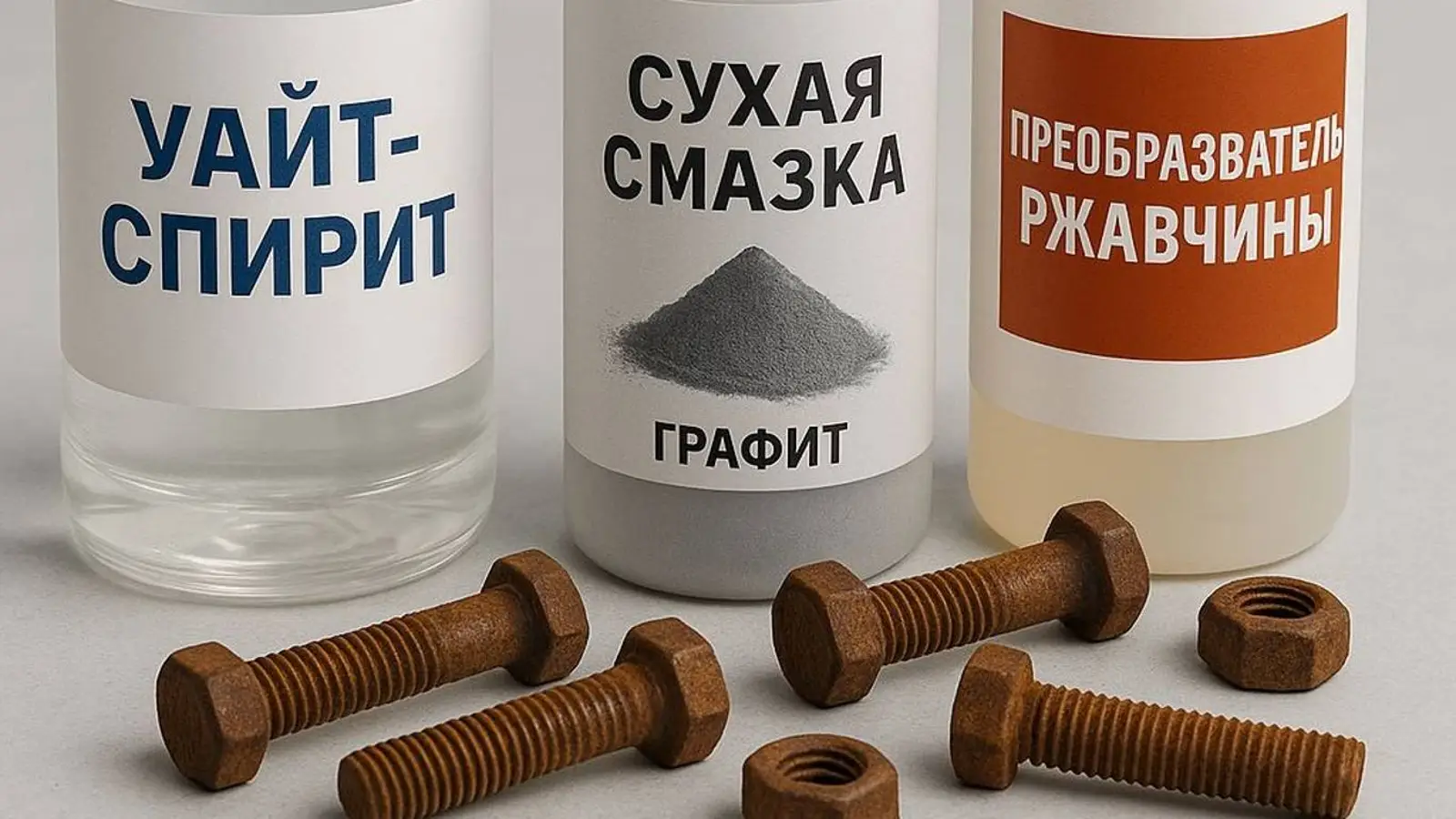
Generated by DALL·E
In repair work, people often reach for familiar fixes. WD-40 looks like a cure-all, and many are sure it will conquer any frozen fastener. But meet a bolt that hasn’t budged in decades, and that confidence fades fast. Nerves fray, threads strip, and a snapped stud turns into a long, joyless session with a drill.
Those who deal with this regularly turned to alternatives long ago. They cost less yet take apart the most stubborn connections.
The first blend — for the toughest cases
This option was put together specifically for old, seized joints where everyday products give up. The mix doesn’t just lubricate the threads — it engages rust on a chemical level.
What you need:
- white spirit — 50 g;
- dry lubricant (graphite, molybdenum, or similar) — 5 g;
- rust converter — 50 g.
How to make it:
- Pour white spirit into a small container.
- Add the dry lubricant.
- Pour in the rust converter.
- Stir and transfer to a convenient sprayer.
The result is an active blend that penetrates deep into the threads, breaks down the oxide layer, and lubricates at the same time. In practice, the reaction starts almost immediately, and a nut that refused to move by wrench comes off without a fight.
There are trade-offs. You need to shake the mix before each use. The sprayer can clog due to the dry lubricant, so it’s smarter to prepare only what you’ll use.
The second blend — stable and convenient
This mix suits those who want strong effect without the hassle of constant shaking or a sticky nozzle.
Components:
- white spirit or solvent 646 — 50 g;
- graphite waterproof grease — 5 g;
- Prolong anti-friction additive — 10 g.
The process is the same: dissolve the grease in the solvent, then add the additive. The liquid is ready to use right away and stays uniform. In tests, this blend cut loosening torque much more than WD-40; the torque wrench’s scale simply wasn’t enough to capture the result.
Why it actually works
The effect comes from several processes working together:
- the rust converter breaks down the oxide film;
- the solvent wicks the mix deep into the threads;
- graphite and molybdenum lay down a durable, low-friction layer;
- the additives push friction to a minimum.
This combination makes the blend stronger than most common penetrating lubricants. The bolt doesn’t snap, the thread doesn’t gall, and the joint separates without drama. These mixes step in where standard products already failed, letting you free old, seized parts without risking threads or tools. Repairs become calmer, and nasty surprises almost disappear — a kind of predictability that, in real garage life, matters more than a familiar name on the can.