https://boda.su/en/posts/id1111-health-risks-of-re-steeping-tea-bags-revealed
Health Risks of Re-Steeping Tea Bags Revealed
Why Re-Steeping Tea Bags Can Harm Your Health
Health Risks of Re-Steeping Tea Bags Revealed
Discover why re-steeping tea bags can lead to bacterial growth, oxidation, and toxic compounds. Learn the key health risks and how to avoid unsafe tea habits.
2025-11-15T09:17:52+03:00
2025-11-15T09:17:52+03:00
2025-11-15T09:17:52+03:00
Many people try to cut everyday costs by steeping a tea bag a second time. At first glance, the idea seems harmless: the water is still hot, the familiar flavor lingers, and it feels like there’s nothing to lose. Yet this small act of »saving” has a hidden side that often becomes clear only when unpleasant symptoms appear.
Why repeated brewing is risky
A used tea bag quickly turns into a favorable environment for bacterial growth. Drinking tea prepared from it on a regular basis can undermine your health, even if the beverage looks perfectly normal. Practical experience shows that the risks far outweigh any minor financial benefit — the few saved coins aren’t worth the potential damage to well-being.
Warning signs in your cup
There are visual cues that shouldn’t be ignored. If the tea becomes noticeably cloudy or a thin film forms on the surface, it signals the beginning of oxidation. During this process, a toxic compound called guanidine appears in the drink. These changes aren’t just cosmetic; they reflect what’s happening inside the cup.
Documented consequences
Consistently consuming oxidized tea containing guanidine may lead to symptoms that are hard to overlook: nausea, vomiting, dizziness, disorientation, irritability, and a rapid heartbeat. These reactions are the body’s way of alerting you to unwanted substances — and they represent only part of the potential harm.
Long-term health risks
The habit of re-steeping a bag for the sake of saving money can gradually escalate into more serious issues. The concerns extend to possible problems involving the gastrointestinal tract, the liver, and the cardiovascular system. At this stage, the consequences go far beyond momentary discomfort and begin to affect overall quality of life.
Why the »savings” don’t add up
It’s easy to justify a second brew out of habit or a desire to be economical. But the logic is misleading: once a tea bag has gone through its first infusion, it is no longer a safe option. A straightforward assessment makes the situation clear — avoiding this practice is the more sensible choice.
How to avoid unnecessary risks
If a drink looks suspicious — cloudy or coated with a surface film — that alone is a reason not to pour it. Signs of oxidation shouldn’t be dismissed as minor flaws; they point to changes that make the tea unsuitable for consumption.
Repeatedly steeping tea bags may seem like a quick way to save money, but in reality it increases the chance of encountering bacteria and oxidized compounds, including toxic guanidine. Regular consumption of such tea can trigger uncomfortable symptoms and, over time, contribute to disorders affecting the digestive system, liver, and heart. Ultimately, this kind of »economy” can prove far too costly — a reminder that health and peace of mind outweigh short-term savings.
Tea Safety, Re-Steeping Tea Bags, Health Risks, Bacterial Growth, Oxidized Tea, Guanidine, Unsafe Tea Habits
2025
articles
Why Re-Steeping Tea Bags Can Harm Your Health
Discover why re-steeping tea bags can lead to bacterial growth, oxidation, and toxic compounds. Learn the key health risks and how to avoid unsafe tea habits.
Generated by Dall-e
Many people try to cut everyday costs by steeping a tea bag a second time. At first glance, the idea seems harmless: the water is still hot, the familiar flavor lingers, and it feels like there’s nothing to lose. Yet this small act of “saving” has a hidden side that often becomes clear only when unpleasant symptoms appear.
Why repeated brewing is risky
A used tea bag quickly turns into a favorable environment for bacterial growth. Drinking tea prepared from it on a regular basis can undermine your health, even if the beverage looks perfectly normal. Practical experience shows that the risks far outweigh any minor financial benefit — the few saved coins aren’t worth the potential damage to well-being.
Warning signs in your cup
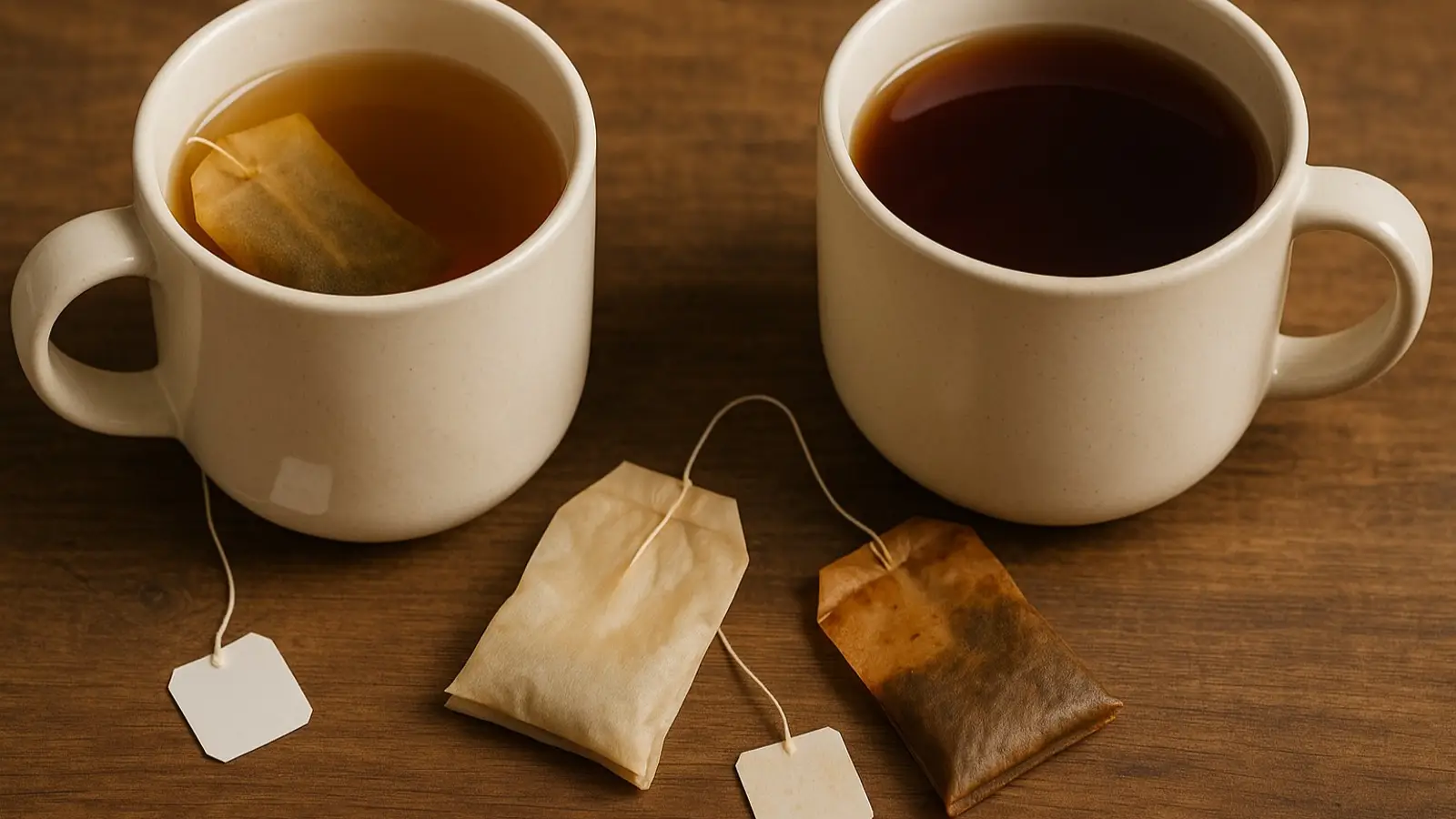
There are visual cues that shouldn’t be ignored. If the tea becomes noticeably cloudy or a thin film forms on the surface, it signals the beginning of oxidation. During this process, a toxic compound called guanidine appears in the drink. These changes aren’t just cosmetic; they reflect what’s happening inside the cup.
Documented consequences
Consistently consuming oxidized tea containing guanidine may lead to symptoms that are hard to overlook: nausea, vomiting, dizziness, disorientation, irritability, and a rapid heartbeat. These reactions are the body’s way of alerting you to unwanted substances — and they represent only part of the potential harm.
Long-term health risks
The habit of re-steeping a bag for the sake of saving money can gradually escalate into more serious issues. The concerns extend to possible problems involving the gastrointestinal tract, the liver, and the cardiovascular system. At this stage, the consequences go far beyond momentary discomfort and begin to affect overall quality of life.
Why the “savings” don’t add up
It’s easy to justify a second brew out of habit or a desire to be economical. But the logic is misleading: once a tea bag has gone through its first infusion, it is no longer a safe option. A straightforward assessment makes the situation clear — avoiding this practice is the more sensible choice.
How to avoid unnecessary risks
If a drink looks suspicious — cloudy or coated with a surface film — that alone is a reason not to pour it. Signs of oxidation shouldn’t be dismissed as minor flaws; they point to changes that make the tea unsuitable for consumption.
Repeatedly steeping tea bags may seem like a quick way to save money, but in reality it increases the chance of encountering bacteria and oxidized compounds, including toxic guanidine. Regular consumption of such tea can trigger uncomfortable symptoms and, over time, contribute to disorders affecting the digestive system, liver, and heart. Ultimately, this kind of “economy” can prove far too costly — a reminder that health and peace of mind outweigh short-term savings.